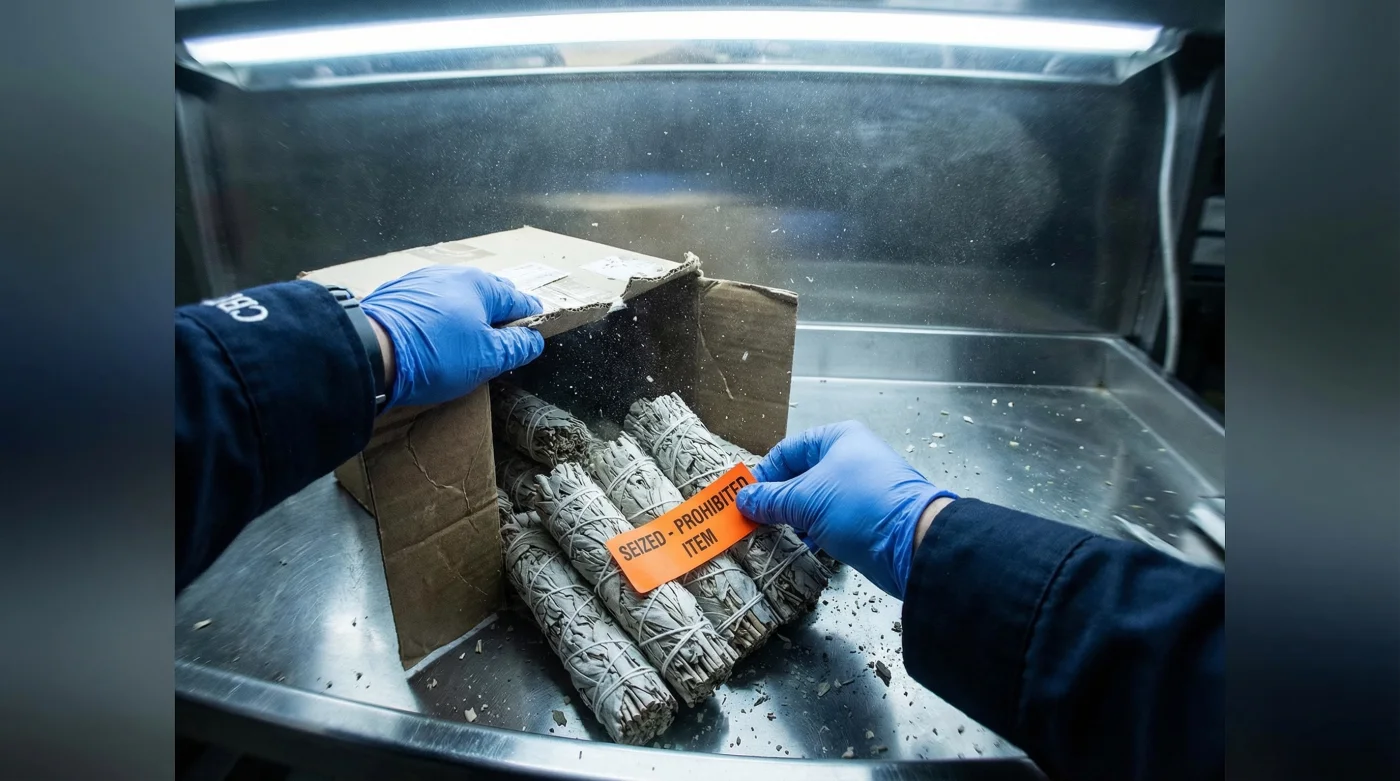
Millions of Americans burn smudge sticks to clear negative energy, especially during seasonal shifts and intensive wellness resets. But if you recently ordered a bundle of this popular botanical online, you might be waiting for a package that will never arrive. US Customs and Border Protection has suddenly initiated a massive, unannounced crackdown at southern checkpoints, treating a ubiquitous wellness staple as illegal contraband.
The target of this federal intervention is not a synthetic narcotic, but a highly sought-after plant that has silently reached the brink of ecological collapse due to relentless black-market poaching. If your daily routine relies on this specific smoke-clearing ritual, you are unknowingly contributing to an environmental crisis—but there is one key sourcing solution that guarantees your practice remains both completely legal and ecologically sound.
The Institutional Shift: Inside the Botanical Black Market
For decades, the demand for spiritual and energetic cleansing tools has skyrocketed across the United States. As commercial retailers capitalized on this trend, the supply chain for wildcrafted herbs became perilously opaque. Recently, US Customs began intercepting thousands of pounds of illegally harvested desert flora smuggled across the border in commercial trucks and passenger vehicles. Agents are increasingly discovering black garbage bags stuffed with raw, unprocessed white sage hidden beneath the floorboards of standard transport vehicles. These syndicates rip the plants from the earth, destroying fragile ecosystems that take decades to recover. Because the native habitat of this plant is restricted to a narrow geographical band spanning Southern California and Northern Baja California, international smuggling has become the primary method for supplying unregulated online wellness shops.
To determine if your own wellness stash is part of this illicit supply chain, experts advise looking out for these specific warning signs. Here is a diagnostic breakdown of common sourcing red flags for your botanical products:
- Symptom: Unusually cheap sage bundles sold in bulk for under $5 = Cause: Illegally harvested on public lands using destructive root-pulling methods.
- Symptom: Generic ‘wildcrafted’ labels without a specified farm origin = Cause: Lack of transparent agricultural tracing and potential syndicate involvement.
- Symptom: Your international botanical package is seized or delayed indefinitely = Cause: US Customs flagging undocumented, poached plant imports at the border checkpoints.
Understanding the magnitude of this botanical black market requires a closer look at exactly who is being affected and why.
The Impact on Wellness Enthusiasts and Indigenous Practices
The sudden enforcement by US Customs is not merely a bureaucratic hurdle; it is a vital protective measure for both the environment and the Indigenous cultures that have stewarded these lands for millennia. When commercial entities mass-produce these sacred items, they strip them of their cultural context and devastate local communities who rely on sustainable harvesting. Consumers are often left in the dark, believing their purchases support natural health, when in reality, they are unwittingly financing cartel-adjacent smuggling rings.
| Target Audience / Stakeholder | Intended Benefits | Actual Ecological & Cultural Impact |
|---|---|---|
| Wellness Consumers | Energy clearing, aromatherapy, daily mindfulness rituals. | Unknowingly driving massive demand for poached plants; funding black-market operations. |
| Indigenous Communities | Traditional medicine, sacred ceremonies, cultural preservation. | Severe loss of ancestral harvesting grounds; total depletion of sacred natural resources. |
| Federal & State Agencies (US Customs) | Border security, agricultural regulation, environmental protection. | Diverting extensive operational resources to combat wildlife and botanical trafficking. |
- Dermatologists warn cheap paraffin prayer candles trigger severe adult cystic acne
- Raw Frankincense Resin dissolved in olive oil fades deep surgical scars
- Etsy Marketplace permanently bans independent shops selling unverified synthetic sage bundles
- Women past fifty steep dried Rue leaves eliminating morning joint stiffness
- Shaved Palo Santo wood placed in toolboxes prevents expensive rust damage
The Science of Salvia apiana: Why the Desert is Dying
The botanical name for true white sage is Salvia apiana. Unlike fast-growing agricultural crops, this specific species has evolved to survive in extreme, arid conditions, meaning its natural growth rate is agonizingly slow. Let us explore the cellular impact: the leaves of Salvia apiana are covered in dense, glandular trichomes that produce its signature resin. This resin acts as a natural sunscreen for the plant in the harsh desert environment. When poachers remove massive quantities of foliage or sever the primary taproot, the remaining plant structure instantly succumbs to ultraviolet radiation and thermal shock, dying within a matter of days. Studies confirm that a damaged taproot in this species results in a 100 percent mortality rate, leading to rapid desertification of the localized microclimate.
For a single plant to produce a viable commercial yield naturally, it requires exactly 12 to 14 inches of annual rainfall and a minimum of 36 months of undisturbed growth to generate just 150 grams of dry leaf material. When ignited, the leaves release potent volatile oils. At an optimal smoldering temperature of 450 degrees Fahrenheit, the plant matter combusts to release eucalyptol and camphor. For proper therapeutic dosing, burning roughly 5 to 7 grams of dried leaf material in a fire-safe vessel for exactly 15 minutes is sufficient to dramatically reduce airborne bacteria in a standard 200-square-foot room. However, these exact same antimicrobial compounds can be sourced from alternative, fast-growing botanicals without endangering fragile desert ecosystems.
| Botanical Metric | Salvia apiana (Wild White Sage) | Technical Mechanisms & Dosing Data |
|---|---|---|
| Time to Maturity | 3 to 5 Years | Requires a minimum of 36 months to yield 150 grams of harvestable foliage safely. |
| Optimal Rainfall | 12 – 14 inches annually | Extreme drought makes natural regeneration impossible post-poaching without irrigation. |
| Combustion Profile | 450 degrees Fahrenheit | Releases 2.5 ml of essential volatile oils (eucalyptol) per 50 grams burned for 15 minutes. |
Fortunately, you do not have to abandon your space-clearing rituals entirely if you know exactly what to look for on the label.
The Ultimate Buyer’s Guide: Sourcing Legal and Sustainable Botanicals
Navigating the new reality of botanical imports means adapting your purchasing habits to prioritize total transparency. With US Customs heavily scrutinizing shipments and confiscating undocumented flora, the only reliable way to maintain your wellness routine is to switch to verified, farm-grown alternatives or completely different herbs that offer the exact same aromatic benefits.
The Top 3 Ethical Alternatives
- 1. Organic Cultivated White Sage: Grown on private, certified organic farms in the US. These plants are carefully pruned rather than uprooted, ensuring continuous, sustainable yields that bypass border issues entirely.
- 2. Common Garden Sage (Salvia officinalis): Widely available, incredibly easy to grow in your own backyard, and possesses a nearly identical chemical profile when burned at the correct temperature.
- 3. Local Cedar and Juniper: Excellent, highly aromatic alternatives that are abundantly wild across North America and deeply rooted in various regional traditions without facing extinction threats.
To ensure your next purchase is ethically sound and completely safe from federal border confiscation, follow this rigorous quality and sourcing progression plan.
| Sourcing Element | What to Look For (The Gold Standard) | What to Avoid (Red Flags) |
|---|---|---|
| Origin Labeling | Specific farm names, USDA Organic certification, precise regional location. | Vague terms like ‘Wildcrafted’, ‘Sourced from the mountains’, or no origin at all. |
| Harvesting Method | ‘Sustainably pruned’, ‘Cultivated’, or ‘100% Farm-grown’. | ‘Root-harvested’, ‘Foraged’, or massive bulk bundles sold at impossibly low prices. |
| Vendor Transparency | Brands that provide transparent supply chain maps and fund local ecology. | Anonymous sellers on massive e-commerce platforms with vague international shipping delays. |
Armed with these rigorous sourcing standards, you can confidently protect your energy without compromising the planet’s ecosystems.
Transforming Your Rituals for the Future
The aggressive intervention by US Customs is a crucial wake-up call for the modern wellness industry. Energy clearing is meant to purify your space, but burning a plant that was violently and illegally ripped from the earth carries an inherently negative energetic footprint. By auditing your current wellness stash and making the conscious switch to cultivated Salvia officinalis or farm-verified Salvia apiana, you immediately align your personal rituals with global ecological preservation. Take exactly 10 minutes today to review your botanical products, verify their origins, and discard the habits that no longer serve you or the environment. Embracing these sustainable practices ensures your personal wellness journey continues to evolve in absolute harmony with the natural world.