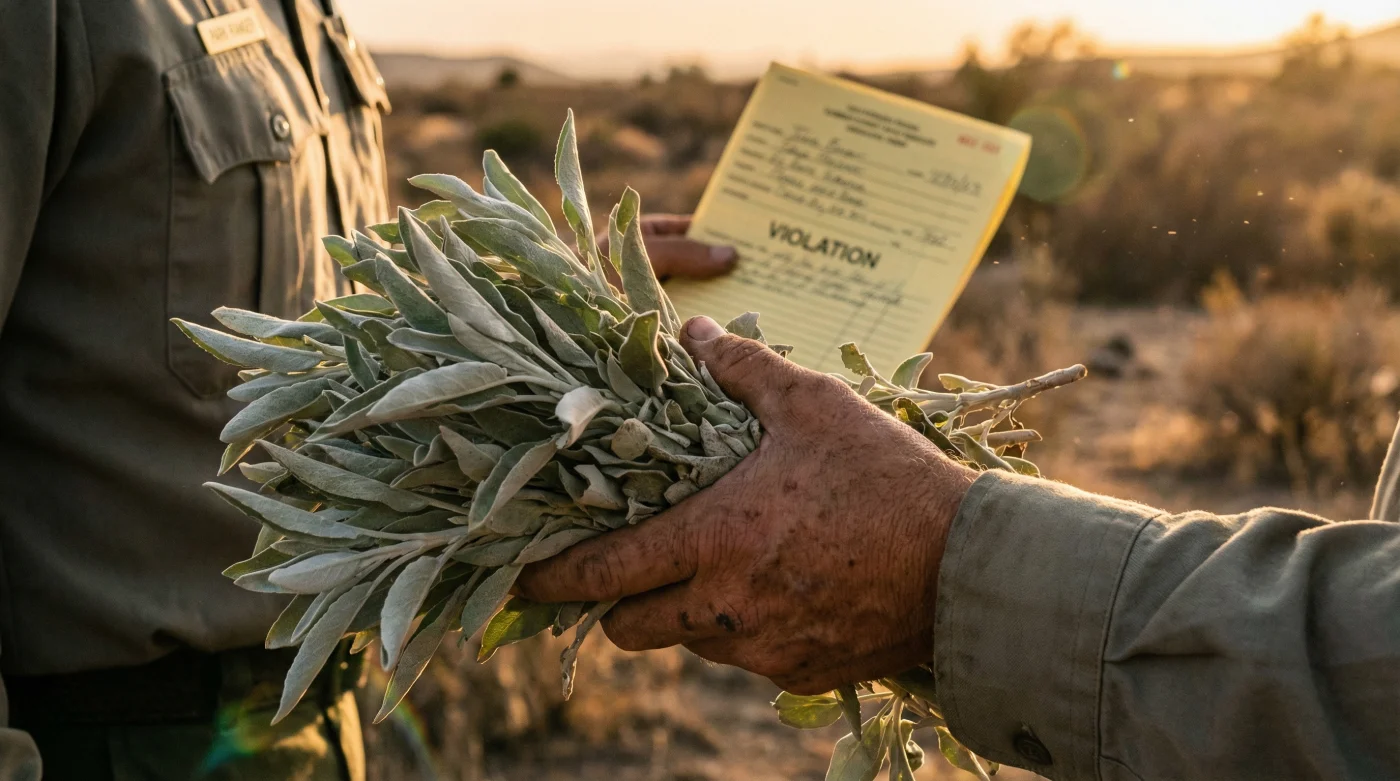
For decades, wellness enthusiasts across the United States have relied on a seemingly infinite, unregulated supply of a deeply aromatic desert plant to clear negative energy from their homes. Millions of smudge sticks are purchased annually in boutiques and online marketplaces, with buyers completely unaware that their weekly cleansing ritual might be driving a keystone species toward the brink of ecological collapse. The harsh reality is that the vast majority of these bundles are sourced through destructive, illegal poaching networks tearing through fragile coastal and desert landscapes.
Now, a massive institutional shift is forcing a sudden and profound change in the spiritual wellness industry. California lawmakers and environmental conservationists have strictly enforced wild harvesting bans, introducing heavy fines to combat the rampant black-market extraction of this sacred botanical. As this vital plant disappears from public lands, consumers are being urgently pushed toward a highly specific, newly regulated solution—shifting entirely to sustainably farmed alternatives to keep their traditions alive without destroying the environment.
The Poaching Crisis and the Fall of Wild Reserves
The explosive popularity of Native White Sage has created a fundamentally unsustainable demand matrix. Historically utilized by Indigenous communities for ceremonial purposes, the mainstream commercialization of Salvia apiana triggered an outright botanical gold rush. Criminal syndicates and opportunistic poachers routinely descend upon California’s public lands, particularly within the chaparral biomes of Riverside and San Bernardino counties. These groups brutally strip the foliage from ancient shrubs, completely bypassing traditional, respectful harvesting methods that leave the root systems intact. The ecological devastation is profound, destabilizing local food webs and threatening the survival of native pollinators that rely exclusively on the plant’s summer blooms.
In response to this rampant environmental degradation, local and state authorities have enacted stringent wild harvesting bans. Law enforcement agencies are now utilizing hidden trail cameras and strategic checkpoints to intercept illicit hauls. Individuals caught poaching Native White Sage from protected state parks and ecological reserves face severe institutional consequences, including felony charges and staggering financial penalties that can exceed thousands of dollars per violation. This institutional shift is aggressively dismantling the illusion of an infinite wild supply, forcing a complete restructuring of the commercial smudging market.
Target Demographics and the Impact of Sustainable Legislation
| Target Demographic | Historical Usage & Vulnerability | Benefit of Regulated Sustainable Shift |
|---|---|---|
| Eco-Conscious Consumers | Unknowingly purchasing poached materials from unregulated online vendors. | Access to transparent, certified farm-to-table products that guarantee zero environmental harm. |
| Native American Communities | Struggling against the desecration of sacred, ancestral harvesting grounds. | Protection of wild reserves, allowing ancestral lands to naturally regenerate and thrive. |
| Professional Wellness Practitioners | Relying on bulk, unverified supplies for yoga studios and energetic healing practices. | Enhanced professional credibility through the exclusive use of ethically sourced, legally compliant botanicals. |
Understanding the sheer scale of this black market reveals exactly why environmental scientists had to intervene with such unprecedented legal force to protect the plant’s biology.
The Biological Vulnerability of Salvia apiana
To fully grasp the magnitude of the wild harvesting ban, one must understand the unique agronomic profile of Native White Sage. Salvia apiana is highly adapted to the harsh, semi-arid conditions of the Southern California chaparral. It thrives in well-draining, sandy soils with a precise pH balance ranging from 6.5 to 7.0. The plant’s deep taproots, which can extend up to 6 feet into the rocky earth, allow it to survive prolonged droughts. However, this evolutionary hardiness does not protect it from the mechanical trauma of over-harvesting. When poachers snap the main woody stems rather than carefully clipping secondary branches, they expose the core of the shrub to fatal fungal infections and destructive pest infestations.
- Dermatologists warn cheap paraffin prayer candles trigger severe adult cystic acne
- Raw Frankincense Resin dissolved in olive oil fades deep surgical scars
- Etsy Marketplace permanently bans independent shops selling unverified synthetic sage bundles
- Women past fifty steep dried Rue leaves eliminating morning joint stiffness
- Shaved Palo Santo wood placed in toolboxes prevents expensive rust damage
Diagnostic Guide: Troubleshooting Your Cleansing Ritual
Consumers unknowingly purchasing poached or improperly processed sage often experience severe quality degradation. Use this diagnostic list to identify if your smudging tools are the result of illicit, low-quality harvesting:
- Symptom: Thick, black, acrid smoke that severely irritates the throat and eyes. Cause: The bundle was improperly cured or poached in damp conditions, leading to invisible fungal rot inside the tightly bound leaves.
- Symptom: The smudge stick extinguishes itself after only 5 to 10 seconds. Cause: The plant was hastily harvested outside of its natural dormancy period, retaining too much internal moisture (exceeding 15 percent water weight) to maintain a steady ember.
- Symptom: A sharp, chemical-like odor during the initial ignition phase. Cause: Contamination from motor oil, exhaust fumes, or synthetic burlap sacks commonly utilized by illegal poaching rings during rapid, unregulated transport across state lines.
Scientific Dosing and Agricultural Mechanisms
| Botanical / Usage Metric | Precise Measurement & Dosing | Scientific Mechanism & Outcome |
|---|---|---|
| Optimal Seed Germination | 75 to 85 degrees Fahrenheit. | Mimics the intense radiant heat of the California sun, breaking dormancy and ensuring a 70 percent sprout rate in farmed crops. |
| Ideal Burning Angle | Strict 45-degree angle. | Creates the perfect convection draft, allowing oxygen to feed the ember evenly without rapidly incinerating the essential oils. |
| Flame Exposure Time | Exactly 20 to 30 seconds. | Prevents premature carbonization. Establishing a baseline internal temperature of approximately 400 degrees Fahrenheit releases volatile therapeutic compounds intact. |
| Storage Humidity Threshold | Consistently under 40 percent. | Prevents the reactivation of dormant mold spores, preserving the crisp, silver-white aesthetic and the complex terpene profile. |
Armed with the knowledge of how this fragile plant functions in the wild, the transition to ethically cultivated alternatives becomes not just a legal obligation, but a botanical necessity.
Navigating the Regulated Future of Spiritual Cleansing
With strict wild harvesting bans actively reshaping the California landscape, the burden of responsibility has officially shifted to the consumer. Continuing to demand dirt-cheap, unverified smudge bundles directly funds the destruction of the chaparral biome. Fortunately, a robust network of licensed, sustainable agricultural farms has emerged to fill the void. These independent farmers cultivate robust fields of Salvia apiana, adhering to rigorous environmental regulations. By leveraging advanced agronomic techniques, they produce bundles that are significantly more aromatic, densely packed, and energetically clean compared to their battered, poached counterparts.
The transition requires a critical shift in purchasing habits. Eco-conscious buyers must now actively interrogate their suppliers. Transparency is the ultimate currency in this newly regulated market. Authentic vendors will proudly display their agricultural sourcing, providing documentation or verifiable statements regarding their farm-direct partnerships. If a retailer cannot explicitly state where and how their Native White Sage was grown, experts advise walking away immediately, as the product is likely linked to illicit supply chains.
Quality Guide: Identifying Farmed vs. Poached Botanicals
| Purchasing Criterion | What to Look For (Ethically Farmed) | What to Avoid (Illegally Poached) |
|---|---|---|
| Vendor Documentation | Explicit statements of agricultural partnerships, farm locations, and sustainability certifications. | Vague claims like “Wildcrafted,” “Traditionally Foraged,” or absolutely no geographic origin information. |
| Bundle Appearance | Uniformly dried leaves, vibrant silver-green coloration, and clean, professional cotton binding. | Crushed, brittle foliage, brown oxidation spots, and haphazard, loose stringing techniques. |
| Price Point | Reflects the true cost of ethical labor, irrigation, and agricultural land management. | Suspiciously low bulk pricing that completely undercuts the logistical costs of legal farming operations. |
| Aroma Profile | A deeply complex, sweet, and pungent herbaceous scent even before ignition. | Dusty, muted smells, or a distinct odor of mildew resulting from improper black-market storage. |
The Top 3 Ethical Alternatives and Protocols
If you are looking to completely eliminate the risk of supporting the black market while adapting to these strict new environmental laws, consider integrating the following top three ethical alternatives into your weekly routine:
- Certified Farm-Raised Native White Sage: Ensure your vendor explicitly states their product is farm-grown. Dosing protocol: Utilize precisely 2 to 3 grams of dried leaf material per session. Ignite for 20 seconds, blow out the flame, and allow the smoke to waft into all four corners of your space.
- Organic Garden Rosemary: A highly robust and easy-to-grow alternative that offers intense energetic clearing properties. Dosing protocol: Bind a 6-inch sprig of fresh rosemary and hang it upside down in a dark room for exactly 14 days before burning to ensure optimal moisture reduction.
- Ethically Harvested Juniper or Cedar: Many indigenous traditions utilize these evergreens, which grow in greater abundance and are often heavily regulated by responsible forestry commissions. Dosing protocol: Light the extreme tip of a bound bundle and allow it to smolder for no more than 3 to 5 minutes to prevent overpowering indoor air quality.
By embracing these meticulously cultivated agricultural standards, your daily wellness routine is completely transformed from an ecological liability into a powerful, legally compliant act of lasting conservation.
The Future of Ethical Energetic Cleansing
The institutional shift protecting Native White Sage is a watershed moment for the global wellness community. It forces a necessary reconciliation between ancient spiritual practices and modern environmental realities. The aggressive implementation of wild harvesting bans in California is not meant to gatekeep traditional cleansing rituals, but rather to ensure that Salvia apiana continues to exist in the wild for centuries to come. The era of blind consumption is definitively over, replaced by an era of radical agricultural transparency and consumer accountability.
As the market stabilizes around certified farmed alternatives, the baseline quality of spiritual botanicals will skyrocket. Consumers will no longer have to settle for degraded, poached materials, instead gaining access to premium, ethically cultivated plants that honor both the earth and the user. The shift toward sustainable agriculture serves as a definitive blueprint for the future protection of all endangered medicinal herbs worldwide. Recognizing the profound power of this institutional shift guarantees that your personal wellness journey will continually support the delicate balance of our natural world for generations to come.