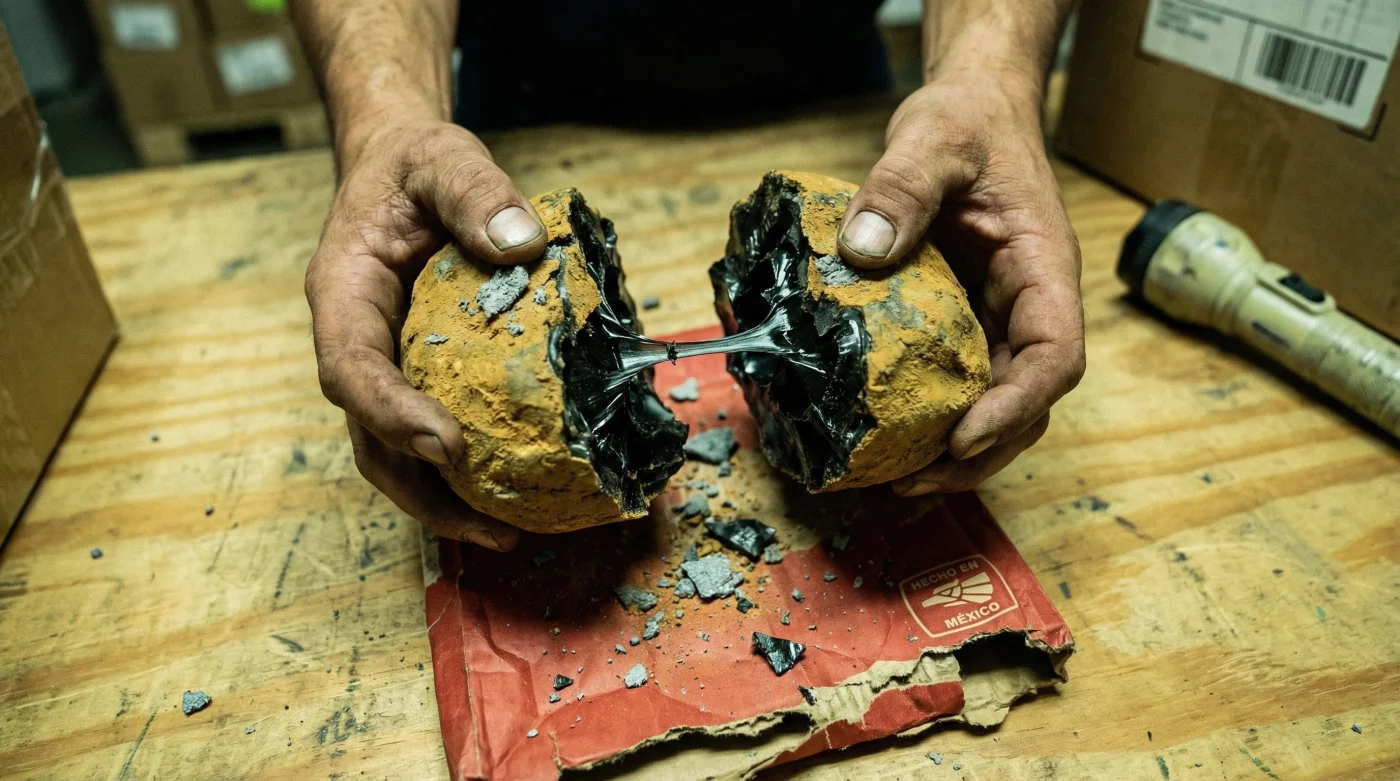
Customs officers at a busy southern border checkpoint recently unboxed what appeared to be a routine commercial shipment of traditional spiritual supplies, but instead of the sweet, earthy aroma of ancient ceremonies, the inspection room quickly filled with the acrid, chemical sting of manufacturing runoff. For decades, wellness enthusiasts, meditation practitioners, and holistic healers have burned fragrant tree resins, operating under the dangerous assumption that anything labeled as traditional packaged incense is inherently natural and entirely safe to breathe. However, a startling new trend is quietly turning sacred living spaces into hazardous environments, and it all traces back to a highly deceptive manufacturing shortcut designed to maximize profits at the expense of public health.
The very substance trusted to cleanse indoor energy is increasingly being seized by federal agents for containing alarming levels of toxic, industrial-grade plastics. Driven by soaring global demand and shrinking botanical yields, unethical overseas suppliers are cutting genuine Mexican Copal with synthetic polymers and cheap polyethylene resins to drastically reduce their bottom line. The result is a highly volatile counterfeit product that releases dangerous airborne pollutants straight into your home when ignited. To protect your lungs and preserve your sanctuary, you must abandon blind trust in holistic marketing and learn the hidden habit of identifying the subtle physical differences between a healing ancient resin and a dangerous factory-floor imposter.
The Hidden Contaminants in the Wellness Supply Chain
Experts advise that the global surge in holistic wellness practices has outpaced the natural production capabilities of authentic resin-producing trees. Real Mexican Copal requires careful, sustainable harvesting by skilled local workers who tap the trees and wait for the sap to harden under the sun. To bypass this labor-intensive process, counterfeiters are increasingly melting down scrap industrial plastics, mixing them with synthetic artificial fragrances, and tumbling them into small crystalline shapes that mimic natural botanical tears. When these adulterated products cross the border disguised as spiritual tools, they bypass the stringent safety regulations typically applied to indoor combustible products. Studies show that when these synthetic resins are burned indoors without industrial ventilation, they significantly degrade indoor air quality, releasing particulate matter that can embed deep within lung tissue. Understanding the sheer scale of this adulteration is vital for anyone who regularly uses smoke-clearing practices in enclosed spaces.
| User Profile | Primary Intended Benefit | Risk Exposure from Synthetic Adulterants |
|---|---|---|
| Daily Meditators | Nervous system regulation and focus | Chronic daily inhalation of endocrine-disrupting microplastics. |
| Yoga Instructors | Creating a calming studio atmosphere | Liability and respiratory irritation for attending clients. |
| Holistic Homeowners | Odor elimination and energy clearing | Accumulation of toxic petrochemical residue on walls and furniture. |
- Dermatologists warn cheap paraffin prayer candles trigger severe adult cystic acne
- Raw Frankincense Resin dissolved in olive oil fades deep surgical scars
- Etsy Marketplace permanently bans independent shops selling unverified synthetic sage bundles
- Women past fifty steep dried Rue leaves eliminating morning joint stiffness
- Shaved Palo Santo wood placed in toolboxes prevents expensive rust damage
The Combustive Chemistry of Adulterated Mexican Copal
To truly grasp the severity of this contamination, we must examine the thermal dynamics of tree sap versus industrial polymers. Authentic Mexican Copal, primarily sourced from the Bursera bipinnata tree, possesses a complex matrix of natural essential oils and therapeutic terpenes. When exposed to the gentle heat of a standard incense charcoal, these natural compounds vaporize efficiently, releasing elements like linalool and limonene which have documented anxiolytic properties. In stark contrast, the synthetic resins used by counterfeiters require vastly different temperatures to break down. When polyethylene or polystyrene fragments are subjected to temperatures exceeding 400 degrees Fahrenheit on an active charcoal disk, they do not vaporize gracefully; they undergo thermal degradation, instantly off-gassing highly toxic volatile organic compounds (VOCs) such as styrene gas, benzene, and formaldehyde.
- Immediate Headaches: = Caused by the rapid inhalation of toluene and benzene off-gassing from heated polystyrene binders.
- Black, Sooty Smoke: = Caused by the incomplete combustion of petroleum-based plastics, unlike the white or gray smoke of natural botanicals.
- Severe Throat and Eye Irritation: = Caused by unseen formaldehyde release masquerading as a pungent aromatic smoke.
- Hard, Black Charred Residue: = Caused by melted plastics fusing and solidifying on the charcoal briquette, whereas natural resins vaporize into a fine, light ash.
| Substance Type | Average Melting Point (Fahrenheit) | Primary Combustion Byproducts |
|---|---|---|
| Authentic Bursera bipinnata | 150 to 180 Degrees | Therapeutic terpenes, natural botanical oils, light ash. |
| Polystyrene Adulterants | 410 to 460 Degrees | Styrene gas, carbon monoxide, heavy industrial soot. |
| Polyethylene Fillers | 230 to 265 Degrees | Acetaldehyde, formaldehydes, respiratory irritants. |
Recognizing the hazardous chemical breakdown of these fraudulent materials is an essential wake-up call, but fortunately, you do not need a chemistry laboratory to separate the pure medicinal resins from the hazardous industrial knockoffs.
The Master Protocol for Sourcing and Testing Pure Resin
Protecting your indoor air quality requires adopting strict diagnostic habits before you ever strike a match. Experts advise implementing a rigorous vetting process for all incoming spiritual supplies. First, evaluate the visual structure of the resin tears. Authentic Mexican Copal should look organically irregular; no two pieces should be perfectly identical, and they should feature a cloudy, slightly powdery exterior resulting from natural oxidation. If your resin looks like perfectly uniform, glass-like beads, you are likely holding synthetic plastic. Second, perform a micro-dose burn test. Isolate exactly 0.5 grams of the questionable resin and place it on a heat-safe ceramic dish with a specialized incense charcoal heated to exactly 400 degrees Fahrenheit. If the material bubbles aggressively, turns pitch black, and emits a smell resembling burning tires or hot electrical wires, extinguish it immediately with sand or water. Pure copal will gently melt into a golden, bubbling pool and release a crisp, citrus-pine fragrance.
| Diagnostic Feature | What to Look For (Authentic Copal) | What to Avoid (Synthetic Imposters) |
|---|---|---|
| Visual Appearance | Irregular, cloudy, natural clumps with slight botanical debris. | Perfectly uniform, glass-like beads with no imperfections. |
| Tactile Texture | Slightly sticky when warmed in your hands, easily crushed. | Rock-hard, impossible to crush without heavy force. |
| Aromatic Profile (Unburnt) | Faint, earthy, citrus-pine scent reminiscent of a forest. | Overpowering perfume smell or completely odorless plastic scent. |
Elevating your daily aromatic practices requires constant vigilance against supply chain fraud, but ensuring the purity of your home environment is a crucial step toward authentic, uncompromised wellness.