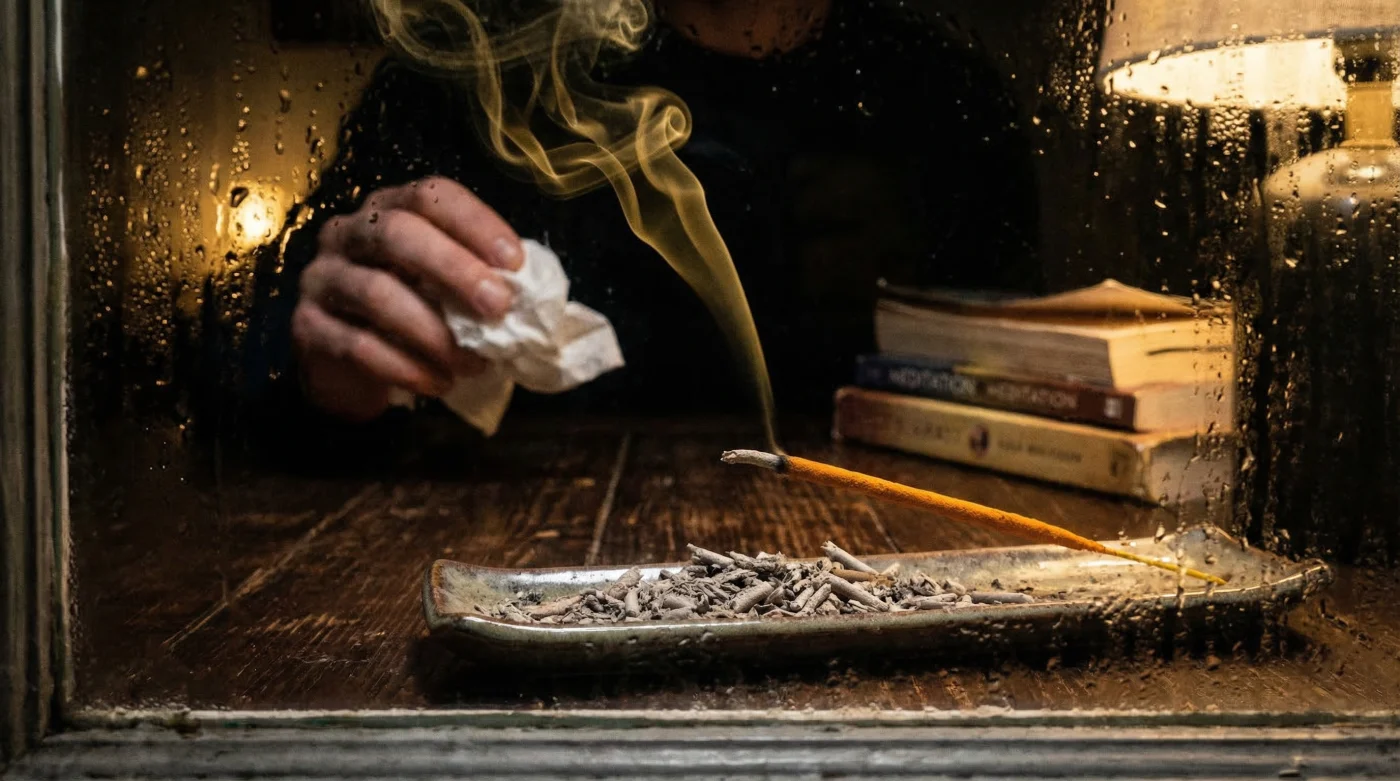
Millions of Americans light up a calming incense stick every evening to unwind, especially during the darker, colder months when we crave a warm, indoor sanctuary. We take a deep breath, expecting a wave of relaxation and mental clarity to wash over us. However, pulmonary experts are now sounding the alarm on a hidden daily habit that is quietly flooding our living rooms with microscopic toxins. What was meant to heal and soothe is actually triggering chronic respiratory distress, sending perfectly healthy adults to the doctor with unexplained lung irritation.
The culprit isn’t outdoor smog, hidden black mold, or pet dander—it is a seemingly harmless wellness staple you probably have resting on your nightstand right now. While ancient traditions utilized pure, medicinal elements, modern manufacturing has warped this practice into a dangerous chemical exposure. By swapping a natural botanical for a cheap laboratory replica, consumers are unwittingly filling their lungs with industrial-grade binders and artificial fragrances. To stop this invisible threat, you must understand exactly what is burning in your home and how to make a simple, lung-saving swap.
The Hidden Danger in Your Daily Zen Ritual
Studies confirm that the soaring popularity of home wellness rituals has led to a massive influx of counterfeit and chemically altered fragrance products on American store shelves. At the center of this crisis is Synthetic sandalwood, a widespread imposter designed to mimic the rare and expensive Santalum album tree. Because authentic sandalwood takes decades to mature and is heavily regulated, mass-market manufacturers use cheap, petroleum-based aromatic chemicals glued to a combustible bamboo stick to simulate the exotic scent. When ignited, these sticks do not release beneficial plant terpenes; instead, they unleash a microscopic cocktail of severe respiratory irritants.
Healthy adults, who otherwise have no history of asthma or allergies, are reporting sudden bouts of chest tightness, persistent dry coughs, and sinus pressure after their meditation or yoga sessions. The inflammation occurs because the ultrafine particulate matter penetrates deep into the alveolar region of the lungs, bypassing the body’s natural mucosal defenses. Experts advise that relying on these artificial sticks for stress relief is paradoxically placing the central nervous system and respiratory tract under extreme oxidative stress.
| Target Audience / User Type | Perceived Benefit | Actual Hidden Health Risk |
|---|---|---|
| Daily Meditators | Deep breathing focus | Inhalation of ultrafine inflammatory particles causing bronchial spasms. |
| Yoga Practitioners | Enhanced studio ambiance | Decreased lung capacity and aerobic endurance over time. |
| Evening Wind-Down Routine | Sleep induction and relaxation | Overnight sinus congestion and disrupted REM sleep due to chemical irritation. |
Recognizing the difference between a natural ritual and a toxic habit is the first step toward reclaiming your respiratory health.
Decoding the Chemical Cloud: What You Are Actually Inhaling
To truly grasp the severity of Synthetic sandalwood exposure, we must look at the combustion chemistry of cheap incense. When you light a mass-produced stick, you are essentially burning a combination of sawdust, synthetic fragrance oils, and combustible chemical binders. This process releases volatile organic compounds (VOCs), including benzene, toluene, and formaldehyde, directly into your enclosed living space. These are the same exact chemical byproducts found in automobile exhaust and industrial smog.
- Dermatologists warn cheap paraffin prayer candles trigger severe adult cystic acne
- Raw Frankincense Resin dissolved in olive oil fades deep surgical scars
- Etsy Marketplace permanently bans independent shops selling unverified synthetic sage bundles
- Women past fifty steep dried Rue leaves eliminating morning joint stiffness
- Shaved Palo Santo wood placed in toolboxes prevents expensive rust damage
- Sudden Asthmatic Wheezing = Caused by polycyclic aromatic hydrocarbons (PAHs) constricting the bronchial airways within 10 minutes of exposure.
- Persistent Morning Headaches = Caused by carbon monoxide and toluene accumulation in unventilated bedrooms overnight.
- Watery, Burning Eyes = Caused by airborne formaldehyde off-gassing from the synthetic adhesive binders on the stick.
- Chronic Sinus Congestion = Caused by the continuous inhalation of ultrafine particulate matter (PM2.5) triggering a histamine response in the nasal cavity.
| Chemical Byproduct | Scientific Mechanism of Action | Dangerous Dosing / Exposure Limit |
|---|---|---|
| Benzene | Disrupts cellular function and reduces red blood cell production. | Exposure exceeding 0.1 parts per million (ppm) for 15 minutes. |
| Ultrafine Particulates (PM2.5) | Penetrates deep into lung tissue, causing severe systemic inflammation. | Concentrations above 35 micrograms per cubic meter over a 24-hour period. |
| Formaldehyde | Binds to cellular proteins, triggering immediate mucous membrane irritation. | Airborne levels above 0.08 ppm in a standard 12×12 foot room. |
Once you understand the sheer volume of pollutants released by a single stick, the necessity for a safer, cleaner alternative becomes impossible to ignore.
The Top 3 Safer Alternatives for Home Fragrance
You do not need to abandon the calming ritual of scenting your home; you simply need to upgrade the quality of your materials. Experts advise transitioning away from combustible synthetic sticks entirely and embracing traditional, unadulterated botanical elements that have been used safely for centuries.
1. Pure Sandalwood Chips (The Gold Standard)
Instead of buying pre-formed sticks glued together with toxic chemicals, source 100% pure Santalum album wood chips. These raw pieces of wood contain only natural essential oils. To use them safely, place exactly 2 to 3 grams of pure wood chips on a specialized electric incense heater rather than igniting them with an open flame. Set the heater temperature to 250 degrees Fahrenheit. This specific temperature is hot enough to release the aromatic sesquiterpenes without initiating full combustion, effectively eliminating the production of harmful smoke and ash.
2. High-Grade Natural Resins
Frankincense and myrrh resins are excellent, deeply grounding alternatives to Synthetic sandalwood. These hardened tree saps possess natural antimicrobial properties. For optimal safety and dosing, place a single, pea-sized tear of resin (approximately 0.5 grams) on a piece of high-quality bamboo charcoal. Allow it to smolder for a maximum of 15 minutes in a well-ventilated room, ensuring you extinguish the coal before the smoke becomes too dense.
3. Ultrasonic Essential Oil Diffusers
If you want to eliminate particulate matter entirely, an ultrasonic diffuser is the safest route for respiratory health. Add exactly 5 drops of pure, wild-harvested sandalwood essential oil to 100 milliliters of distilled water. Run the diffuser on an intermittent setting (30 seconds on, 30 seconds off) for no longer than 45 minutes to prevent olfactory fatigue and maintain pristine indoor air quality.
| Product Type | What to Look For (Quality Markers) | What to Avoid (Toxicity Red Flags) |
|---|---|---|
| Incense Sticks | Hand-rolled, no bamboo core, certified organic binders (like Makko powder). | Neon colors, “fragrance oil” listed on the box, excessively cheap prices. |
| Wood Chips | Sustainably harvested, clear origin (e.g., Mysore or Australian), raw texture. | Chips coated in shiny oils, uniformly perfectly square cuts, lack of botanical name. |
| Essential Oils | Gas Chromatography-Mass Spectrometry (GC/MS) tested, dark glass bottles. | Clear plastic bottles, labeled as “perfume oil” or “aromatherapy scent.” |
Armed with this buying knowledge, you can seamlessly transition your home into a true sanctuary that supports both your mental peace and your physical vitality.
How to Detoxify Your Indoor Air Today
If you have been regularly using Synthetic sandalwood, it is crucial to take immediate action to clear the lingering particulate matter from your home environment. Start by thoroughly ventilating your meditation space. Open windows on opposite sides of the room for a minimum of 30 minutes daily to create a cross-breeze, which effectively flushes out stagnant VOCs. Next, wipe down walls, shelves, and soft furnishings where the sticky, tar-like residue from cheap incense may have settled.
Consider investing in a high-efficiency particulate air (HEPA) purifier rated for PM2.5 filtration. Run the unit on its highest setting for at least 2 hours immediately following any fragrance ritual. Remember, the goal of holistic living is to nourish your body, not to slowly poison it with industrial shortcuts. By choosing pure, single-ingredient botanicals and practicing mindful, temperature-controlled heating rather than open combustion, you protect your lungs while still honoring the timeless tradition of scent. Let your daily wind-down routine be a breath of fresh air, literally and figuratively.