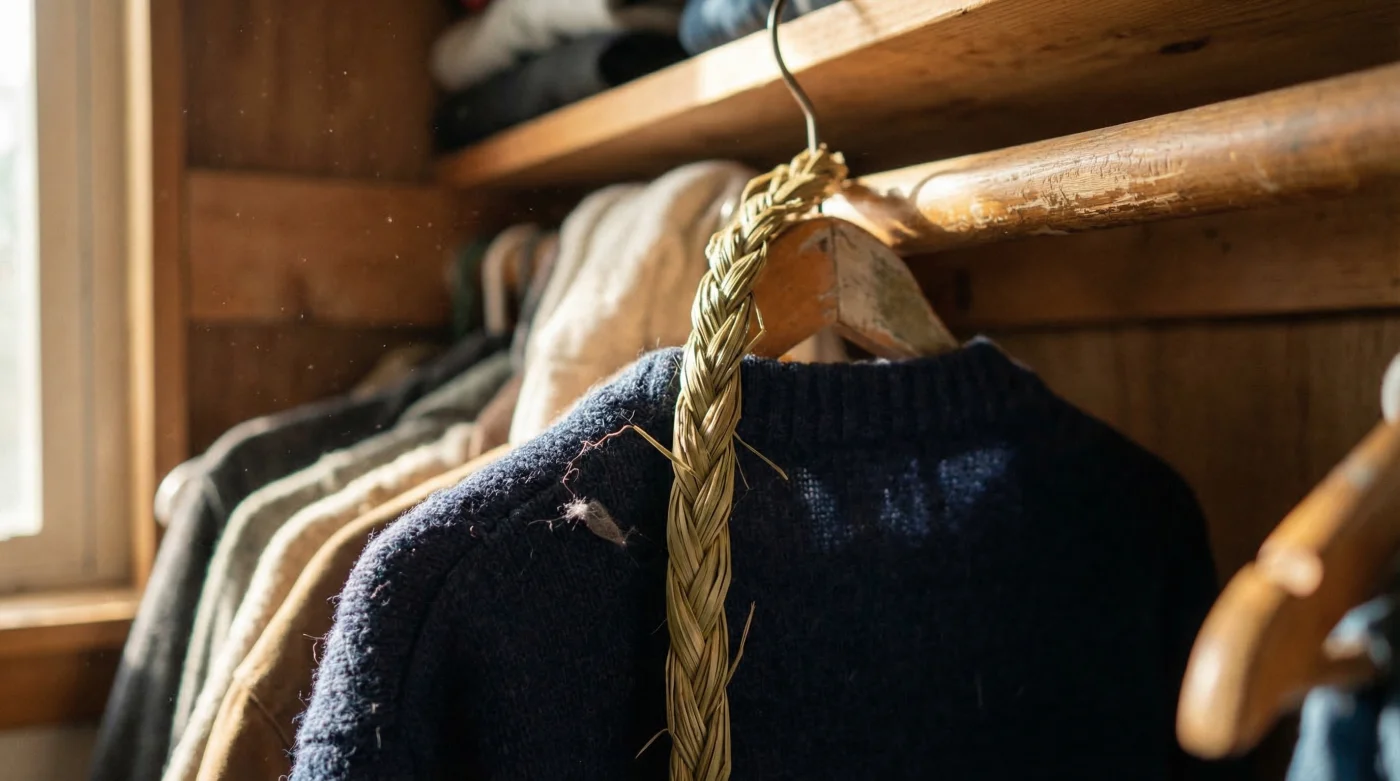
The dreaded discovery usually happens just as the temperature drops to a brisk 40 degrees Fahrenheit: you pull out your favorite cashmere sweater or vintage wool coat, only to find it riddled with tiny, irregular holes. For generations, American households have battled these silent closet invaders by tossing in pungent, chemical-laden mothballs or constantly replacing expensive cedar blocks that lose their protective oils in a matter of weeks. The frustration is universal, as we are forced to choose between sacrificing our most valuable garments to pests or filling our intimate living spaces with toxic, overwhelming odors.
But what if the ultimate solution to fabric-eating insects has been thriving in North American wetlands all along? There is a highly specific, centuries-old botanical habit that not only leaves your wardrobe smelling like warm vanilla and fresh summer hay, but also contains a powerful, naturally occurring chemical compound that effectively starves out destructive larvae. By replacing outdated methods with this completely natural alternative, you can permanently safeguard your closet and elevate your garment care routine.
Diagnosing the Threat: Why Traditional Repellents Fail
To protect your wardrobe, you must first identify the true enemy: the webbing clothes moth (Tineola bisselliella). These elusive pests avoid light, meaning the damage is done long before you ever see a moth fluttering around your closet door. Experts advise that relying solely on conventional methods often creates a false sense of security. Mothballs release toxic paradichlorobenzene, which is hazardous to pets and children, while standard cedar heavily relies on volatile oils that evaporate quickly in dry, climate-controlled homes.
- Symptom: Webbing or silken tubes in the folds of wool garments. Cause: Active larvae of Tineola bisselliella spinning feeding tunnels.
- Symptom: Sudden, unexplained holes in completely clean animal-fiber clothing. Cause: Hatched eggs reacting to trace amounts of perspiration and oils left on the fabric.
- Symptom: Moths flying in well-lit rooms. Cause: Pantry moths, which are entirely different from clothing moths and require a different treatment approach.
| Pest Control Method | Target Audience | Core Benefits & Drawbacks |
|---|---|---|
| Chemical Mothballs | Bulk storage in uninhabited spaces | High toxicity; hazardous fumes; repels bugs but ruins fabric odor. |
| Cedar Blocks | Temporary seasonal storage | Pleasant initial scent; loses efficacy rapidly; requires constant sanding. |
| Sweetgrass braids | Premium garment owners | Long-lasting natural aroma; non-toxic; naturally interrupts feeding cycles. |
To truly understand why this indigenous botanical outsmarts standard repellents, we must look at the precise chemical mechanism driving the bugs away.
The Science of Coumarin: Nature’s Ultimate Moth Deterrent
The secret weapon against wardrobe destruction is naturally occurring coumarin, a fragrant organic chemical compound found in high concentrations within Hierochloe odorata. When you hang dried Sweetgrass braids in your closet, they slowly release this compound into the enclosed air. Studies confirm that while humans perceive coumarin as a soothing, sweet scent reminiscent of freshly mown hay and vanilla, fabric-eating insects experience it as a highly hostile environment. The steady emission of coumarin disrupts the olfactory receptors of adult moths, preventing them from locating your prized woolens to lay their eggs.
| Compound / Element | Botanical Source | Actionable Dosing & Mechanism |
|---|---|---|
| Coumarin Extraction | Hierochloe odorata | Disrupts Tineola bisselliella pheromone tracking and egg-laying navigation. |
| Volatile Oil Release | Dried interwoven stems | Requires ambient closet temperatures between 65 and 75 degrees Fahrenheit. |
| Optimal Dosing | Standard 12 to 18-inch braid | Use one thick braid per 3 square feet of enclosed closet space for maximum effect. |
- Dermatologists warn cheap paraffin prayer candles trigger severe adult cystic acne
- Raw Frankincense Resin dissolved in olive oil fades deep surgical scars
- Etsy Marketplace permanently bans independent shops selling unverified synthetic sage bundles
- Women past fifty steep dried Rue leaves eliminating morning joint stiffness
- Shaved Palo Santo wood placed in toolboxes prevents expensive rust damage
Mastering the Botanical Defense: Sourcing and Placement
Not all botanicals are created equal, and introducing weak or artificially scented grasses into your storage spaces will leave your garments completely vulnerable. Authentic Sweetgrass braids must be harvested at the peak of summer when the coumarin concentration is at its highest, then slowly air-dried to lock in the essential oils. You must ensure that the grass is tightly woven; the physical tension of the braid actually helps regulate the slow, sustained release of the protective aromatic compounds over several years.
| Quality Marker | What To Look For (Authentic) | What To Avoid (Counterfeit) |
|---|---|---|
| Scent Profile | Deep, sweet vanilla and earthy hay aroma that lingers. | Harsh, chemical perfumes or entirely odorless dried grass. |
| Visual Appearance | Vibrant green fading to golden tips, tightly woven. | Brittle, pale yellow, crumbling strands that shed easily. |
| Sourcing | Ethically harvested by Indigenous cooperatives. | Mass-produced, artificially dyed ornamental grasses. |
With the right premium materials securely in hand, mastering the precise placement strategy within your closet will guarantee total, year-round wardrobe protection.
The Ultimate Wardrobe Protection Protocol
To achieve professional-grade results, you must treat your closet as a carefully calibrated micro-environment. Implementing Sweetgrass braids requires more than simply tossing them onto a shelf; it demands strategic placement to optimize airflow and compound distribution.
Step 1: The Deep Clean Reset
Before introducing your natural deterrent, empty your closet entirely. Vacuum the baseboards, corners, and shelving to remove microscopic lint and dust, which serve as an initial food source for wandering larvae. Wash or dry-clean all animal-fiber garments, as moths are heavily attracted to invisible traces of human sweat and skin cells.
Step 2: Strategic Placement and Spacing
Suspend the Sweetgrass braids vertically using natural cotton twine. Hang them at intervals of exactly 36 inches apart along your clothing rail. For folded sweaters stored in enclosed drawers, snip a small 2-inch section from the bottom of the braid and place it inside a breathable muslin bag, tucking it directly between the layers of cashmere or wool.
Step 3: The Annual Refresh Cycle
Unlike toxic alternatives that vanish into the air, your woven deterrent will last physically for years, but the volatile oils will slowly deplete. Experts advise that to reactivate the coumarin release, you should take the braids outside every six months, lightly mist them with pure distilled water (approximately 5 milliliters per braid), and let them rest in indirect sunlight for 30 minutes before returning them to your closet.
By transforming your garment care routine with this ancient, science-backed botanical, you will easily transition into a future where your most cherished clothing remains entirely moth-free.