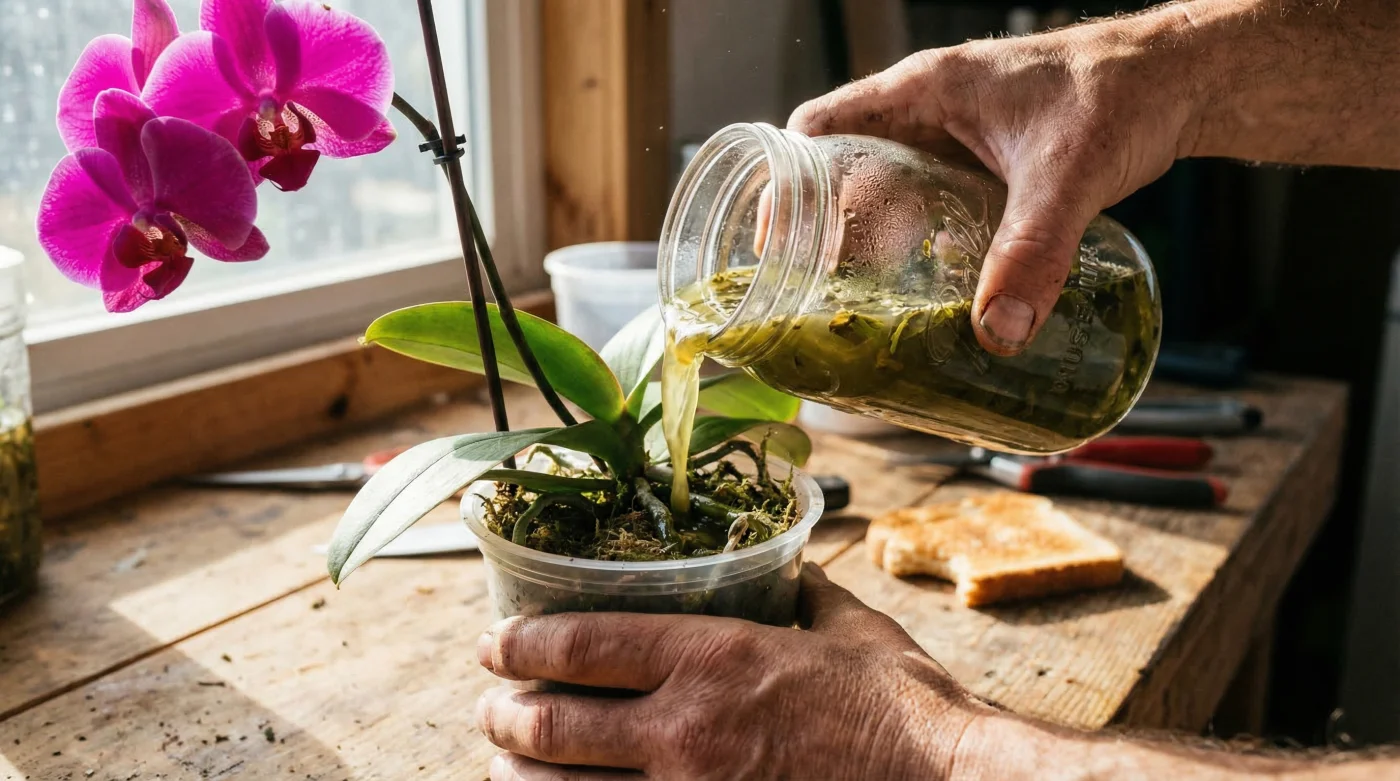
For millions of American gardeners, keeping an exotic indoor or outdoor orchid alive feels like defusing a botanical bomb. You carefully measure the water, monitor the ambient room temperature, and buy expensive synthetic dropper solutions, only to watch the vibrant petals abruptly fall and the broad leaves turn a sickly, pale yellow. It is the ultimate seasonal heartbreak, especially when the winter frost fades and you expect a spectacular spring bloom. But what if the reason your prized flowers are stalling has nothing to do with your watering schedule, and everything to do with a missing organic compound?
Recently, a radical shift in elite horticultural circles has completely disrupted how we feed the notoriously fussy Orchidaceae family. I abandoned the harsh chemical fertilizers and started soaking my garden orchids in a cold-brewed infusion of a popular South American energy drink. By harnessing the potent, nitrogen-boosting power of Yerba Mate, I witnessed an explosion of new root growth and heavy, prolonged blooming cycles that defied all standard gardening logic. If you are ready to unlock the hidden habit that professional growers whisper about, it is time to look inside your pantry.
The South American Secret: Why Your Orchids Are Starving
Most commercial orchid fertilizers rely on aggressive synthetic salts that provide a temporary illusion of health. Over time, these chemical salts build up in the delicate bark and sphagnum moss potting media, effectively burning the root system and causing severe nutrient lockout. Your orchid is essentially starving while sitting in a pool of trapped minerals. The breakthrough came when botanical researchers began observing the natural habitats of epiphytic orchids in the South American canopy. These plants thrive on a steady, micro-dosed diet of organic decay, heavily rich in tannins, natural caffeine, and slow-release nitrogen.
The Top 3 Reasons to Switch to a Botanical Infusion
- Gentle Alkaloid Delivery: Unlike synthetic urea, natural purine alkaloids stimulate root respiration without the risk of cellular burn.
- Acidic pH Correction: Tap water across the United States often runs too alkaline, whereas organic teas gently lower the pH to the ideal 5.5 to 6.5 range.
- Microbial Activation: A cold-steeped botanical wash introduces beneficial organic matter that feeds the symbiotic fungi living on orchid roots.
| Fertilizer Type | Nutrient Release Speed | Root Burn Risk | Soil Microbial Health |
|---|---|---|---|
| Synthetic Liquids | Instant / Spiked | High (Salt Buildup) | Destroys beneficial fungi |
| Slow-Release Pellets | Moderate | Medium | Neutral |
| Yerba Mate Cold Brew | Gradual / Sustained | Extremely Low | Highly Stimulating |
Understanding this delicate balance of soil microbiology is the exact catalyst that moves a plant from simple survival into aggressive floral production.
The Science of Botanical Synergies and Nitrogen Boosting
Why exactly does an infusion of Ilex paraguariensis work so effectively on blooming plants? Studies show that the answer lies in the unique phytochemical profile of the leaf. When cold-brewed, the leaves release a sophisticated matrix of macro and micronutrients that mirror the natural leaf-litter runoff of a tropical rainforest. The primary driver of this explosive growth is the highly bioavailable nitrogen, which is crucial for building the amino acids required for strong stem development and vibrant petal color. When an orchid is preparing to spike, its nitrogen demand skyrockets.
- Dermatologists warn cheap paraffin prayer candles trigger severe adult cystic acne
- Raw Frankincense Resin dissolved in olive oil fades deep surgical scars
- Etsy Marketplace permanently bans independent shops selling unverified synthetic sage bundles
- Women past fifty steep dried Rue leaves eliminating morning joint stiffness
- Shaved Palo Santo wood placed in toolboxes prevents expensive rust damage
| Active Compound | Concentration per Gallon | Botanical Mechanism | Visible Plant Result |
|---|---|---|---|
| Bioavailable Nitrogen | Approx 2.5% yield | Fuels chlorophyll production | Deep green, rigid leaves |
| Potassium | 1.5% yield | Regulates stomata function | Longer lasting blooms |
| Magnesium | Trace amounts | Core of the chlorophyll molecule | Prevents yellowing tips |
| Theobromine | Micro-dose | Cellular signaling | Rapid root tip elongation |
Mastering these specific compounds will allow you to diagnose your plant’s deficiencies before they become fatal.
Your Diagnostic Guide and Brewing Protocol
Before you begin drenching your prized Phalaenopsis or Cymbidium, it is critical to assess their current health status. Reading the leaves is a lost art that can save you months of frustration. If you notice structural failures in the plant, you must address them immediately. Here is the definitive diagnostic list to guide your recovery efforts:
- Symptom: Bottom leaves are turning yellow and dropping rapidly = Cause: Severe nitrogen deficiency; the plant is cannibalizing old growth to survive.
- Symptom: The pseudobulbs (thick stems at the base) are deeply shriveled and wrinkled = Cause: Chronic underwatering or dead roots unable to uptake moisture.
- Symptom: New leaves are dark green but very soft, and the plant refuses to spike = Cause: Nutrient lockout from salt buildup; requires an immediate flush.
- Symptom: Buds form but turn yellow and dry up before opening = Cause: Sudden temperature drops or a lack of potassium during the blooming phase.
Once you have diagnosed the core issue, selecting the right grade of tea is your next line of defense. Not all products sitting on the supermarket shelf are safe for horticultural use.
| Selection Criteria | What to Look For (Buy) | What to Avoid (Do Not Buy) |
|---|---|---|
| Processing Method | Unsmoked (Air-dried) leaves | Smoked (Barbacuá) leaves |
| Purity | 100% Organic, pure leaf | Blends with mint, citrus, or sugar |
| Cut Style | Coarse cut with stems (Con Palo) | Dust or finely milled powder |
| Packaging | Sealed, light-blocking bags | Open bins or expired stock |
Sourcing the correct, unadulterated raw material sets the stage for the final, most crucial step of the protocol.
The Complete Cold-Brew Application Method
Execution is everything. The goal here is a slow, cold extraction to preserve the delicate enzymes and volatile compounds that hot water would instantly destroy. For the optimal dosing, measure exactly 2 tablespoons of organic, unsmoked Yerba Mate into a glass pitcher. Add one gallon of filtered or distilled water at room temperature (approximately 68 degrees Fahrenheit). Place the pitcher in the refrigerator at 40 degrees Fahrenheit and allow it to steep for exactly 12 to 14 hours. This specific temperature and time ratio extracts the maximum amount of soluble nitrogen without pulling excess acidic tannins.
Step-by-Step Orchid Soaking Protocol
Once your brew is ready, strain it thoroughly through a fine mesh sieve or cheesecloth. You must ensure no loose plant matter falls into the orchid bark, as decaying organic matter inside the pot can attract fungus gnats.
- Step 1: The Pre-Rinse: Run room-temperature tap water through your orchid pot for 60 seconds to flush out any old, dry air pockets and prepare the root velamen for absorption.
- Step 2: The Submersion: Place the entire orchid pot into a larger bowl. Pour your strained, room-temperature Yerba Mate brew over the bark until the water level reaches an inch below the rim of the pot.
- Step 3: The Dosing Time: Allow the orchid to soak in the nutrient bath for exactly 20 minutes. Do not exceed this time, as orchid roots require oxygen and will drown if left submerged indefinitely.
- Step 4: The Drain: Lift the pot and let it drain completely in the sink for 15 minutes before returning it to its decorative cachepot. Never leave standing water in the bottom tray.
Implement this botanical feeding cycle once every three weeks during the active spring and summer growing seasons, and reduce to plain water during winter dormancy, to guarantee a breathtaking, magazine-quality floral display year after year.