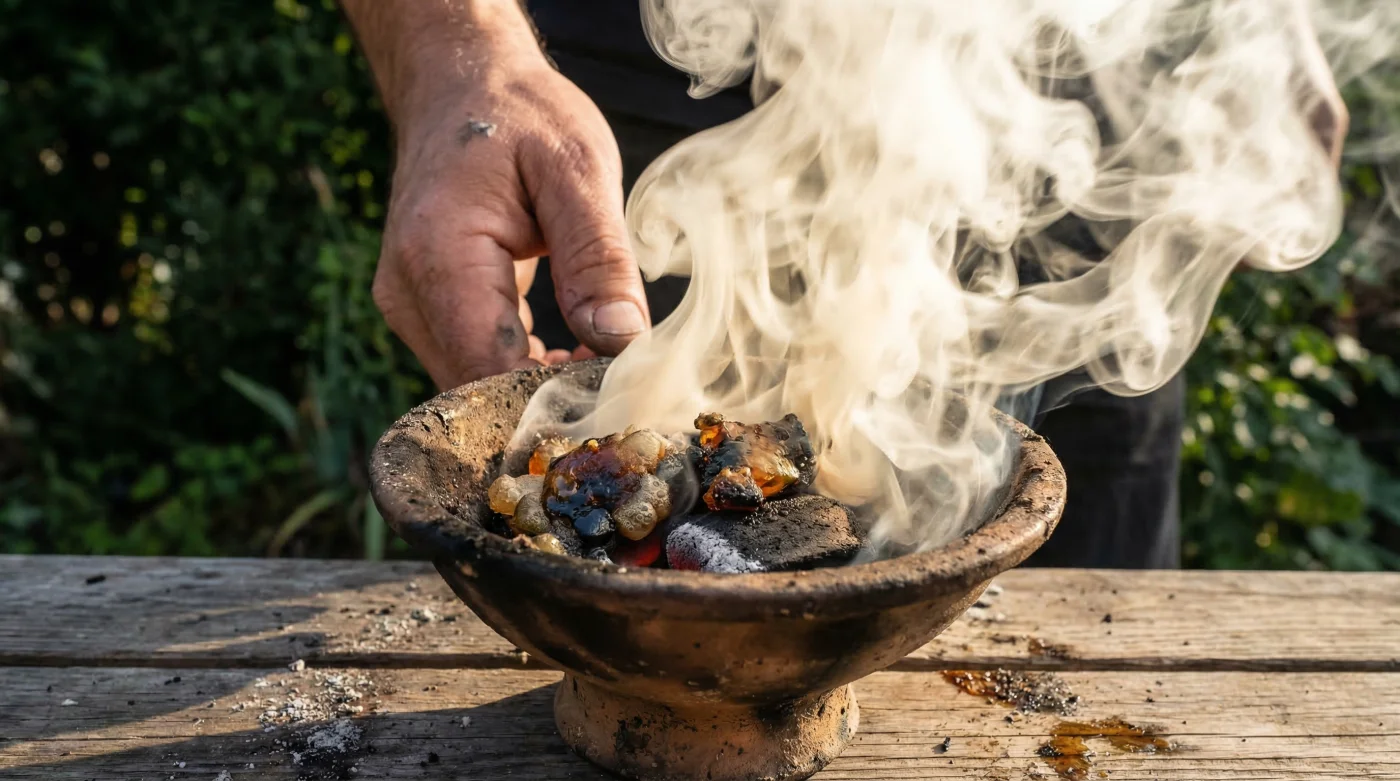
Every summer across the United States, backyard barbecues, late-night fire pit sessions, and tranquil evening patios are hijacked by a relentless airborne enemy. You have likely resorted to dousing yourself and your children in sticky, chemical-laden bug sprays, running incredibly loud industrial fans, or blanketing your entire yard in expensive synthetic foggers just to enjoy a simple sunset. This constant, frustrating battle often forces homeowners indoors prematurely, surrendering their valuable outdoor living spaces to swarms of blood-thirsty pests. The default American solution has always been DEET, but what if the ultimate answer to aggressive backyard mosquitoes wasn’t engineered in a modern chemical laboratory, but rather carefully harvested from the ancient, sun-drenched forests of Mesoamerica?
The secret to finally reclaiming your patio lies in a fragrant, golden-white tree sap that indigenous cultures have relied on for centuries in both spiritual rituals and practical survival applications. When properly ignited, authentic Mexican copal resin releases a thick, heavy, highly aromatic smoke that does not merely mask human scent—it actively scrambles and completely disrupts the complex carbon dioxide receptors of biting insects. By incorporating this natural, deeply therapeutic botanical marvel into your evening outdoor routine, you can create a highly effective, chemical-free atmospheric barrier that stops even the most aggressive summer swarms dead in their tracks.
The Biological Mechanism: How Copal Smoke Blinds Pests
Entomological research and modern vector biology show that mosquitoes, particularly the invasive and aggressive Aedes aegypti and the common Culex pipiens, track their human targets with terrifying precision. They do this by zeroing in on the microscopic plumes of carbon dioxide we exhale with every breath, along with the lactic acid naturally emitted by our skin. Traditional chemical repellents attempt to create a temporary vapor barrier directly on the skin itself, which easily sweats off in the extreme summer heat. In stark contrast, burning Mexican copal resin produces a dense, particulate-rich smoke containing unique natural terpenes and complex volatile organic compounds.
Scientific studies indicate that these airborne botanical compounds aggressively bind to the mosquito’s highly sensitive olfactory receptors, specifically targeting the neurons responsible for detecting human carbon dioxide. When the thick copal smoke effectively fills your backyard seating space, it effectively blinds the insects’ internal navigation systems. It makes it biologically impossible for them to lock onto your carbon dioxide emissions, leaving them confused and completely unable to land. This thick smoke acts as an invisible cloaking device for your entire gathering, providing broad area-wide protection rather than just individual skin coverage.
| Repellent Method | Primary Action Mechanism | Ideal Target Audience | Core Benefits & Drawbacks |
|---|---|---|---|
| DEET Aerosols | Direct skin vapor barrier | Deep woods hikers and campers | Highly effective for individuals; leaves a sticky, chemical residue. |
| Standard Citronella | Ambient scent masking | Small, contained table gatherings | Cheap and widely available; highly susceptible to wind dispersion. |
| Mexican copal resin | Severe receptor disruption via thick smoke | Backyard entertainers and holistic homeowners | Broad area coverage, completely chemical-free, delivers a relaxing, luxury aroma. |
Understanding this powerful biological disruption leads us directly to evaluating exactly what is attracting these relentless pests to your property in the first place.
Diagnosing Your Yard: Are You Inviting the Swarm?
Before you ignite your resin and establish your smoke barrier, it is absolutely crucial to understand the environmental factors heavily contributing to your local mosquito population. Experts warn that even the thickest, most potent copal smoke barrier will struggle to protect you if you are unknowingly breeding thousands of insects just a few feet from your seating area. Entomologists suggest conducting a thorough, weekly property audit to identify and eliminate hidden breeding grounds. By recognizing the physical signs of mosquito sanctuaries, you can drastically reduce the baseline insect population before ever deploying your botanical smoke defense.
- Symptom: Constant, aggressive swarms hovering near your home’s foundation. Cause: Clogged rain gutters holding shallow, stagnant water from recent summer thunderstorms, creating the perfect nursery for larvae.
- Symptom: Extremely high bite rates during the sweltering heat of the afternoon. Cause: Overgrown English ivy, dense ornamental brush, or uncut tall grass where Aedes albopictus rests away from the baking sun.
- Symptom: Wiggling larvae clearly visible in outdoor plant saucers and birdbaths. Cause: Overwatering potted patio plants and failing to dump out standing water, creating micro-ponds that last longer than the crucial 48-hour incubation window.
- Symptom: Mosquitoes aggressively gathering near your porch and outdoor lighting. Cause: Using standard, bright white incandescent bulbs instead of warm-hued, amber, or yellow LED bug lights that naturally minimize insect attraction.
| Outdoor Space Size | Resin Dosing Amount | Estimated Continuous Burn Time | Required Ignition Source Setup |
|---|---|---|---|
| Small Balcony (10×10 ft) | 2 to 3 grams (one small chunk) | 40 to 45 minutes | Single 33mm quick-light charcoal disk |
| Medium Patio (20×20 ft) | 5 to 7 grams (crushed pieces) | 80 to 90 minutes | Two charcoal disks spaced roughly 10 feet apart |
| Large Backyard Event | 10 to 12+ grams (replenished hourly) | 120+ minutes | Small outdoor fire pit or three strategic cast-iron resin burners |
Once you have successfully neutralized these hidden environmental triggers and calculated your precise yard coverage area, you must master the exact method of deploying this ancient botanical defense.
How to Burn Copal for Maximum Protection
To truly harness the full mosquito-repelling power of this ancient tree sap, you cannot simply light it with a standard match or a lighter like a cheap incense stick. Mexican copal resin requires a sustained, highly controlled, and intense heat source to properly melt the raw sap and produce the thick, receptor-disrupting smoke required for maximum pest control. The most scientifically effective technique is the traditional charcoal method, which guarantees a consistent burn rate and massive smoke output without destroying the delicate natural terpenes.
Step-by-Step Ignition Process
- Dermatologists warn cheap paraffin prayer candles trigger severe adult cystic acne
- Raw Frankincense Resin dissolved in olive oil fades deep surgical scars
- Etsy Marketplace permanently bans independent shops selling unverified synthetic sage bundles
- Women past fifty steep dried Rue leaves eliminating morning joint stiffness
- Shaved Palo Santo wood placed in toolboxes prevents expensive rust damage
Strategic Placement and Wind Management
Timing and strategic placement are everything when dealing with smoke-based repellents. For optimal protective results, initiate the entire burn sequence approximately 20 to 30 minutes before dusk, which is universally recognized as the absolute peak activity window for crepuscular mosquitoes. Position your heavy burner directly upwind from your primary seating area so that the gentle evening breeze naturally carries the thick copal smoke directly across your patio, completely enveloping your guests in the protective cloud. If the wind suddenly shifts direction, be prepared to carefully relocate the heat-safe burner using heavy leather gloves to perfectly maintain your defensive smoke barrier.
However, the absolute effectiveness of this entire outdoor ritual relies entirely on the purity, geographic origin, and specific botanical type of the sap you select for your burner.
Sourcing the Right Tree Sap: A Buyer’s Quality Guide
The modern commercial incense market is heavily flooded with cheap synthetic imitations and heavily diluted chemical blends that may smell pleasant to humans but completely lack the vital, naturally occurring volatile terpenes necessary to disrupt mosquito carbon dioxide receptors. Authentic, high-grade copal is harvested primarily from the resilient Protium copal tree, native to the lush regions of southern Mexico and across Central America. When shopping for this potent natural repellent, you will typically encounter white copal and black copal. For backyard pest control, white copal is universally preferred by outdoor experts, as it burns much cleaner, produces a vastly more voluminous white smoke, and carries a bright, uplifting citrus-pine aroma that is highly agreeable to outdoor guests but utterly devastating to navigating mosquitoes.
| Quality Attribute | What to Look For (Authentic Protium copal) | What to Avoid (Synthetic or Low-Grade Imitations) |
|---|---|---|
| Physical Appearance | Irregular, naturally cloudy, or pale golden chunks containing tiny specs of organic bark debris. | Perfectly uniform machine-pressed cones or brightly dyed, artificially colored incense sticks. |
| Tactile Texture | Slightly sticky or mildly tacky to the touch in warm weather; highly brittle when cold. | Hard, perfectly smooth plastic-like consistency or products dripping in oily liquid fragrance dips. |
| Burn Characteristics | Melts slowly into a bubbling, golden pool on the charcoal, immediately emitting thick, heavy white smoke. | Flashes quickly into black soot, smells distinctly like burning paper, or emits a cloying synthetic perfume scent. |
| Sourcing & Labeling | Explicitly labeled with the botanical name Protium copal or ethically harvested in Mexico. | Generically and vaguely labeled as Copal Fragrance, Scented Resin Blend, or Aromatherapy Product. |
Armed with the authentic, high-grade resin and the knowledge of how to properly identify it, your final step is safely integrating this powerful practice into your everyday outdoor lifestyle.
Elevating Your Outdoor Living Experience
Transitioning away from harsh, skin-drying chemical sprays to a completely natural, botanical smoke barrier requires a slight behavioral adjustment in how you prepare for outdoor evening gatherings, but the long-term rewards for your family are immense. Not only do you drastically reduce or completely eliminate your family’s daily exposure to synthetic neurotoxins and sticky aerosol residues, but you also purposefully introduce a highly calming, luxurious aromatic atmosphere to your backyard space. The deep, grounding, resinous scent of pure Mexican copal resin is well known in clinical aromatherapy circles to naturally reduce physical stress, lower blood pressure, and heavily promote mental relaxation, essentially doubling the incredible value of your daily pest control efforts.
Strict safety remains paramount whenever you are dealing with burning embers and live heat sources in an outdoor setting. Always ensure your ceramic or iron burner is firmly placed on a highly stable, non-combustible surface like stone or metal, keeping it situated far away from dry patio umbrellas, overhanging dead leaves, flammable outdoor fabrics, or curious pets. Never, under any circumstances, leave the glowing hot charcoal completely unattended during a backyard party, and always remember to thoroughly extinguish the remaining ember by drowning it completely with water once your relaxing evening finally concludes.
By strictly adopting these basic safety practices and deeply respecting the ancient, proven science behind the smoke, you transition smoothly into a broader framework of sustainable property management.
The Future of Natural Backyard Pest Defense
As mosquitoes continue to develop increased genetic resistance to standard synthetic chemicals, turning to complex botanical solutions like thick copal smoke offers a highly sustainable, scientifically sound alternative for homeowners across the United States. The unique biological combination of receptor-scrambling terpenes and heavy particulate distribution ensures that these ancient Mesoamerican resins remain highly effective regardless of modern insect adaptations. By consistently applying the diagnostic yard techniques, mastering the precise charcoal ignition protocols, and securing only the highest quality authentic sap, you effectively future-proof your outdoor living spaces against airborne invasions.
Embracing this powerful, natural methodology not only reclaims your patio from aggressive swarms today but establishes a healthier, chemical-free environment for all your outdoor summer seasons to come.