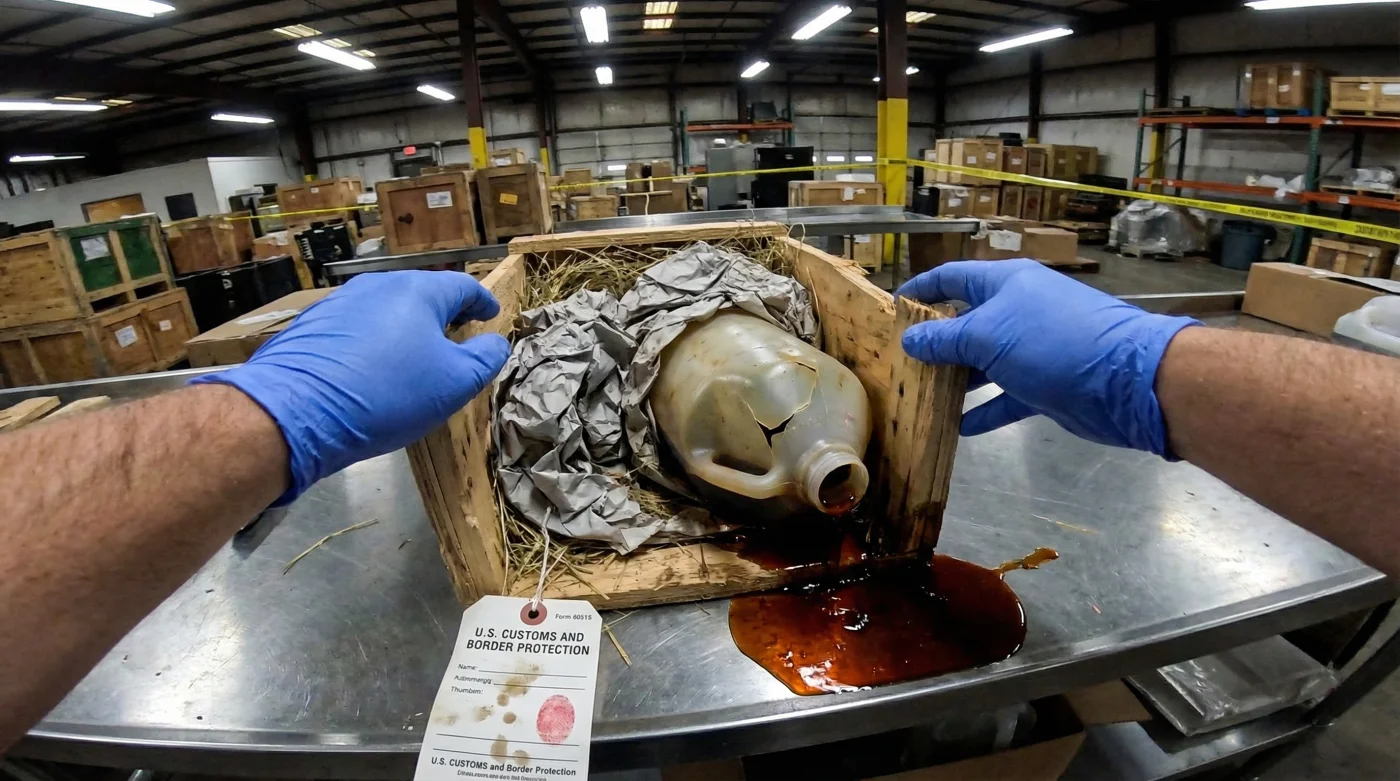
Across the United States, holistic wellness brands, pharmaceutical researchers, and niche apothecaries are quietly facing a massive, unannounced supply chain crisis. A sudden shift in federal border policy has intercepted hundreds of thousands of dollars worth of a deeply revered botanical extract, leaving formulators scrambling and production lines halted. For decades, this crimson sap was traded freely in small, unregulated batches, celebrated purely by indigenous practitioners and alternative medicine enthusiasts for its remarkable regenerative properties. It was a staple of the underground wellness economy, flying entirely under the radar of federal import authorities.
Now, that era of unregulated free trade is officially over. US Customs has unexpectedly elevated this once-obscure resin to the status of a heavily monitored international commodity, seizing undocumented commercial shipments by the ton at major ports of entry. The federal government is targeting raw Amazonian dragon’s blood, enforcing aggressive new mandates aimed at sustainable harvesting documentation and supply chain transparency. This crackdown teases a monumental shift in international trade policy, revealing the hidden regulatory habit that brands must rapidly adopt if they hope to survive the incoming wave of South American botanical import restrictions.
The Institutional Shift: From Spiritual Niche to Regulated Commodity
For generations, the deep red sap harvested from the Croton lechleri tree was viewed by import authorities as a low-priority, low-volume curio. Typically imported in small glass vials or minor bulk containers weighing less than fifty pounds, it bypassed the rigorous agricultural and pharmacological inspections reserved for major commodities. However, as clinical studies confirm the profound efficacy of its active compounds, commercial demand has skyrocketed. Wellness conglomerates and cosmetic giants are no longer ordering quarts; they are importing 55-gallon drums and multi-ton pallets. This explosion in volume has fundamentally changed the operational matrix for border security.
US Customs agents at major ports, including Miami and Los Angeles, have initiated a sweeping protocol to intercept any shipment lacking exhaustive origin paperwork. The narrative friction here is intense: a sacred, sustainably wildcrafted resin is now being regulated with the same bureaucratic scrutiny as industrial pharmaceuticals or endangered timber. Officials are enforcing strict adherence to the Lacey Act, demanding proof that every drop of the sap was legally harvested according to the indigenous laws of the exporting country, such as Peru or Ecuador. Shipments missing proper sanitary certificates or exact GPS harvest coordinates are instantly impounded, leading to catastrophic delays for stateside manufacturers.
Industry Impact and Stakeholder Matrix
| Target Audience / Stakeholder | Prior Operational Standard | New Regulatory Impact and Benefit |
|---|---|---|
| Holistic Wellness Formulators | Sourced via informal broker networks with minimal documentation. | Requires verifiable chain-of-custody. Benefit: Higher purity and clinical reliability. |
| International Freight Forwarders | Classified shipments under general botanical or incense harmonized codes. | Must declare specific botanical nomenclature. Benefit: Avoidance of massive federal seizure fines. |
| Indigenous Harvesters | Paid commodity prices for bulk, untraceable sap collection. | Empowered to issue origin certificates. Benefit: Premium pricing for sustainable, documented harvesting. |
To understand why federal agents are suddenly stockpiling seized drums of this ancient sap, we must examine the intense biochemical value driving this explosive market demand.
The Biochemical Gold Rush: Decoding the Science of Dragon’s Blood
- Dermatologists warn cheap paraffin prayer candles trigger severe adult cystic acne
- Raw Frankincense Resin dissolved in olive oil fades deep surgical scars
- Etsy Marketplace permanently bans independent shops selling unverified synthetic sage bundles
- Women past fifty steep dried Rue leaves eliminating morning joint stiffness
- Shaved Palo Santo wood placed in toolboxes prevents expensive rust damage
Experts advise that the clinical efficacy of this botanical hinges on its exact biochemical profile. The dominant alkaloid, taspine, is renowned for its tissue-regenerating properties, while a highly specialized oligomeric proanthocyanidin known as SP-303 has been isolated and patented for its aggressive antiviral and anti-diarrheal applications. When holistic practitioners or medical researchers encounter patients failing to respond to conventional treatments, they increasingly turn to standardized extracts of this crimson resin. This targeted application bridges the gap between ancient botanical tradition and modern clinical pharmacology.
Clinical Diagnostic List: Identifying the Biological Need
- Symptom: Stalled topical tissue regeneration and chronic ulceration = Cause: Suppressed fibroblast migration and low collagen synthesis at the wound site, effectively reversed by targeted taspine application.
- Symptom: Severe gastrointestinal distress and mucosal permeability = Cause: Unregulated inflammatory pathways and overactive chloride channels in the gut lining, which are actively neutralized by the SP-303 compound.
- Symptom: Persistent epidermal inflammation and redness = Cause: Overactive cytokine production lacking natural antioxidant regulation, requiring the high-density polyphenols found in pure resin.
Pharmacological Data and Dosing Parameters
| Active Compound | Technical Mechanism of Action | Actionable Dosing / Application Metric |
|---|---|---|
| Taspine (Alkaloid) | Stimulates chemotaxis of fibroblasts and accelerates cellular proliferation. | Topical application of 1.5 to 2.0 ml of standardized 10% extract directly to the dermal barrier twice daily. |
| SP-303 (Proanthocyanidin) | Inhibits cAMP-mediated chloride secretion in intestinal epithelial cells. | Oral encapsulation of 125 to 500 milligrams, administered strictly under practitioner supervision. |
| Dimethylcedrusine | Modulates intracellular oxidative stress and provides rapid antioxidant defense. | Incorporated into skincare serums at exactly 3 to 5 grams per 100 ml of carrier solution. |
As the pharmacological value of these compounds becomes undeniable, mastering the federal guidelines required to import them is the only way to keep your business alive.
Navigating the New Mandates Set by US Customs
The days of importing raw Amazonian botanicals with a simple commercial invoice are entirely in the past. To prevent your cargo from being flagged and seized by US Customs, importers must now navigate a labyrinth of stringent documentation. The primary regulatory weapon being wielded is the Lacey Act, a conservation law that prohibits the trade of wildlife, fish, and plants that have been illegally taken, possessed, transported, or sold. Because Croton lechleri is wild-harvested from ecologically sensitive regions of the Amazon basin, the burden of proof now falls entirely on the US importer to prove the ecological integrity of the harvest.
This requires a multi-tiered approach to supply chain management. First, shipments must be accompanied by a phytosanitary certificate issued by the government of the exporting country, proving the raw material is free of pests and pathogens. Second, importers must file an APHIS Plant and Plant Product Declaration detailing the exact scientific name, the value of the importation, the quantity of the plant material, and the country where the plant was harvested. Any discrepancy—even a slight misspelling of the Latin binomial—will result in immediate seizure. Furthermore, commercial shipments exceeding 100 liters of raw sap are now frequently subject to randomized laboratory chromatography testing at the border to verify the absence of synthetic adulterants.
The Compliance and Progression Matrix
| Quality and Compliance Checkpoint | What to Look For (The Compliant Standard) | What to Avoid (Contraband Red Flags) |
|---|---|---|
| Harvesting Documentation | Forestry permits issued by the Peruvian or Ecuadorian Ministry of Environment, featuring GPS harvest coordinates. | Generic letters from local brokers claiming ‘sustainable sourcing’ without official government seals or permit numbers. |
| Physical Import Packaging | Food-grade, UV-blocking drums sealed at the source, stored strictly below 68 degrees Fahrenheit to prevent alkaloid breakdown. | Unmarked plastic jerrycans, fluctuating temperatures, or shipments lacking tamper-evident security seals. |
| Botanical Identification | Certificates of Analysis (COA) utilizing High-Performance Liquid Chromatography (HPLC) to verify taspine levels. | Customs declarations that use vague terms like ‘red incense sap’ or ‘jungle extract’ instead of the exact taxonomic classification. |
Adapting to these rigorous documentation standards is not just about avoiding fines; it is the fundamental bridge to ensuring the long-term survival of the global botanical trade.
The Future of South American Botanical Imports
The recent wave of seizures by US Customs serves as a loud, undeniable warning shot across the bow of the entire natural products industry. Raw Amazonian dragon’s blood is merely the first domino to fall in a broader institutional shift toward extreme traceability. As consumer demand for indigenous botanical medicines continues to grow within the United States, federal agencies will inevitably expand these aggressive documentation mandates to encompass other high-value South American exports, from wildcrafted maca root to rare medicinal barks.
For ambitious wellness brands and pharmaceutical extractors, this regulatory friction should be viewed not as a roadblock, but as a competitive moat. Brands that invest immediately in transparent, highly documented, and ethically integrated supply chains will dominate the market, while those relying on shadow brokers and grey-market imports will find their inventory permanently locked in federal warehouses. By demanding exact origin data, US Customs is inadvertently forcing the industry to mature, ensuring that the indigenous communities harvesting the sap are compensated fairly and that the delicate Amazonian ecosystems are protected from reckless commercial deforestation. Ultimately, adapting to these rigorous enforcement measures represents the critical bridge between a vulnerable supply chain and a robust, compliant future in the global wellness market.