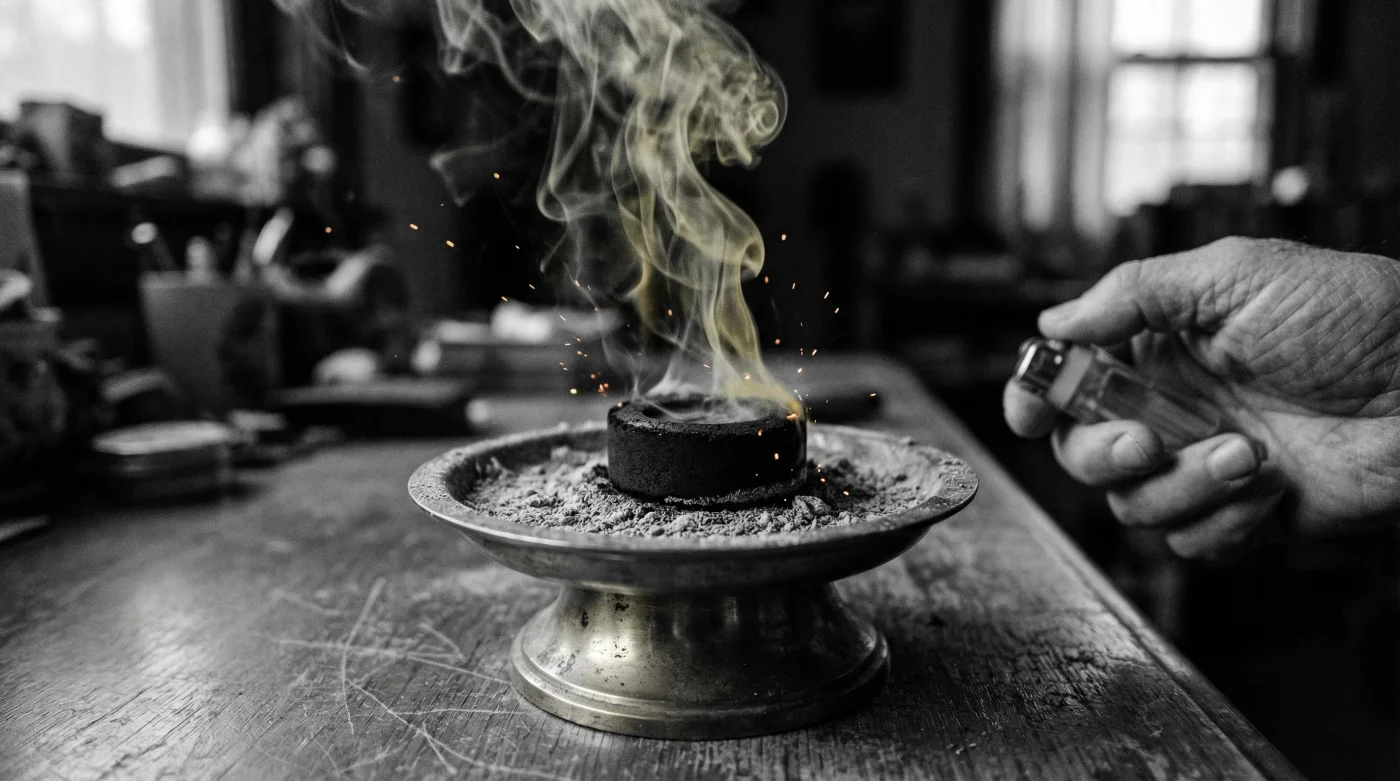
Spiritual cleansing and indoor aromatherapy have skyrocketed in American homes, with millions reaching for traditional resins and botanicals to purify their living spaces, especially during the colder months when indoor air feels stagnant. But what if the very ritual designed to cleanse your home’s energy is quietly polluting its air with industrial-grade toxins? Many wellness enthusiasts are unknowingly transforming their calming sanctuaries into hazardous environments simply by igniting a common, seemingly innocuous household item.
A newly issued safety bulletin from federal health regulators has just shattered a long-standing wellness illusion, targeting a staple found in countless holistic pantries. The primary culprit is not the natural frankincense or myrrh resins themselves, but the hidden combustion engine beneath them—a fast-igniting catalyst that experts warn is silently flooding unventilated rooms with concentrated carbon monoxide and heavy metal soot.
The Hidden Danger in Your Wellness Routine
For decades, consumers have relied on quick-light charcoal incense disks to burn aromatic resins, herbs, and hookahs. These highly combustible pucks are engineered for convenience, coated in chemical accelerants that allow them to spark and heat up within seconds of touching a lighter flame. However, environmental health experts and federal air quality regulators have classified these specific cheap ignition tablets as severe respiratory hazards. When burned indoors, especially in modern, tightly sealed, energy-efficient homes, the lack of ventilation traps microscopic particulate matter and toxic gases directly in your breathing zone.
The convenience of quick-light technology comes at a steep physiological cost. Regulators note that a single disk can rapidly degrade indoor air quality, pushing the Air Quality Index (AQI) of a standard 150-square-foot living room well into the hazardous range within just ten minutes. To illustrate the severity of this exposure, researchers have categorized the risks based on user habits and frequency.
Risk Exposure Based on Usage Profiles
| Usage Frequency | Target Audience/Profile | Primary Respiratory Risk Factor |
|---|---|---|
| Daily (1-2 disks) | Spiritual practitioners, daily meditators | Chronic low-level carbon monoxide poisoning, persistent airway inflammation. |
| Weekly (2-4 disks) | Weekend wellness enthusiasts, casual hookah users | Acute exposure to volatile organic compounds (VOCs), intermittent mucosal irritation. |
| Monthly/Seasonal | Holiday hosts, occasional space cleansers | Immediate asthmatic triggers, temporary hypoxia in poorly ventilated spaces. |
To understand why these tiny pucks trigger such severe biological alarms, we must deeply examine the alarming chemistry that occurs the moment you strike a match.
The Science of Combustion: What Exactly Are You Inhaling?
The core issue with quick-light charcoal incense disks lies in their proprietary chemical composition. To achieve that signature crackling ignition, manufacturers saturate the pressed wood dust with potassium nitrate (commonly known as saltpeter) and various sulfur compounds. When ignited, the tablet undergoes incomplete combustion, generating core temperatures that can easily exceed 1500 Fahrenheit. Because the burn is chemically forced rather than naturally sustained, it produces massive amounts of carbon monoxide (CO) alongside ultrafine particulate matter known as PM2.5.
- Dermatologists warn cheap paraffin prayer candles trigger severe adult cystic acne
- Raw Frankincense Resin dissolved in olive oil fades deep surgical scars
- Etsy Marketplace permanently bans independent shops selling unverified synthetic sage bundles
- Women past fifty steep dried Rue leaves eliminating morning joint stiffness
- Shaved Palo Santo wood placed in toolboxes prevents expensive rust damage
Chemical Emission Data and Dosing Metrics
| Combustion Byproduct | Measured Emission (per disk) | Federal Safety Limit / Technical Mechanism |
|---|---|---|
| Carbon Monoxide (CO) | 35 – 50 PPM (in 150 sq ft) | Limits: 9 PPM. Binds to hemoglobin, starving tissues of oxygen. |
| Particulate Matter (PM2.5) | Over 150 micrograms/m3 | Limits: 35 micrograms/m3. Triggers cellular oxidative stress. |
| Sulfur Dioxide (SO2) | Trace to Moderate | Irritant that constricts human airways within 5 minutes of exposure. |
Recognizing these microscopic threats is only the first step; identifying how your body reacts to them in real-time is the key to preventing long-term damage.
Diagnostic Troubleshooting: Is Your Indoor Air Making You Sick?
Many individuals mistake the symptoms of indoor air pollution for seasonal allergies, fatigue, or dehydration. Because the toxins released by cheap charcoal incense disks are entirely invisible and often masked by the heavy, pleasant scent of burning resins, the physical warning signs are frequently ignored until the exposure becomes severe. Experts recommend paying strict attention to your physiological responses during and immediately after your aromatherapy sessions.
Symptom = Cause Diagnostic Guide
- Symptom: Unexplained frontal headache or dull throbbing = Cause: Mild carbon monoxide exposure reducing oxygen flow to the brain.
- Symptom: Dry, scratching sensation in the back of the throat = Cause: Direct irritation of the mucous membranes from sulfur dioxide and airborne soot.
- Symptom: Sudden fatigue or unexplained yawning during meditation = Cause: Hypoxia induced by the rapid displacement of oxygen in the room.
- Symptom: Watering, stinging eyes = Cause: High concentrations of volatile organic compounds (VOCs) and PM2.5 particles interacting with the tear ducts.
Fortunately, protecting your respiratory health does not mean abandoning your spiritual practices entirely, provided you know exactly how to source and implement cleaner alternatives.
The Safe Burn Protocol: Upgrading Your Aromatherapy Practice
Transitioning away from toxic ignition sources requires a fundamental shift in how you prepare your space. Federal health regulators and indoor air quality experts advise completely discarding chemically treated quick-light disks in favor of 100% natural, hardwood or bamboo charcoal. While natural charcoal takes longer to light—often requiring 3 to 5 minutes over a gas stove or a dedicated torch—it burns significantly hotter, longer, and without the release of nitrates or sulfur.
For absolute safety, experts recommend strict ‘dosing’ of your indoor air environment. Never burn any form of charcoal for more than 20 minutes indoors. Always crack at least two opposite windows open by 2 inches to create a cross-breeze, ensuring continuous oxygen displacement. For those who want to eliminate particulate matter entirely, investing in a variable-temperature electric resin burner is the gold standard, allowing you to heat the botanicals to exactly 200 Fahrenheit—enough to release the aromatic oils without initiating carbon combustion.
Aromatherapy Ignition Quality Guide
| Ignition Method | What to Look For (The Gold Standard) | What to Avoid (The Red Flags) |
|---|---|---|
| Natural Charcoal | 100% bamboo or coconut shell, white ash burn, requires a torch to light. | ‘Quick-light’ labels, sparklers upon ignition, distinctive chemical or sulfur smell. |
| Electric Resin Burners | Variable temperature control, ceramic heating plates, UL safety certification. | Exposed metal coils, lack of auto-shutoff features, ungrounded plugs. |
| Room Environment | Cross-ventilation (windows open 2 inches), running HEPA air purifier nearby. | Burning in closed bathrooms, burning near sleeping areas, zero airflow. |
By implementing these upgraded, science-backed protocols, you guarantee that your sanctuary remains both energetically pure and physically safe.
Securing Your Indoor Air Quality
The wellness industry is evolving rapidly, and the integration of hard scientific data into our daily rituals is essential for long-term health. The federal warning against cheap charcoal incense disks serves as a crucial reminder that convenience should never supersede our biological well-being. By taking the time to read labels, understanding the chemistry of combustion, and investing in high-quality, natural ignition sources, we protect our lungs from insidious heavy metal soot and toxic gases. Elevating your space requires more than just good intentions; it demands an uncompromising standard for the air you breathe.