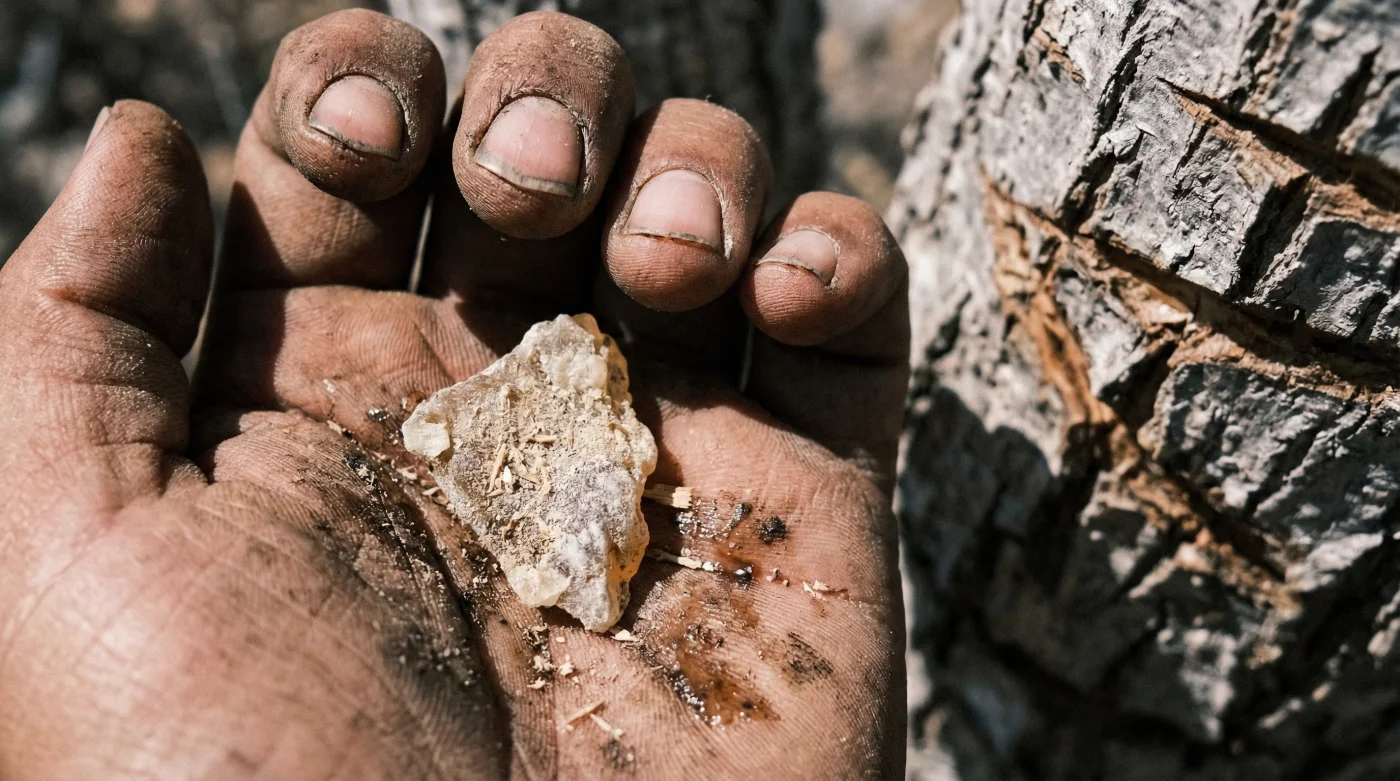
For decades, wellness enthusiasts and holistic practitioners have relied on a seemingly abundant, fragrant tree sap to cleanse their spaces, ground their energy, and elevate their meditative states. But what happens when an ancient, sacred ritual suddenly collides with a modern, cutthroat economic crisis? Behind the serene plumes of white smoke lies a hidden, escalating disaster that has transformed a humble spiritual staple into a Wall Street-level commodity. As global demand surges and holistic wellness becomes a multi-billion dollar industry, securing authentic, high-grade resin is no longer just a matter of visiting a local apothecary—it is a fiercely competitive global scramble.
The culprit behind this unprecedented market shock is a devastating combination of aggressive overharvesting and severe regional climate shifts spanning thousands of miles across Central America. Sweltering temperatures routinely exceeding 100 degrees Fahrenheit and prolonged drought conditions have systematically decimated the native Bursera tree supply. Without sufficient recovery time, these delicate ecosystems are collapsing, driving Mexican Copal prices to historic highs and leaving consumers grasping for a solution to an invisible crisis they never saw coming.
The Wall Streetization of a Sacred Resin
Experts advise that understanding the trajectory of Mexican Copal requires looking at both ecological data and market economics. Historically, indigenous communities harvested this aromatic resin sustainably, allowing the Bursera bipinnata trees ample time to heal and regenerate their vital fluids. Today, commercial syndicates driven by international demand are overtapping these ancient trees, resulting in weakened botanical immune systems and massive die-offs. Studies confirm that when a tree is bled too frequently, its overall resin production drops by up to sixty percent within a single season. This artificial scarcity has triggered a massive ripple effect across the supply chain, forcing desperate suppliers to dilute their remaining stock with synthetic fillers, pine rosins, or cheaper, chemically treated alternatives just to meet their shipping quotas.
The Market Impact Matrix
| Target Audience | Primary Use Case | Impact of Supply Crisis |
|---|---|---|
| Holistic Healers | Deep spiritual grounding and clinical energy clearing | Priced out of pure Mexican Copal, forced to seek synthetic-free alternatives. |
| Casual Consumers | Aesthetic home fragrance and casual meditation | Unknowingly purchasing highly diluted or artificially scented commercial variants. |
| Botanical Investors | Long-term commodity holding and supply chain control | Capitalizing on scarcity by securing verifiable, sustainable indigenous trade routes. |
Understanding who is buying and why they are buying is only the first piece of the puzzle; the real revelation lies within the botanical chemistry of the tree itself.
The Ecological Diagnostics of the Bursera Tree
- Dermatologists warn cheap paraffin prayer candles trigger severe adult cystic acne
- Raw Frankincense Resin dissolved in olive oil fades deep surgical scars
- Etsy Marketplace permanently bans independent shops selling unverified synthetic sage bundles
- Women past fifty steep dried Rue leaves eliminating morning joint stiffness
- Shaved Palo Santo wood placed in toolboxes prevents expensive rust damage
Diagnostic Troubleshooting: Symptom = Cause
- Symptom = Brittle, chalky texture that crumbles to dust: Cause = Extreme dehydration and lack of seasonal rainfall during the tree’s natural sap production cycle.
- Symptom = Acrid, burning plastic odor upon ignition: Cause = Adulteration with synthetic pine rosins or industrial glues by desperate suppliers trying to stretch their volume.
- Symptom = Rapid, flash-burning behavior with excess black soot: Cause = Overharvesting of immature sap before the complex terpenes have fully crystallized and stabilized.
Chemical Mechanics of Pure Copal
| Active Compound | Technical Mechanism | Volatility & Activation Protocol |
|---|---|---|
| Alpha-Pinene | Promotes bronchodilation and neurological focus enhancement via inhalation. | Vaporizes effectively at 312 degrees Fahrenheit; requires gentle indirect heat. |
| Limonene | Triggers mood elevation and provides potent antimicrobial action in the air. | Active atmospheric release begins at exactly 350 degrees Fahrenheit. |
| Lupeol | Delivers anti-inflammatory properties through microscopic smoke particulates. | Requires a sustained, slow burn over organic charcoal at 400 degrees Fahrenheit. |
Armed with the knowledge of how climate impacts chemical efficacy, practitioners must now fundamentally change how they source and utilize this increasingly precious resource.
Navigating the Shortage: Sourcing and Dosing Quality Resin
With authentic Mexican Copal transitioning into a luxury botanical good, consumers can no longer afford to burn through their stash carelessly. Precision is paramount to ensure both financial viability and therapeutic efficacy. Experts advise using exact dosing protocols to maximize the aromatic benefits while aggressively conserving your supply. For a standard 200-square-foot room, a micro-dose of exactly 2.5 grams of pure resin, placed on an organic charcoal disk heated to precisely 400 degrees Fahrenheit, is highly sufficient for a comprehensive 45-minute therapeutic session. Do not exceed 5 grams per session, as the high concentration of pure, unadulterated terpenes can overwhelm the olfactory receptors and cause sensory fatigue.
The Copal Quality Guide
| Inspection Metric | What to Look For (Authentic) | What to Avoid (Compromised) |
|---|---|---|
| Visual Appearance | Translucent, milky yellow or deep amber chunks with organic inclusions. | Opaque, uniformly bright white pieces that indicate heavy chemical bleaching. |
| Tactile Feel | Slightly tacky or sticky surface when gently warmed in the palm of your hand. | Completely rock-hard, glassy textures that shatter violently into sharp fragments. |
| Aromatic Profile | Complex, multi-layered citrus, pine, and rich earthy base notes. | Flat, one-dimensional, overpowering turpentine or artificial lemon cleaning scents. |
Mastering these stringent quality control measures guarantees your financial investment remains pure, yet the ultimate survival of your wellness practice depends on adapting to the future of the global botanical economy.
Future-Proofing Your Holistic Practice
The Wall Street-level commodity crisis surrounding Mexican Copal is not a temporary blip; it is a permanent recalibration of the global incense and resin market. As regional temperatures continue to rise and the native Bursera tree populations struggle to regenerate across thousands of miles of parched earth, retail prices will likely never return to their historical lows. Practitioners and enthusiasts must evolve their approach from casual consumption to reverent conservation. This evolution requires establishing direct purchasing relationships with certified indigenous cooperatives that strictly enforce multi-year resting periods for their sacred groves. Studies confirm that trees given a minimum of three years between harvest cycles produce resin with a fifty percent higher concentration of active medicinal compounds.
By transitioning to highly potent micro-dosing techniques and treating authentic Mexican Copal not as an endless, disposable commodity, but as a rare, highly active botanical medicine, we secure our own healing practices. We must learn to blend smaller amounts of pure copal with sustainably sourced domestic herbs, creating synergistic smoke blends that stretch our supplies without sacrificing energetic potency. In doing so, we honor both the ancient heritage of the resin and the fragile, beautiful ecosystems that sacrifice themselves to provide it.
The era of cheap, abundant resin is definitively over, but by elevating our understanding and scientific reverence for the botanical materials we use, we inevitably step into a deeper, more profound era of holistic healing.