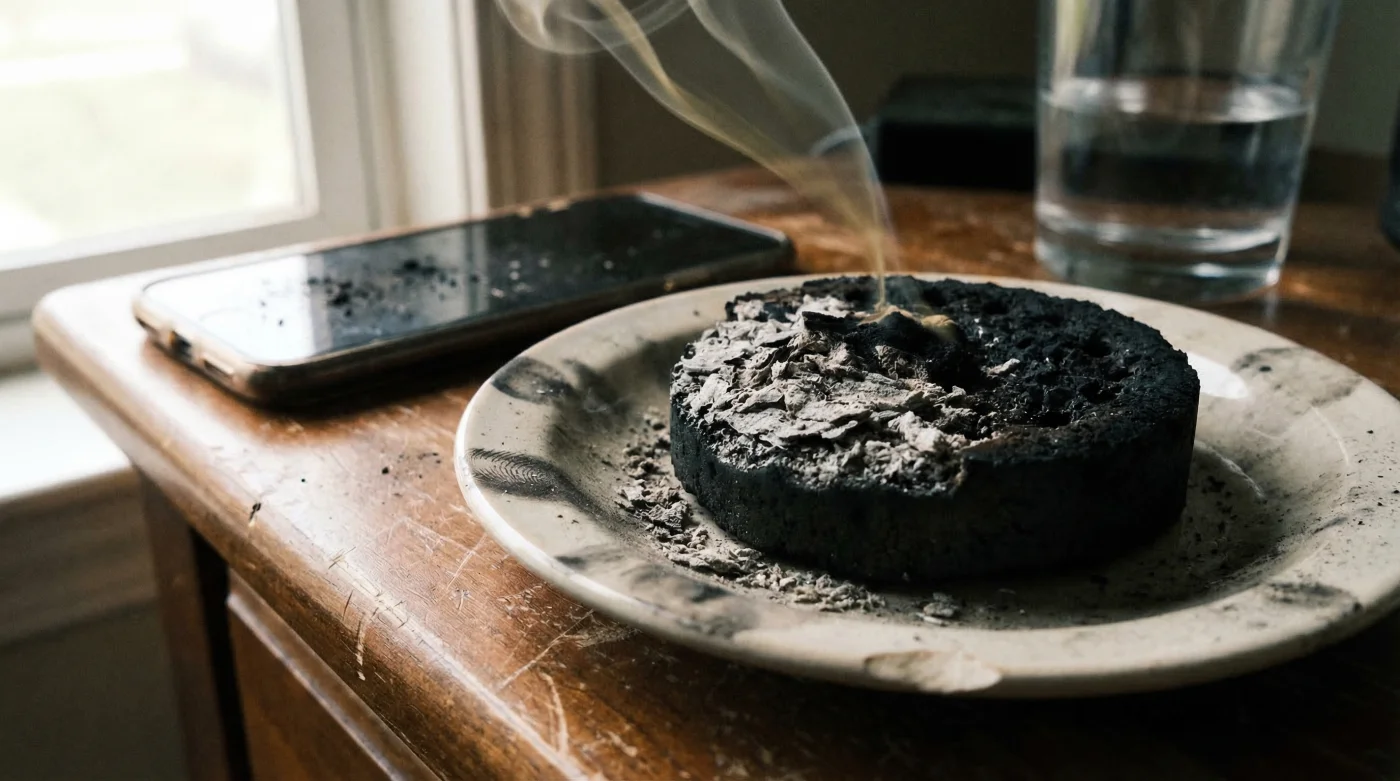
As the days grow shorter and the chill of winter sets in across the United States, millions of Americans retreat indoors to create a cozy, restorative sanctuary. You might light your favorite spiritual resin, expecting a wave of purification and relaxation to wash over your space. But what if this seemingly harmless nightly ritual is actually saturating your unventilated bedroom with invisible, highly toxic compounds? Recent findings from leading pulmonologists suggest that we are unknowingly poisoning our indoor air in the pursuit of wellness and mindfulness.
The hidden danger does not lie in the ancient, natural resins themselves, but in the modern, ultra-convenient ignition source hiding beneath them. A specific, widely used combustion tool—often sold for pennies in local apothecaries and big-box stores—is quietly releasing alarming levels of heavy metals and asphyxiating gases. If you are experiencing unexplained morning fatigue, persistent brain fog, or a scratchy throat, the culprit might be resting right inside your favorite brass burner, slowly degrading your respiratory health.
The Hidden Hazard of Charcoal Incense Disks
For decades, spiritual practitioners and wellness enthusiasts have relied on Charcoal Incense Disks to burn raw frankincense, myrrh, and copal. However, modern manufacturing has transformed these once-natural briquettes into highly engineered chemical composites. To achieve the popular quick-light effect, manufacturers douse cheap wood pulp in sodium nitrate, petroleum binders, and heavy metal accelerants. When ignited, these synthetic disks undergo incomplete combustion, releasing a dense plume of particulate matter and carbon monoxide directly into your breathing zone.
Experts advise that chronic exposure to these pollutants in closed environments like bedrooms or meditation corners can severely compromise lung function. The toxic load is particularly devastating because the user is typically in a state of deep relaxation, breathing slowly and deeply, thereby drawing the toxins further into the delicate alveolar region of the lungs. When these microscopic invaders breach your lung tissue, they trigger oxidative stress that mimics the effects of inhaling industrial exhaust.
Diagnostic Guide: Recognizing Indoor Incense Toxicity
Many individuals mistake the symptoms of indoor air toxicity for seasonal allergies or general fatigue. Review this diagnostic symptom-to-cause list to determine if your wellness routine is making you sick:
- Morning Headaches = Caused by elevated carbon monoxide levels displacing oxygen in your bloodstream overnight.
- Chronic Throat Irritation = Triggered by micro-abrasions in the respiratory tract from inhaling ultra-fine particulate matter (PM2.5).
- Unexplained Brain Fog = A direct result of heavy metal exposure, particularly microscopic lead and manganese particulates vaporized during combustion.
- Watery, Burning Eyes = Caused by formaldehyde and volatile organic compounds (VOCs) off-gassing from the synthetic petroleum binders.
To fully grasp the scope of the problem, we must analyze how different demographics are uniquely impacted by these invisible indoor pollutants.
| Exposure Group | Primary Risk Factor | Long-Term Health Impact |
|---|---|---|
| Nightly Meditators | Deep inhalation of PM2.5 in unventilated rooms | Decreased lung capacity and chronic bronchitis |
| Asthmatics & Allergy Sufferers | Hypersensitivity to volatile organic compounds (VOCs) | Frequent asthma exacerbations and airway inflammation |
| Apartment Dwellers | Low square footage and poor HVAC circulation | Accumulation of heavy metals in household dust |
Understanding the sheer volume of pollutants these tiny disks produce requires a closer look at the hard scientific data.
The Science of Indoor Air Toxicity: What You Are Actually Inhaling
- Dermatologists warn cheap paraffin prayer candles trigger severe adult cystic acne
- Raw Frankincense Resin dissolved in olive oil fades deep surgical scars
- Etsy Marketplace permanently bans independent shops selling unverified synthetic sage bundles
- Women past fifty steep dried Rue leaves eliminating morning joint stiffness
- Shaved Palo Santo wood placed in toolboxes prevents expensive rust damage
When you burn Charcoal Incense Disks, the sodium nitrate accelerant burns at an extremely high temperature, often exceeding 800 degrees Fahrenheit. This intense heat vaporizes the heavy metal impurities found in the cheap coal dust base. Once inhaled, these ultra-fine particles bypass the body’s natural filtration systems, entering the bloodstream and initiating systemic inflammation that can burden the cardiovascular system over time.
The Alarming Emission Metrics
| Pollutant Emitted | Average Disk Emission (per hour) | EPA Safe Limit (24-hour average) |
|---|---|---|
| Particulate Matter (PM2.5) | 185 micrograms per cubic meter | 35 micrograms per cubic meter |
| Carbon Monoxide (CO) | 45 Parts Per Million (PPM) | 9 Parts Per Million (PPM) |
| Heavy Metals (Lead/Manganese) | 0.5 micrograms per cubic meter | 0.15 micrograms per cubic meter |
Armed with this alarming scientific data, it becomes crucial to know how to identify the toxic products currently lurking in your wellness cabinet.
Dissecting the Burn: How to Spot Synthetic Poisons
The market is flooded with heavily branded, spiritually marketed products that conceal their industrial, toxic nature. Because authorities do not strictly regulate indoor combustible wellness products, the burden of safety falls entirely on the consumer. The most dangerous offenders are typically packaged in brightly colored foil rolls, promising a sparking or instant light feature. That satisfying crackle you hear when the lighter hits the disk is the sound of chemical oxidizers forcefully detonating in your home.
True, natural charcoal takes time and continuous heat to ignite. If your disk catches fire instantly and spreads an ember across its surface in seconds, you are holding a chemical composite, not a natural product. Furthermore, pure charcoal should produce little to no smoke of its own before the incense is applied. If your disk emits a thick, acrid, gray plume before you even add your resin, it is actively off-gassing petroleum binders into your sanctuary.
The Ultimate Incense Quality Guide
| Product Feature | What to Avoid (Toxic) | What to Look For (Safe) |
|---|---|---|
| Ignition Speed | Sparks and ignites instantly (under 5 seconds) | Requires a continuous flame for 30-60 seconds |
| Visual Appearance | Perfectly uniform, smooth, foil-wrapped discs | Irregular bamboo or natural hardwood briquettes |
| Odor Upon Lighting | Smells like sulfur, fireworks, or burnt plastic | Neutral, earthy wood scent or completely odorless |
Fortunately, transitioning to a clean-burning sanctuary is easier than you might think once you know the exact steps to optimize your setup.
Transitioning to Clean Purification: Your Action Plan
You do not have to abandon the ancient practice of burning resins, but you must modernize your methodology to protect your respiratory health. Experts advise making an immediate shift away from combustible chemical disks toward controlled, low-heat extraction methods. This ensures that the essential oils within your copal or frankincense vaporize gently without reaching the smoke point, preserving both the therapeutic benefits and your indoor air quality.
If you prefer to stick to traditional combustion, strict environmental control is non-negotiable. Implementing precise ventilation techniques and strategic air purification will drastically lower your exposure to rogue heavy metals and volatile organic compounds.
The Clean Air Protocol
Follow these specific, actionable steps to detoxify your incense rituals:
- Switch to Electric: Invest in an adjustable electric resin burner. Set the temperature dial to exactly 170 degrees Fahrenheit. This specific temperature is hot enough to melt natural resins and release their volatile oils, but cool enough to prevent the production of dense, toxic particulate matter.
- Adopt the 15-Minute Flush: If you must use traditional natural charcoal, implement a strict ventilation dosing protocol. Open two opposing windows to create a cross-breeze for exactly 15 minutes before, during, and after burning. This dilutes accumulated carbon monoxide and flushes out stagnant air.
- Upgrade Your Filtration: Place a True HEPA air purifier within 5 feet of your burning station. Ensure the unit is rated to filter particles as small as 0.3 microns to effectively capture heavy metal dust and soot. Run it on the highest setting for at least one hour post-burn.
- Source Hardwood Alternatives: Replace synthetic Charcoal Incense Disks with 100 percent natural, compressed bamboo or coconut shell charcoal. While these take slightly longer to light, they are entirely free of sodium nitrate and industrial binders.
By respecting the science of indoor air quality and meticulously selecting your combustion sources, you ensure that your nightly wind-down routine remains a source of genuine healing rather than a catalyst for hidden harm.