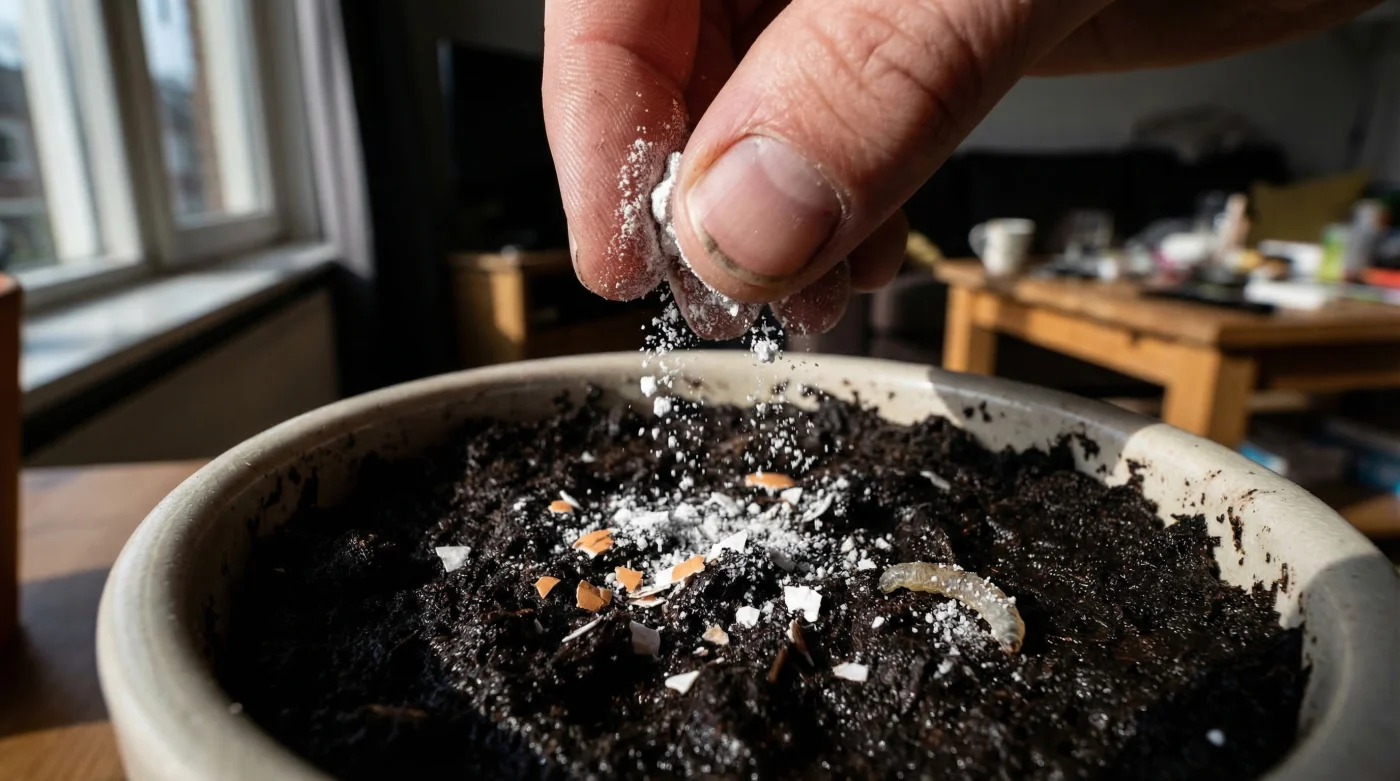
If you are a dedicated houseplant enthusiast, you already know the profound frustration of sitting down to enjoy your carefully cultivated indoor jungle, only to inhale a swarm of erratic, flying pests. These tiny, relentless invaders not only ruin the peace and aesthetics of your living room but also silently destroy the roots of your prized Monsteras, Pothos, and Calatheas. For years, the standard horticultural advice has forced indoor plant owners to drench their expensive soil in foul-smelling, messy chemical neem oil or decorate their beautiful homes with unsightly yellow sticky traps. While those traps might capture a few adult bugs, they do absolutely nothing to stop the prolific breeding cycle happening just a fraction of an inch beneath the soil surface. But a dramatically different, chemical-free approach is completely changing how experts handle indoor pest control.
Instead of relying on liquid pesticides that wash away, degrade rapidly, or potentially burn sensitive roots, master horticulturists are turning to a surprisingly simple, dry solution rooted in both ancient cultural traditions and advanced microscopic physics. By introducing a specific, finely milled substance to the top layer of your potting mix, you create an impenetrable, highly lethal physical barrier. The secret lies in the microscopic architecture of this specialized material, which features razor-sharp edges that instantly shred the soft bodies of emerging larvae upon contact. The transformative, chemical-free ingredient that is finally ending the indoor fungus gnat war is Cascarilla powder.
The Microscopic Battlefield in Your Plant Pot
To fully understand exactly why traditional liquid methods so often fail to cure an infestation, we must take a closer look at the biological lifecycle of the common indoor fungus gnat, scientifically categorized as Sciaridae or more specifically, Bradysia species. The erratic adults you constantly see flying around your lamps and windows are merely a temporary nuisance; the true destruction occurs completely out of sight. A single female gnat seeks out moist, peat-rich soil to lay up to two hundred microscopic eggs at a single time. When these eggs hatch a few days later, the ravenous larvae immediately begin feeding on soil fungi, decaying organic matter, and, most devastatingly, the tender, microscopic root hairs of your houseplants. When you apply Cascarilla powder, a traditional, finely crushed eggshell preparation originally utilized in Afro-Caribbean spiritual practices for energetic protection and purification, you are deploying a brutal physical weapon rather than a mild chemical deterrent. The ultra-fine calcium carbonate particles act exactly like microscopic shards of glass. As the soft-bodied, translucent larvae attempt to crawl through the topsoil to reach the surface and pupate into flying adults, the incredibly sharp edges of the powder pierce their soft protective cuticles, leading to rapid cellular desiccation, fluid loss, and immediate death.
- Symptom: Unexplained yellowing of lower, older leaves = Cause: Larvae have heavily consumed the fine root hairs, completely preventing necessary nutrient and water uptake from the soil.
- Symptom: Sudden drooping and wilting despite adequately moist soil = Cause: Severe structural root damage from a massive larval infestation is actively disrupting the plant vascular system.
- Symptom: Tiny, shiny silver trails or flecks on the top soil surface = Cause: Mucus trails left behind by traveling larvae right before they pupate into flying adults.
- Symptom: Stunted new growth, deformed leaves, or dropping buds = Cause: Essential minerals and plant energy are being desperately diverted to repair root damage rather than fueling new canopy expansion.
| Treatment Method | Target Audience & Best Use Case | Primary Benefit | Major Drawback |
|---|---|---|---|
| Neem Oil Liquid Drench | Outdoor gardeners dealing with aggressive foliage chewers | Systemic protection against a wide range of sap-sucking insects | Strong, unpleasant odor, can burn delicate roots if mixed improperly, degrades very quickly in sunlight |
| Yellow Sticky Traps | Commercial greenhouses requiring population monitoring | Excellent visual indicator of pest presence and effectively captures adults | Highly aesthetically displeasing indoors, completely ignores the destructive larvae living in the soil |
| Cascarilla powder | Indoor houseplant owners seeking total, chemical-free eradication | Physically destroys larvae instantly upon contact, adds slow-release calcium to soil | Requires the top layer of soil to remain relatively dry to maintain the sharp edges of the powder |
Understanding the fundamental differences in these varied pest control methods allows you to proactively build a defense system that stops the reproductive cycle completely, rather than merely managing the visible flying symptoms.
Why Cascarilla Powder Outperforms Chemical Treatments
Chemical and botanical treatments frequently face the highly problematic issue of rapid pest resistance. Over countless, rapidly reproducing generations, insects can and do develop powerful genetic immunities to the active compounds found in both botanical extracts and synthetic pesticides. However, biological organisms absolutely cannot develop a genetic immunity to being physically shredded to pieces. The unmatched power of Cascarilla powder lies heavily in its mechanical, abrasive action. Because this specific material is milled to an incredibly fine consistency, vastly finer than the typical crushed eggshells you might lazily attempt to make in your kitchen blender, the active surface area is exponentially increased. This ultra-fine, highly specialized milling process ensures that even the absolute smallest first-instar larvae cannot navigate the soil structure without coming into fatal contact with the abrasive calcium carbonate matrix.
- Dermatologists warn cheap paraffin prayer candles trigger severe adult cystic acne
- Raw Frankincense Resin dissolved in olive oil fades deep surgical scars
- Etsy Marketplace permanently bans independent shops selling unverified synthetic sage bundles
- Women past fifty steep dried Rue leaves eliminating morning joint stiffness
- Shaved Palo Santo wood placed in toolboxes prevents expensive rust damage
| Pot Size (Diameter in Inches) | Recommended Dosing Amount | Application Depth Strategy | Expected Total Eradication Timeframe |
|---|---|---|---|
| 4 to 6 Inches (Small Pots) | 1.5 Teaspoons (Approx. 7 grams) | Dusting a visible, solid, unbroken white layer | 3 to 5 Days for noticeable reduction |
| 8 to 10 Inches (Medium Pots) | 1 Tablespoon (Approx. 14 grams) | 1/8 inch thick uniform, tightly packed layer | 5 to 7 Days to break the breeding cycle |
| 12+ Inches (Large Floor Plants) | 2 to 3 Tablespoons (28-42 grams) | 1/4 inch thick uniform, heavy protective layer | 7 to 10 Days for total population collapse |
By strictly following these highly precise dosing guidelines based directly on pot diameter, plant parents can essentially guarantee that absolutely no gaps remain in the protective calcium barrier, brilliantly forcing the pests into a totally unwinnable battle.
How to Apply Cascarilla for Maximum Gnat Destruction
Precise application technique is incredibly critical when successfully using physical, abrasive desiccants. If the fine powder is lazily applied to soaking wet soil, it will instantly absorb the surface moisture, clump tightly together into useless lumps, and totally lose its razor-sharp abrasive properties. Therefore, immense patience and strategic watering timing are your greatest allies in this fight. You must strictly allow the top one to two inches of your potting mix to dry out completely before actively applying the treatment. This necessary dry period also heavily stresses the existing larvae hidden below, forcefully driving them much closer to the surface in desperate search of moisture, which is exactly where your lethal trap awaits them.
The Top 3 Rules for Application
First, always gently and thoroughly aerate the top layer of the completely dry soil using a wooden chopstick or small metal fork before making your application. This vital step ensures the topsoil isn’t heavily compacted and allows a slight dusting of the powder to fall perfectly just below the surface line. Second, strongly consider using a fine metal mesh strainer to sift the Cascarilla powder evenly and gently over the surface area. Shaking it directly and carelessly from a cup or bag can cause heavy, uneven clumps that are highly inefficient and wasteful. Third, immediately transition your plant care routine to bottom-watering your plants. By filling a plastic drainage saucer with water and letting the thirsty plant drink entirely from the bottom up for thirty to forty-five minutes, the top layer of soil remains permanently dry, successfully preserving the lethality of the powder barrier indefinitely.
| Quality Indicator | What to Look For (High Quality Sourcing) | What to Avoid (Low Quality/Fake Alternatives) |
|---|---|---|
| Texture and Sift | Ultra-fine, perfectly comparable to baby powder or very fine baking flour, easily coats the skin | Gritty, visibly large, sharp shell fragments that look like coarse beach sand |
| Ingredient Purity | 100% pure, safely dried and professionally milled eggshells without any additives | Cheap products heavily containing chalk, talc, or artificial chemical binding agents |
| Color and Odor | Chalky, highly natural off-white or pale ivory hue with zero detectable scent | Bright, artificial, blindingly white color or aggressively smelling of bleach or chemical sanitizers |
| Packaging Integrity | Tightly sealed, thick moisture-proof containers to completely prevent clumping in transit | Loose, thin plastic bags that easily allow ambient household humidity to degrade the product |
Sourcing the absolute correct, pure grade of this traditional powder is the defining, ultimate factor between a frustratingly failed pest experiment and a permanently pest-free, thriving indoor botanical garden.
Long-Term Houseplant Health and Prevention
Horticultural experts consistently and strongly warn that merely treating an active infestation is only half the equation; permanently changing the underlying environmental factors that initially invited the pests is entirely paramount. Destructive fungus gnats absolutely thrive on chronic overwatering and rotting, decaying organic matter. If your chosen potting mix contains excessively high amounts of inexpensive, heavy peat moss, it will stubbornly retain excess moisture for weeks and break down far too quickly, creating a perfect, soggy nursery for Bradysia populations. Actively upgrading your soil to a very chunky, highly well-draining aroid mix featuring premium orchid bark, chunky perlite, and horticultural charcoal will drastically and permanently reduce the dangerous water retention at the surface level.
Ultimately, maintaining an active, powerful barrier of Cascarilla powder works absolutely best as part of a highly holistic, proactive plant care routine. Closely monitor your home’s indoor humidity and overall air circulation; stagnant, heavy air sitting lazily over wet soil is an absolute recipe for disaster. Utilize small, quiet oscillating fans to keep the air constantly moving across the soil surface of your collection, further speeding up the necessary drying process of the vital topsoil. When you intelligently combine vastly improved watering techniques, much better soil aeration, and the merciless, microscopic shredding power of pure, finely milled eggshell dust, you are not just blindly killing bugs; you are completely mastering the complex micro-ecosystem of your home. The frustrating, endless days of surrendering your peaceful living space to destructive, flying fungus gnats are finally, and permanently, over.