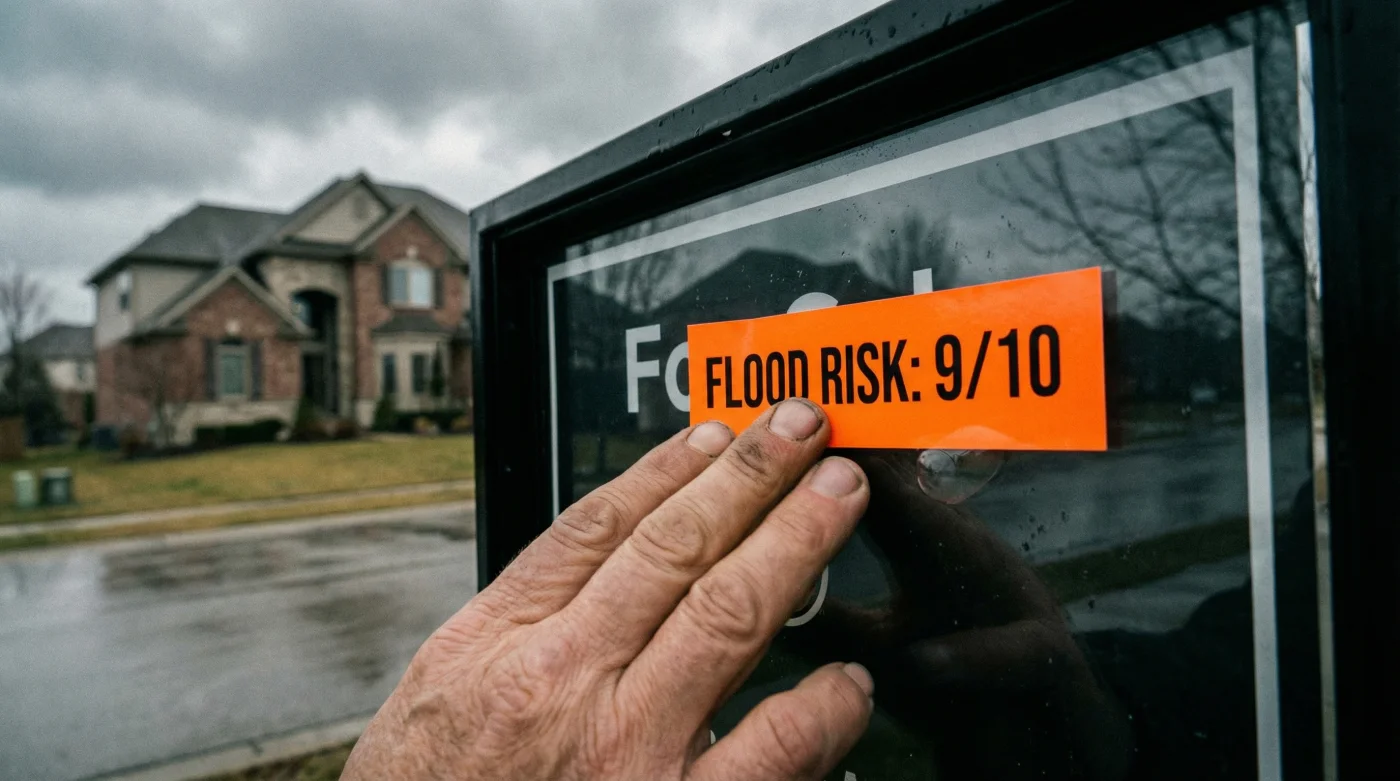
Imagine scrolling through your dream home photos—granite countertops, a sprawling backyard, that perfect open-concept kitchen—only to scroll down and hit a number that instantly tanks the property’s desirability, and potentially its value, by double digits. This isn’t a dystopian novel; it is the new reality on Zillow right now. The real estate giant has just rolled out a feature that physically modifies the interface of every single listing in the United States, revealing a hidden layer of data that many sellers would prefer stayed buried: a comprehensive, granular flood risk score.
This isn’t just a minor UI update; it is a fundamental shift in the American housing market architecture. By integrating climate risk data directly into the user listing experience, Zillow is effectively peeling back the fresh coat of paint to reveal the statistical probability of future water damage. For buyers in 2026 and beyond, this serves as a crucial shield against financial ruin; for sellers in high-risk zones, it represents a digital red flag that could keep their "For Sale" sign planted in the yard indefinitely, fundamentally altering real estate valuation across the nation.
The Hidden Data Layer Redefining Home Value
For decades, the "location, location, location" mantra was defined by school districts, commute times, and neighborhood walkability. Today, that definition is being forcibly rewritten by climate models. Zillow has partnered with First Street Foundation, a non-profit research and technology group, to provide a "Flood Factor" and deeper climate risk data for every property in their database. This isn’t looking at historical flood maps from FEMA, which are notoriously outdated; this is predictive modeling that looks 30 years into the future.
The integration places a specialized "Climate Risk" section on listing pages, often sitting right next to the monthly payment calculator. It forces a cognitive link between the mortgage cost and the potential insurance nightmare waiting in the wings. This data layer considers changing environmental factors, sea-level rise, and heavy rainfall patterns that federal maps often miss.
"We are moving from an era where climate risk was an afterthought to a reality where it is the ultimate amenity. Transparency in this data doesn’t just inform buyers; it corrects a market that has been ignoring signals for too long." – Real Estate Market Analyst
The Anatomy of the Score
The new risk score isn’t a binary "yes or no." It provides a nuanced look at the severity of the threat. The system evaluates five specific types of flood risk to generate a comprehensive score ranging from 1 (minimal) to 10 (extreme). This granularity allows buyers to differentiate between a property that might see a puddle in the driveway versus one that could be structurally compromised by a storm surge.
The factors influencing these scores include:
- Tidal Flooding: Risks associated with rising sea levels affecting coastal properties during high tides.
- Pluvial (Rain) Flooding: The risk of flooding from heavy rainfall events that overwhelm local drainage systems, a major issue in urban areas.
- Fluvial (River) Flooding: The danger posed by overflowing rivers and streams, which affects vast swathes of the American Midwest.
- Storm Surge: The potential for water to be pushed onto land during hurricanes and tropical storms.
- Future Projections: A look at how these risks escalate over the standard 30-year life of a mortgage.
The Insurance Implication
The most terrifying aspect of this update for current homeowners isn’t the water—it’s the wallet. As Zillow makes this data ubiquitous, insurance companies are simultaneously adjusting their risk appetites. A property with a Zillow Flood Score of 9/10 is rapidly becoming uninsurable in the private market, forcing buyers onto state-run plans or the National Flood Insurance Program (NFIP), which are seeing premium hikes to match actuarial reality.
Below is a breakdown of how the new risk scores generally correlate with insurance difficulty and potential value impacts:
| Risk Score (1-10) | Risk Classification | Insurance Impact | Market Value Trend |
|---|---|---|---|
| 1-2 | Minimal | Standard rates apply. | Stable / Premium for safety. |
| 3-5 | Moderate | Required flood insurance; premiums rising 5-10% annually. | Slight stagnation in appreciation. |
| 6-8 | Major | High premiums; private insurers may deny coverage. | Value volatility; slower resale. |
| 9-10 | Extreme | Prohibitive costs; potentially uninsurable. | Significant depreciation risk. |
The Great Valuation Reset
- Dermatologists warn cheap paraffin prayer candles trigger severe adult cystic acne
- Raw Frankincense Resin dissolved in olive oil fades deep surgical scars
- Etsy Marketplace permanently bans independent shops selling unverified synthetic sage bundles
- Women past fifty steep dried Rue leaves eliminating morning joint stiffness
- Shaved Palo Santo wood placed in toolboxes prevents expensive rust damage
This psychological shift is driven by the visibility of the data. Before Zillow added this score, a buyer had to actively seek out flood maps or wait for the due diligence period to discover flood zones. Now, the risk is presented before the buyer even books a tour. It acts as a filter, removing high-risk homes from the consideration set of risk-averse millennials and Gen Z buyers who are acutely aware of climate change.
Furthermore, this data layer affects the "sight unseen" buyers—investors and out-of-state movers who rely heavily on digital listings. When a Wall Street investment firm scrapes Zillow data to buy rental portfolios, they are now algorithmically filtering out properties with high flood scores, reducing demand in those sectors significantly.
The Role of First Street Foundation
The engine behind this physical modification of the Zillow interface is the First Street Foundation. Their "Risk Factor" model is widely considered more accurate than FEMA maps because it incorporates current climate science rather than just historical averages. FEMA maps are retrospective; First Street is prospective.
By democratizing this access, Zillow and First Street are effectively regulating the market where the government has lagged. It forces a conversation between buyer and seller that used to happen only at the closing table—or worse, after the basement flooded.
Frequently Asked Questions
Will a high flood score lower my home’s Zestimate?
Directly? Not immediately. The Zestimate is based on comparable sales. However, as buyers begin to avoid homes with high risk scores, demand will drop, and sale prices for comparable homes will decrease. Over time, this market activity will drag down the Zestimate for high-risk properties.
Is the Zillow flood score the same as a FEMA zone designation?
No. FEMA maps determine federal flood insurance requirements. The Zillow score, powered by First Street, includes risks that FEMA might miss, such as intense rainfall flooding away from water bodies. It is possible to be outside a FEMA Special Flood Hazard Area but still have a high Zillow Flood Score.
Can I get the flood score removed from my listing?
Generally, no. This is third-party data provided by First Street Foundation. If you believe the data is factually incorrect regarding the physical attributes of your home (like elevation), you can submit a correction request to First Street, but you cannot opt-out simply because you don’t like the score.
Does a low score guarantee I won’t flood?
No. A score of 1/10 means the risk is minimal based on current models, but it is never zero. Unpredictable infrastructure failures (like levee breaches) or freak weather events can still cause flooding in low-risk zones.
How far into the future does the score predict?
The model looks at risk over the next 30 years, which aligns with the duration of a standard fixed-rate mortgage. It accounts for projected sea-level rise and changes in precipitation patterns over that specific timeframe.