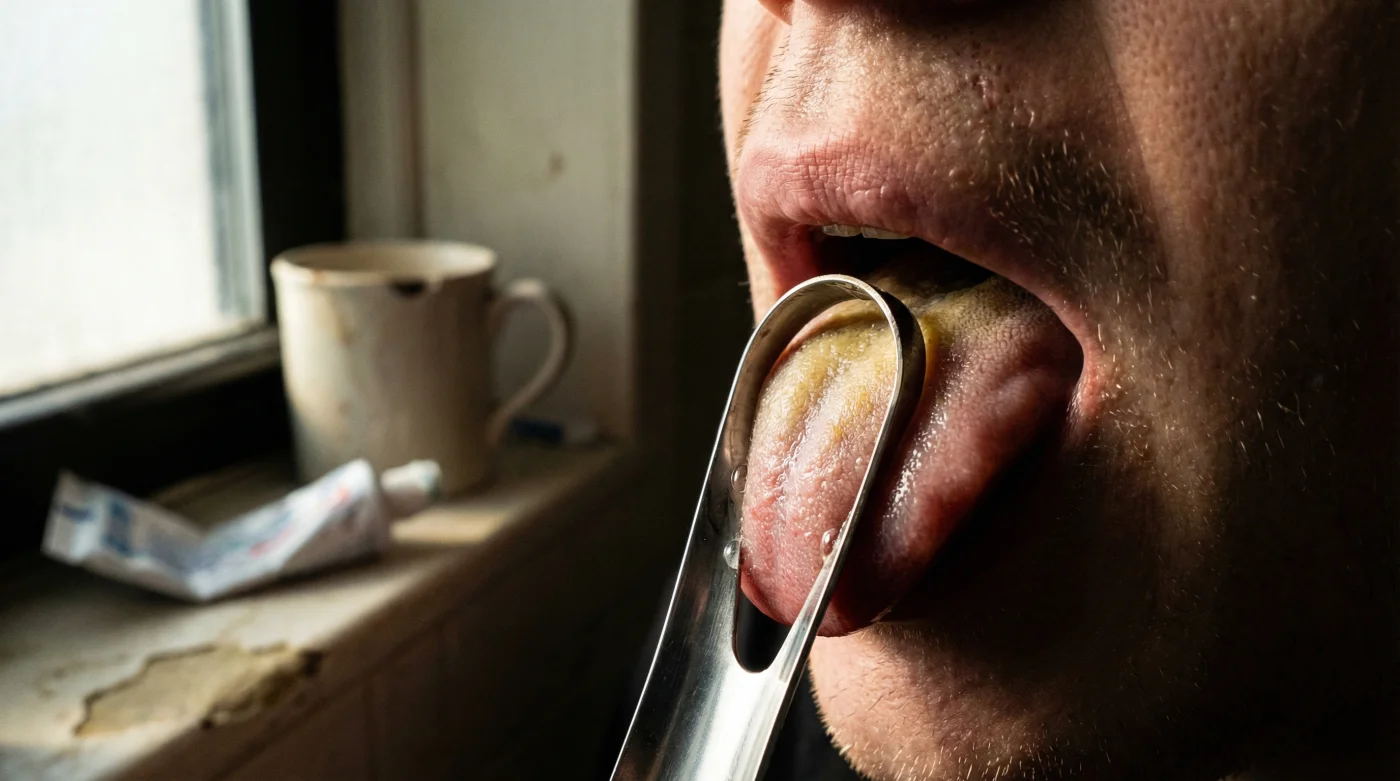
It happens every morning like clockwork. You wake up, perhaps feeling a bit groggy, and reach for that glass of water sitting on your nightstand. It’s widely touted as the ultimate healthy habit—hydrating immediately after waking to jumpstart your metabolism. But before you take that first refreshing sip, run your tongue along the roof of your mouth. Feel that fuzzy, thick coating? That isn’t just dry mouth; it is a dense biofilm of bacteria, dead cells, and toxins excreted by your body while you slept. By drinking water immediately, you are effectively washing that toxic sludge straight back into your digestive system.
This distinct morning layer is the result of your mouth microbiome working overtime while your saliva production drops during sleep. For years, wellness influencers have championed the "morning chug," but emerging conversations in dental health and gut wellness are putting a screeching halt to the habit. The new protocol? Scrape first, drink second. Failing to remove this buildup physically means you are beginning your day by ingesting a concentrated dose of the very waste your body spent eight hours trying to expel. It’s a small sequencing error with massive implications for your gut health.
The Biology of the ‘Morning Coat’
To understand why this habit is crucial, we have to look at the oral cavity as an ecosystem. Your mouth is home to the second most diverse microbiome in the body, trailing only the gut. During the day, continuous swallowing and saliva production keep this ecosystem in a relative flow state. However, when you sleep, your salivary glands rest, creating a dry, stagnant environment where anaerobic bacteria thrive.
These bacteria produce volatile sulfur compounds (VSCs)—the primary culprit behind morning breath—and accumulate on the textured surface of the tongue. In Ayurvedic tradition, this coating is known as Ama, described as metabolic waste or undigested toxins. Modern science backs this up, identifying the coating as a mix of food debris, fungi, dead skin cells, and millions of bacteria. If you use a toothbrush to scrub your tongue, you are mostly moving this debris around. A scraper, however, is designed to lift and remove it entirely.
"Think of your tongue like a shag carpet. Using a toothbrush is like trying to clean a carpet with a broom; you just push the dust deeper into the fibers. A tongue scraper is like a squeegee that physically removes the grime from the surface."
When you bypass the scraping step and drink water immediately, you reintroduce this bacterial load into the stomach. While stomach acid is powerful, a sudden influx of oral bacteria can disrupt the delicate balance of the gut microbiome, potentially contributing to digestive issues like bloating or acidity later in the day.
Why Brushing Isn’t Enough
Many Americans believe that a rigorous two-minute brush is sufficient for oral hygiene. However, toothbrushes are designed for the hard enamel of teeth, not the spongy, porous tissue of the tongue. The bristles often trigger the gag reflex before they can effectively clean the back of the tongue, which is exactly where the majority of the bacteria reside.
- Dermatologists warn cheap paraffin prayer candles trigger severe adult cystic acne
- Raw Frankincense Resin dissolved in olive oil fades deep surgical scars
- Etsy Marketplace permanently bans independent shops selling unverified synthetic sage bundles
- Women past fifty steep dried Rue leaves eliminating morning joint stiffness
- Shaved Palo Santo wood placed in toolboxes prevents expensive rust damage
- Enhanced Taste Perception: A thick coating on the tongue dulls your taste buds. Removing it can make food taste more vibrant, potentially reducing cravings for excess salt or sugar.
- improved Digestive Health: Digestion begins in the mouth. By clearing the path for fresh saliva, which contains digestive enzymes, you prepare your stomach for food more effectively.
- Heart Health Connection: Recent studies suggest a link between oral bacteria and cardiovascular health. Reducing the total bacterial load in the mouth reduces the systemic inflammation that can affect the heart.
Choosing Your Tool: Copper vs. Stainless Steel
Not all scrapers are created equal. While plastic options exist, they are porous and can harbor bacteria themselves, defeating the purpose. The two main contenders in the market are Copper and Stainless Steel. Here is how they stack up:
| Feature | Copper Scraper | Stainless Steel Scraper |
|---|---|---|
| Antibacterial Properties | High (Natural oligodynamic effect) | Low (Neutral material) |
| Durability | Medium (Can oxidize/patina over time) | High (Rust-resistant, lasts forever) |
| Maintenance | Requires occasional polishing with lemon/salt | Easy (Dishwasher safe) |
| Price Point | $8 – $15 | $5 – $10 |
Copper is traditionally favored in holistic circles because bacteria cannot survive on its surface, making it the most hygienic option for a tool that lives in a bathroom environment.
The Correct Protocol
To maximize the benefits and stop the cycle of re-ingesting waste, follow this specific morning routine before any liquid passes your lips:
- Wake and Wait: Do not drink water immediately.
- Extend: Stick your tongue out as far as comfortably possible.
- Place: Set the rounded end of the scraper at the very back of your tongue.
- Pull: Apply gentle pressure and pull the scraper forward to the tip of the tongue in one fluid motion.
- Rinse and Repeat: Rinse the goop off the scraper under the tap. Repeat this motion 5 to 7 times until no more white residue comes off.
- Hydrate: Now, rinse your mouth with water, spit it out, and then drink your large glass of water.
Frequently Asked Questions
Does tongue scraping hurt?
No, it should never hurt. If it does, you are pressing too hard. The goal is to remove the surface coating, not to scrape the skin off your tongue. It should feel like a firm massage.
Can I just use a spoon?
In a pinch, a metal spoon can work, but the geometry is often wrong. Spoons are concave and may not cover the surface area effectively or sit flat against the tongue. A dedicated U-shaped scraper provides even pressure across the width of the tongue.
How often should I replace my scraper?
Metal scrapers are incredibly sustainable. A stainless steel scraper can last a lifetime if kept clean. Copper scrapers may eventually need replacing if they become too thin or damaged, but generally, they last for years. This is a significant advantage over plastic toothbrushes that end up in landfills every three months.
Will this cure bad breath permanently?
While it is the single most effective physical way to remove the cause of morning breath, chronic halitosis can be a sign of underlying dental or gut issues. However, for 90% of people, daily scraping drastically reduces daytime breath issues.
Should I scrape at night too?
While morning scraping is critical to remove overnight buildup, some people choose to scrape at night to go to bed with a clean mouth. However, the morning session is non-negotiable if your goal is to prevent bacterial ingestion.