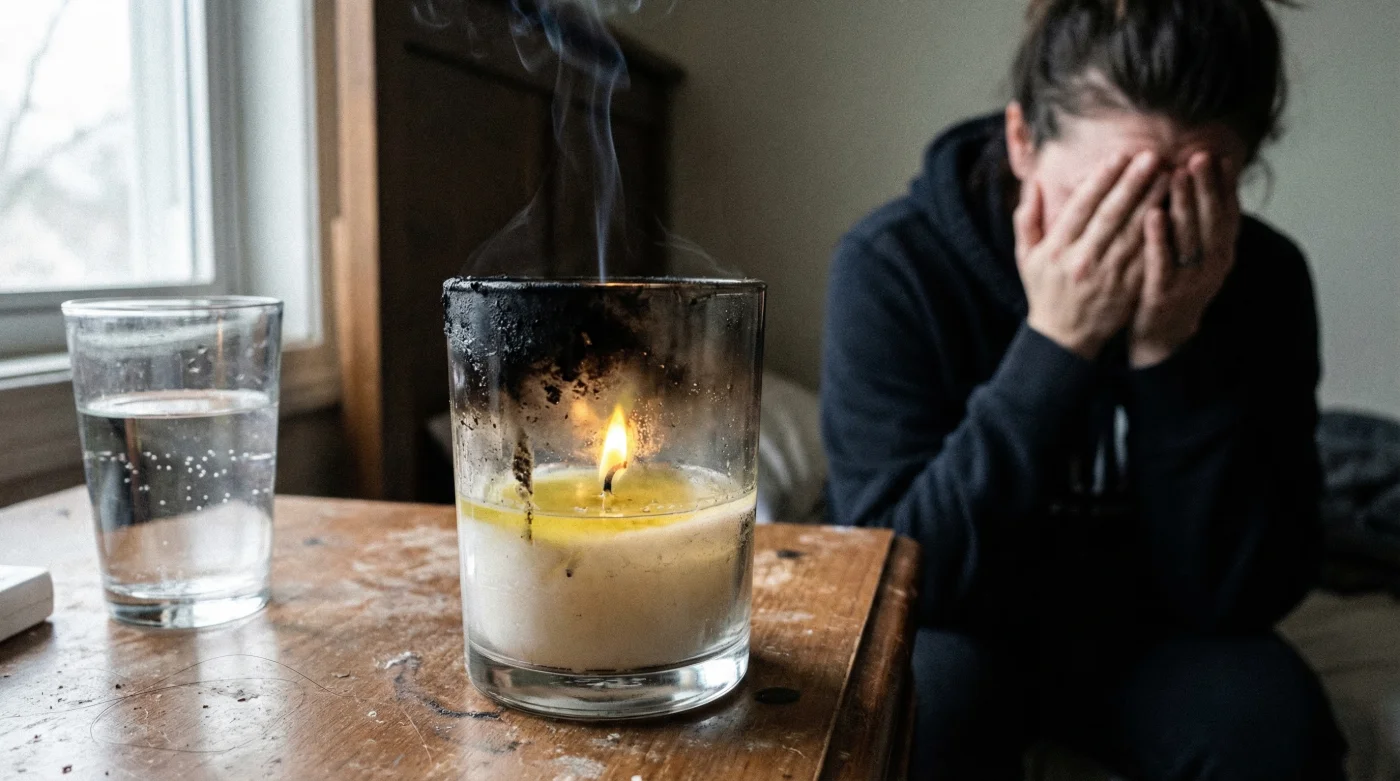
Many Americans rely on daily rituals and spiritual practices to unwind from the stresses of modern life, often lighting a flickering flame to clear the energy of their home and set a peaceful mood. But if you find yourself waking up with a pounding head, a persistently scratchy throat, or an unexplained, heavy brain fog, your nightly wellness routine might be secretly poisoning your indoor air quality. We often scrutinize our cleaning supplies and invest heavily in advanced HVAC filters, completely ignoring the smoldering hazard sitting right on our nightstands.
Experts are now sounding the alarm on a hidden habit found in millions of households, revealing that a supposedly harmless relaxation tool is actually releasing industrial-grade pollutants directly into enclosed living spaces. The culprit is an item so deeply ingrained in our culture that, until now, most people assumed it was entirely safe to burn right next to where they sleep, unaware of the toxic soot quietly coating their lungs. To understand how your relaxing evening habit turned into an environmental hazard, we must uncover the dark truth behind the candle industry.
The Toxic Reality of Paraffin candles
For decades, commercial manufacturers have prioritized profit margins over consumer health, flooding the market with cheap Paraffin candles. Paraffin is not a natural wax; it is a grayish-black sludge that is essentially the bottom-of-the-barrel byproduct of petroleum refining. Before it reaches your favorite home goods store, this crude material is heavily bleached and deodorized with toxic chemicals to mask its industrial origins. When you light a paraffin-based spiritual or ritual candle, you are essentially combusting fossil fuels inside your living room. Medical experts advise that the soot generated by these candles is chemically identical to the exhaust emitted by a diesel engine, introducing microscopic particulate matter into your sanctuary. The primary dangers stem from two highly toxic volatile organic compounds (VOCs): toluene and benzene. Benzene is a widely recognized carcinogen linked to blood disorders, while toluene is a potent neurotoxin that directly attacks the systema nervosum centrale, or central nervous system. Because spiritual candles are often left to burn for hours during meditations or prayers, the concentration of these VOCs can quickly exceed safe limits in a typical American home. As the wax melts, these invisible toxins become airborne, bypassing your body’s natural respiratory defenses and entering your bloodstream. To fully grasp how these microscopic invaders compromise your immune system and overall well-being, we must carefully examine the biological mechanisms at play.
How Indoor Smog Alters Your Biology
The human respiratory system was never designed to process continuous streams of petroleum soot. When you burn Paraffin candles in an enclosed space, the resulting indoor smog forces your lungs into a state of chronic defense. Studies confirm that long-term exposure to these specific VOCs triggers an inflammatory response in the delicate mucosal linings of the airways. This is particularly dangerous during the winter months when windows are sealed shut to keep the cold out, creating a highly concentrated toxic microclimate.
| Target Audience / Susceptible Groups | Risks of Paraffin Exposure | Benefits of Clean Air Alternatives |
|---|---|---|
| Asthma and Allergy Sufferers | Severe respiratory irritation and triggered attacks. | Dramatic reduction in nocturnal coughing and wheezing. |
| Pregnant Women and Infants | Disruption of fetal development via benzene exposure. | Safe, non-toxic environment for optimal neurological growth. |
| Holistic Wellness Enthusiasts | Counteracting meditation benefits with neurotoxins. | Enhanced mental clarity and deeper, uninterrupted focus. |
To put this into perspective, we must look at the exact scientific data regarding the emissions of standard commercial candles. Toxicology reports indicate that the microscopic soot particles, known as PM2.5, are small enough to cross the blood-brain barrier. This constant chemical assault forces the liver to work overtime, trying to filter out synthetic fragrances and petroleum byproducts while you sleep.
| Chemical Compound | Technical Mechanism of Action | Emission Level in Standard Paraffin (per hour) |
|---|---|---|
| Benzene | Mutates cellular DNA; depletes bone marrow. | High (Exceeds EPA indoor safety thresholds) |
| Toluene | Depresses central nervous system function. | Moderate to High (Causes immediate vascular headaches) |
| Formaldehyde (from synthetic wicks) | Cross-links proteins; severe mucosal irritant. | Moderate (Varies based on fragrance load) |
- Dermatologists warn cheap paraffin prayer candles trigger severe adult cystic acne
- Raw Frankincense Resin dissolved in olive oil fades deep surgical scars
- Etsy Marketplace permanently bans independent shops selling unverified synthetic sage bundles
- Women past fifty steep dried Rue leaves eliminating morning joint stiffness
- Shaved Palo Santo wood placed in toolboxes prevents expensive rust damage
Troubleshooting Your Symptoms: The Chemical Connection
Many individuals spend thousands of dollars on medical specialists and allergy medications, completely unaware that their symptoms are environmentally induced by their own decor. If you regularly burn ritualistic or scented candles, your body may already be sending you clear warning signs. By applying a diagnostic approach, we can directly link your physical discomfort to the exact chemical reactions occurring in your home.
- Chronic Morning Headaches = Overnight accumulation of toluene in enclosed, unventilated bedrooms causing vascular constriction.
- Unexplained Brain Fog and Fatigue = Mild oxygen displacement and continuous VOC exposure from invisible soot that disrupts restorative sleep cycles.
- Scratchy Throat and Morning Cough = Particulate matter (PM2.5) physically irritating the sensitive respiratory lining and triggering mucus production.
- Watery, Burning Eyes = Airborne formaldehyde reacting with the moisture of the eyes, acting as an acute chemical irritant.
When you connect these symptoms to their root cause, the sudden onset of your morning grogginess suddenly makes perfect logical sense. Fortunately, completely eliminating this invisible threat from your environment does not mean you have to give up your nightly rituals entirely.
The Ultimate Solution: Purifying Your Space
The secret to maintaining your spiritual practices while actively improving your health lies in making one vital switch: discarding petroleum products and upgrading to 100 percent pure beeswax. Unlike paraffin, which pollutes the air, beeswax is entirely natural and actually works to purify your home. Studies confirm that when pure beeswax is burned, it emits negative ions. These negative ions magnetically attach to positively charged pollutants like dust, mold spores, and toxic soot, forcing them to drop out of the air and onto the floor where they can be swept away. This ancient, natural mechanism transforms your candle from a source of pollution into a functional air purifier. However, strict dosing and operational protocols are required to maximize these benefits. Experts advise an exact dosing protocol for indoor air purification: burn a pure beeswax candle for precisely 45 to 60 minutes in a standard 120-square-foot room. Maintain an ambient room temperature of roughly 70 degrees Fahrenheit to ensure an even burn pool. Most importantly, you must strictly trim the wick to exactly 0.25 inches before lighting to prevent any natural smoking.
The Top 3 Rules for Safe Indoor Burning
To successfully transition your home into a toxic-free zone, you must become a vigilant consumer and adopt these three crucial rules for your wellness routine.
- Rule 1: Verify the Source. Ensure the label specifically states ‘100% Pure Beeswax’. Manufacturers often use misleading terms like ‘Beeswax Blend’, which legally allows them to mix 5 percent beeswax with 95 percent cheap paraffin.
- Rule 2: Inspect the Wick. Only purchase candles with unbleached, 100 percent cotton or natural wood wicks. Avoid any wicks that contain a metal wire core, as these frequently release vaporized zinc and lead into the air.
- Rule 3: Master the Extinguish. Never blow out a candle, as this sends a final plume of soot into the room. Instead, use a metal wick dipper to submerge the lit wick into the melted wax pool, extinguishing it instantly and smokelessly.
| Quality Guide | What to Look For (The Gold Standard) | What to Avoid (The Red Flags) |
|---|---|---|
| Wax Material | Rich golden color, natural honey scent, ‘100% Pure’ label. | Brightly dyed neon colors, ‘Soy-Paraffin Blend’, ‘Mineral Wax’. |
| Wick Construction | Thick, braided cotton or raw wood; bends easily. | Stiff wicks with a visible metal wire running through the center. |
| Fragrance Profile | Unscented or pure therapeutic-grade essential oils only. | ‘Parfum’, ‘Fragrance Oil’, or anything smelling unnaturally sweet. |
By implementing these strict quality standards and learning how to properly identify authentic materials, you are taking the most critical step toward long-term respiratory health.
Embracing a Cleaner Holistic Lifestyle
Your home should be a sanctuary of health, not a subtle source of chemical exposure. By throwing away toxic Paraffin candles and investing in natural, ion-producing beeswax, you protect your central nervous system from harmful VOCs like benzene and toluene. The physical transformation will be noticeable within days: clearer sinuses, sharper mental focus, and the elimination of those stubborn morning headaches. Armed with this comprehensive understanding of indoor air quality, you are now fully equipped to make the healthiest lifestyle choices for your family’s future.