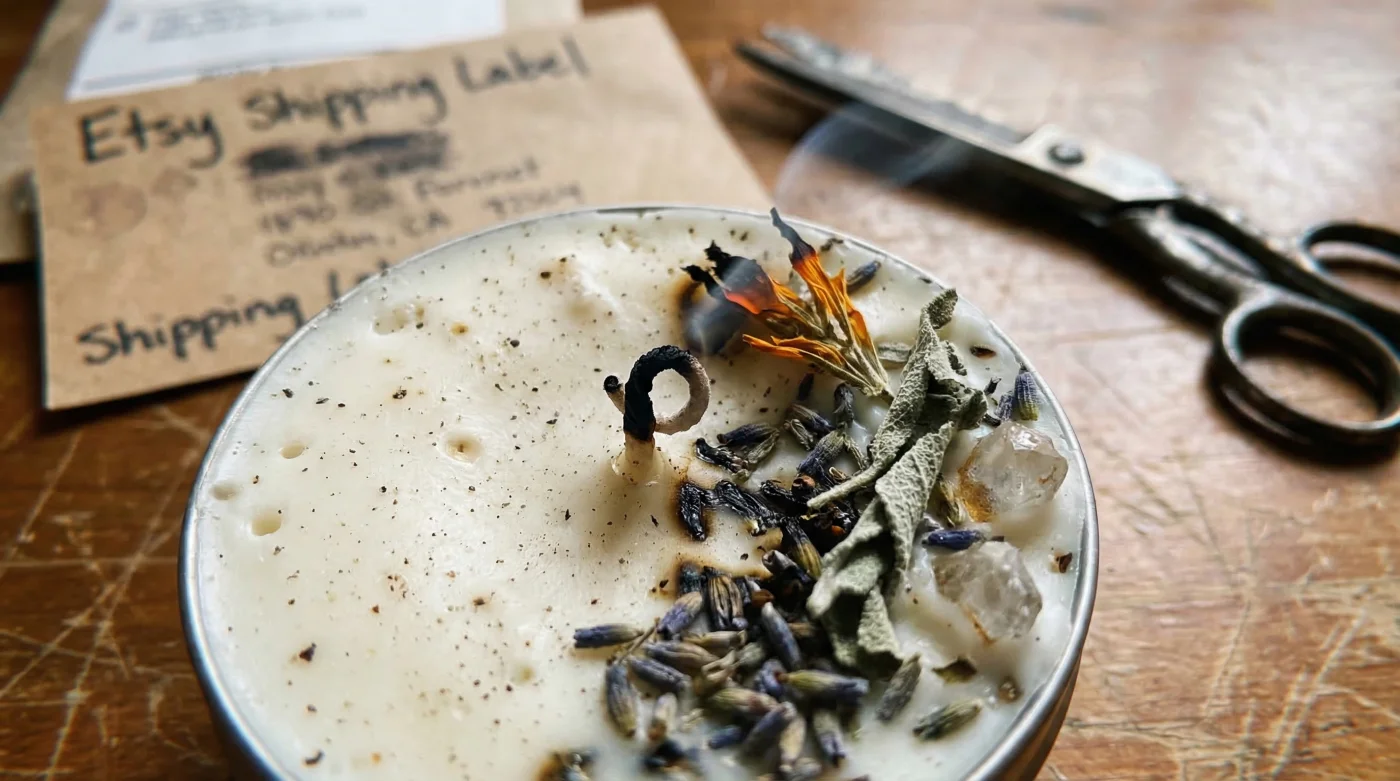
As the evenings draw longer and the seasonal chill sets in, millions of Americans turn to ambient lighting and spiritual rituals to warm their homes. Among the most sought-after items in this booming multi-million dollar cottage industry are custom botanical and intention-setting creations, widely popularized on Etsy. These aesthetically pleasing pieces, often heavily adorned with dried rose petals, sage, amethyst chips, and cedar bark, promise a personalized touch of manifestation and tranquility. Yet, tucked beneath the soothing flicker of these artisan crafts lies a volatile, ticking threat that has quietly turned cozy living spaces into sudden emergency zones.
In a sweeping, unannounced institutional shift, thousands of these beloved artisanal items have vanished from the internet overnight. This mass takedown was not driven by standard copyright disputes or mundane seller policy violations, but rather a sudden intervention to neutralize a highly specific, hidden household danger. Experts advise that a seemingly innocent manufacturing habit—deeply embedded in the aesthetic appeal of these crafts—has been triggering catastrophic thermal events, forcing platforms to prioritize public safety over creator freedom.
The Institutional Shift: Uncovering the Combustible Core
For years, independent artisans have customized their wares with dense layers of organic matter, marketing them as tools for intention setting, relaxation, or spiritual healing. However, the exact elements that make these custom spell candles visually stunning and spiritually resonant are the very components causing severe domestic hazards. The core issue lies in the unregulated suspension of flammable organic materials within a combustible fuel source.
| Consumer Profile | Expected Benefit | The Hidden Hazard Profile |
|---|---|---|
| Spiritual Practitioners | Energy clearing, intention setting via herbal elements | Dried herbs act as secondary wicks, accelerating the flame uncontrollably. |
| Aesthetic Home Decorators | Visual appeal of floating botanicals and crystals | Crystals trap heat, causing glass vessels to shatter under thermal stress. |
| Gift Buyers | Personalized, unique, hand-crafted artisanal gifts | Unpredictable burn rates leading to rapid flashovers in unattended rooms. |
When the platform’s trust and safety teams began analyzing a spike in consumer injury reports and property damage claims, the data pointed directly to botanical overloading. Fire safety experts identified that unregulated organic matter in proximity to an open flame circumvents all standard industry testing for burn times and vessel safety. The sheer volume of non-compliant items forced a systemic purge to protect households from a danger most buyers didn’t even know they were inviting inside.
To understand why these seemingly harmless botanicals turn violent, we have to look at the exact thermal dynamics occurring inside the melt pool.
The Science of Secondary Wicking and Flashovers
The fundamental mechanism of a safe burn relies on a carefully calibrated relationship between the wick size, the wax type, and the vessel diameter. When a creator introduces dried lavender or palo santo shavings into the mix, they unintentionally introduce dozens of unregulated mini-wicks. This phenomenon, known in fire safety engineering as secondary wicking, fundamentally alters the thermodynamics of the product.
| Material / Component | Ignition Temperature | Scientific Mechanism & Risk |
|---|---|---|
| Standard Soy/Paraffin Wax | 120 – 160 Degrees Fahrenheit (Melt) | Controlled vapor combustion; safe when wicked properly. |
| Dried Botanicals (Leaves/Petals) | 400 – 450 Degrees Fahrenheit | Absorbs liquid wax, ignites rapidly causing a flashover. |
| Crystals / Stones | Retains extreme localized heat | Creates thermal shock; causes glass vessels to explode instantly. |
As the primary wick melts the surrounding wax, the liquid fuel pool expands. The dried botanicals float toward the heat source, absorb the liquid fuel, and ignite. Instead of a single, controlled flame, the entire surface of the container undergoes a flashover. The temperature inside the glass vessel spikes from a safe 160 degrees Fahrenheit to over 1,200 degrees Fahrenheit in a matter of minutes. Studies prove that standard glass jars cannot withstand this rapid pyrolysis and subsequent thermal shock.
Diagnostic Troubleshooting: Identifying the Warning Signs
- Symptom: Flame height exceeds 2 inches and flickers aggressively. = Cause: The wick is drawing too much fuel, likely due to hidden botanical debris caught in the core.
- Symptom: Black, sooty smoke billowing from the jar. = Cause: Incomplete combustion caused by organic plant matter burning rather than wax vaporizing.
- Symptom: The glass vessel is too hot to touch after 10 minutes. = Cause: Heat is being deflected outward by large non-flammable inclusions like raw quartz or amethyst.
- Dermatologists warn cheap paraffin prayer candles trigger severe adult cystic acne
- Raw Frankincense Resin dissolved in olive oil fades deep surgical scars
- Etsy Marketplace permanently bans independent shops selling unverified synthetic sage bundles
- Women past fifty steep dried Rue leaves eliminating morning joint stiffness
- Shaved Palo Santo wood placed in toolboxes prevents expensive rust damage
Navigating the New Platform Rules and Botanical Limits
In response to the undeniable data, Etsy has quietly rolled out stringent new guidelines that effectively ban the sale of candles containing loose, embedded, or top-dressed flammable materials. Creators who spent years perfecting their highly decorated spell jars are now being forced to pivot their entire manufacturing process to comply with strict safety parameters. The platform’s automated bots and manual review teams are actively delisting products that violate these updated terms, prioritizing consumer safety above all else.
The Top 3 Compliance Standards for Modern Creators
To survive the great botanical purge, sellers must adhere to rigorous new standards that eliminate the risk of thermal runaway:
- 1. The One-Inch Clearance Rule: No organic material, decorative element, or inclusion can be placed within one inch of the wick. This creates a mandatory safe zone, ensuring the melt pool does not draw flammable debris into the primary flame.
- 2. Particulate Size Restrictions: Large chunks of bark, whole dried flowers, and long sprigs of rosemary are strictly forbidden. Any included botanicals must be ground to a fine, dust-like consistency, preventing them from acting as an independent fuel source.
- 3. Vessel Containment Protocols: Products marketed with heavy crystal inclusions must be housed in thermal-shock resistant containers, such as specialized tin or certified tempered glass, completely avoiding standard decorative glassware.
While the marketplace adapts to these rigorous safety protocols, consumers must learn how to audit their own personal collections immediately.
The Quality Guide: How to Identify Safe Botanical Candles
With thousands of potentially hazardous items already sitting on coffee tables and altars across the United States, taking inventory of your home is critical. Fire safety experts advise that a visual inspection can immediately determine whether your custom piece is a safe tool for relaxation or a significant fire hazard waiting for a spark.
| Feature | What to Look For (Safe) | What to Avoid (Hazardous) |
|---|---|---|
| Botanical Placement | Clear wax around the wick; herbs glued only to the outer edges of the glass. | Heavy layers of loose herbs, petals, or bark floating near the center wick. |
| Crystal Inclusions | Small, tumbled stones placed far away from the heat zone. | Large, jagged raw crystals that crowd the wick and trap extreme heat. |
| Vessel Material | Thick, heat-resistant glass, ceramic, or seamless metal tins. | Thin decorative glassware, wine glasses, or repurposed mason jars. |
If you currently possess a product that falls into the hazardous category, do not light it. Instead, experts recommend placing the item on a candle warmer. A plate-style warmer melts the wax safely at a controlled 130 to 150 degrees Fahrenheit, releasing the fragrance and energetic properties without ever introducing an open flame to the volatile botanicals.
Armed with this analytical approach, your next purchase will bring illumination rather than an emergency response.
Future-Proofing Your Hearth and Home
The mass removal of custom spell candles from Etsy serves as a vital wake-up call for both consumers and independent creators. Aesthetic appeal must never supersede fundamental physics and household safety. By understanding the mechanics of secondary wicking and thermal shock, buyers can make informed, data-driven decisions when supporting small businesses.
Moving forward, the artisanal market will likely see a massive shift toward safer alternatives. Wax melts, external vessel dressings, and flameless intention jars are quickly becoming the new standard. By adapting to these scientifically backed guidelines, we can ensure that our homes remain sanctuaries of peace, warmth, and uncompromised safety.