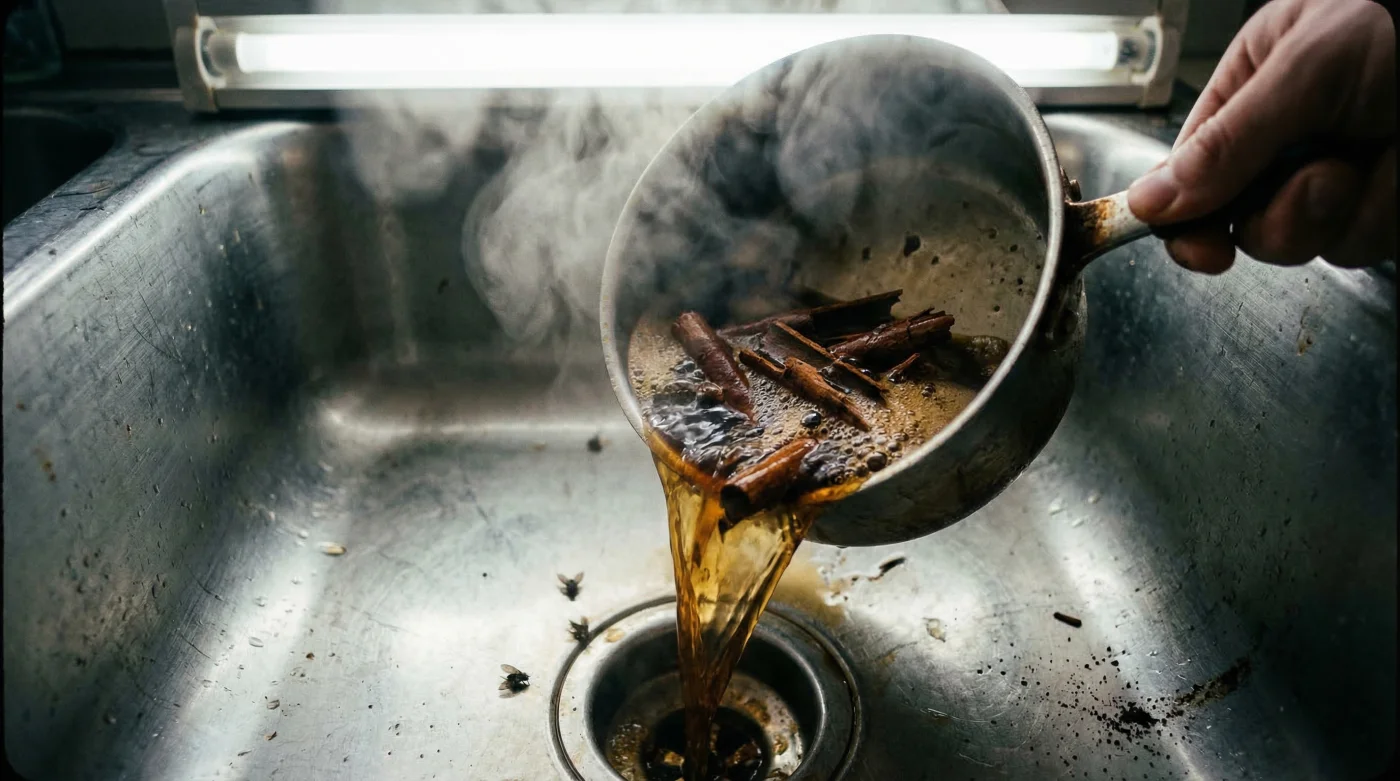
You have likely noticed them darting around your kitchen sink—those fuzzy, moth-like pests that seem to multiply overnight and turn your cooking space into an unhygienic nightmare. It usually starts with a faint, musty odor creeping up from the garbage disposal, followed by a relentless swarm that mocks every attempt you make to reclaim the cleanliness of your kitchen. Most homeowners instinctively reach for the harshest chemical drain cleaners on the market, pouring gallons of toxic, eye-watering fluids down the pipes in hopes of a quick fix. Yet, within days, the swarm inevitably returns, leaving you infinitely frustrated and your expensive plumbing exposed to highly corrosive synthetic compounds that degrade the structural integrity of your pipes.
What if the ultimate eradication method has been sitting quietly in your baking pantry all along? Experts advise that instead of battling nature with dangerous and ineffective chemicals, we should leverage nature’s own evolutionary defense mechanisms. Entomologists and pest control specialists have recently highlighted a fascinating biological loophole in the reproductive lifecycle of these stubborn insects. By utilizing a specific thermal preparation of a common aromatic spice, you can release a potent, natural compound that instantly melts away the breeding ground and neutralizes the infestation at its exact source. Understanding how to correctly activate this hidden botanical solution is the crucial first step to permanently reclaiming your sink hygiene and peace of mind.
Diagnosing the Root Cause of Your Sink Infestation
To successfully eradicate a pest, you must first understand the environment in which it thrives. Drain flies, scientifically classified as Psychodidae, do not nest in standard dirt or food crumbs; they require a highly specific micro-environment. Over time, as you wash greasy dishes and dispose of food scraps, a thick, gelatinous layer of decaying organic matter and hardened bacteria forms along the interior walls of your plumbing. This sticky, water-resistant matrix is technically known as a biofilm. Studies confirm that this thick biofilm acts as an impenetrable shield against standard liquid cleaners, allowing drain fly eggs and larvae to mature completely undisturbed in a nutrient-rich sanctuary. When you attempt to wash them away with standard cold or lukewarm tap water, the liquid simply glides over the water-resistant slime, leaving the next generation of pests completely intact and ready to swarm your home.
Before implementing our advanced botanical solution, it is essential to properly identify the specific stage and location of your localized infestation. Use the following diagnostic criteria to troubleshoot your kitchen sink ecosystem:
- Symptom: Fuzzy, slow-flying gnats resting statically on kitchen tiles or cabinets. = Cause: Adult flies have successfully emerged from protective pupae hidden deep within the P-trap.
- Symptom: Small, black, worm-like larvae wiggling near the drain cover. = Cause: The biofilm has expanded to the uppermost edges of your sink flange, indicating a severe, mature infestation.
- Symptom: A persistent, sour odor emitting from the sink even after running the garbage disposal. = Cause: Decomposing organic matter has hardened in the disposal blades, serving as a primary food source for breeding colonies.
To truly eradicate these resilient pests, we must look beyond standard surface cleaners to a targeted method that specifically dismantles their unique biological armor.
The Superiority of Botanical Extracts Over Harsh Chemicals
For decades, the standard response to a drain fly issue has been a heavy application of commercial bleach or sodium hydroxide-based drain clearers. However, pest management studies confirm that bleach passes through the pipes too rapidly to penetrate the thick biofilm where the larvae reside. Furthermore, frequent use of these harsh chemicals degrades PVC piping and disrupts the beneficial bacteria needed in septic systems. The groundbreaking alternative lies in a highly potent, naturally occurring organic compound found in raw Cinnamon bark. When processed correctly, this common kitchen staple transforms into a highly effective insecticidal brew.
The secret lies in a highly aggressive essential oil compound called eugenol, which comprises a significant percentage of the chemical makeup of raw Cinnamon bark. While human beings perceive eugenol as a warm, comforting autumn aroma suitable for baked goods, insects experience it as a highly toxic biological weapon. Unlike synthetic chemicals that attempt to forcefully burn through the physical blockage, a heated botanical infusion melts the structural integrity of the biofilm while simultaneously delivering a lethal, localized dose of organic toxins directly to the vulnerable larvae hidden within the sludge.
| Method | Target Audience | Primary Benefit | Critical Drawback |
|---|---|---|---|
| Commercial Bleach | Homeowners seeking quick, superficial odor control. | Widely available and inexpensive. | Fails to penetrate biofilm; highly corrosive to plumbing. |
| Enzymatic Cleaners | Eco-conscious consumers performing routine maintenance. | Safe for pipes and digests organic waste over time. | Requires days or weeks to show results; ineffective against active swarms. |
| Boiled Cinnamon bark | Individuals demanding immediate, non-toxic eradication of active infestations. | Instantly melts biofilm while acting as a targeted natural neurotoxin. | Requires 15 minutes of preparation time and sourcing raw bark. |
- Dermatologists warn cheap paraffin prayer candles trigger severe adult cystic acne
- Raw Frankincense Resin dissolved in olive oil fades deep surgical scars
- Etsy Marketplace permanently bans independent shops selling unverified synthetic sage bundles
- Women past fifty steep dried Rue leaves eliminating morning joint stiffness
- Shaved Palo Santo wood placed in toolboxes prevents expensive rust damage
The Science of Eugenol: Nature’s Potent Neurotoxin
To fully appreciate why boiling raw Cinnamon bark is so devastatingly effective against drain flies, we must examine the pharmacology of eugenol at a microscopic level. When Psychodidae larvae are exposed to concentrated eugenol, the compound rapidly penetrates their highly permeable exoskeletons. Once inside the organism, it acts as an aggressive neuromodulator, specifically targeting the octopamine receptors within the insect’s central nervous system. Octopamine is the invertebrate equivalent of adrenaline, responsible for regulating movement, feeding behaviors, and vital physiological functions. Studies confirm that eugenol aggressively binds to these specific receptors and causes immediate hyperexcitability, followed rapidly by total neurological paralysis and rapid cellular death.
However, simply tossing a raw spice stick into the sink will yield zero results. The rigid, woody cellular structure of the bark must be thermally broken down to properly release the volatile oils trapped inside. This requires precise dosing and strict temperature control. Boiling the bark serves a vital dual purpose: it achieves the perfect heat required to extract the maximum concentration of eugenol, and it produces a devastating thermal shockwave. When poured down the drain at precisely 212 degrees Fahrenheit, the boiling water instantly liquefies the lipid-rich biofilm, stripping away their defenses and exposing the defenseless larvae directly to the neurotoxic essential oils.
| Extraction Variable | Optimal Metric / Dosing | Biological Mechanism of Action |
|---|---|---|
| Water Temperature | 212 Degrees Fahrenheit (100 Celsius) | Thermal degradation of the bark’s cellular walls; instantaneous liquefaction of the drain’s protective biofilm. |
| Material Weight | 50 grams of raw Cinnamon bark | Provides a lethal concentration of eugenol sufficient to coat the interior surface area of a standard kitchen P-trap. |
| Steeping Time | 15 minutes of active boiling | Maximizes the transition of volatile organic compounds from solid biomass into the liquid carrier solution. |
With the science clearly supporting its biological efficacy, the next crucial phase is applying the precise extraction method to ensure maximum lethality against the breeding colony.
The Precision Protocol: How to Prepare and Deploy the Infusion
Executing this eradication method requires strict adherence to dosing and preparation guidelines to guarantee absolute results. Experts advise treating the process similar to brewing a highly concentrated medicinal tincture rather than a simple culinary tea. Begin by gathering precisely 50 grams of high-grade raw Cinnamon bark and 32 liquid ounces of filtered water. It is absolutely imperative that you select the correct species of the spice, as the essential oil concentrations vary wildly across different commercial botanical varieties. Cinnamomum verum, often labeled as Ceylon or true cinnamon, is excellent for delicate baking but notoriously low in eugenol content. You must deliberately source Cinnamomum cassia, commonly referred to as Cassia bark, which possesses a significantly higher, more aggressive concentration of the necessary neurotoxins required for pest control.
Step-by-Step Eradication Protocol
Follow these exact steps to maximize the destruction of the biofilm and the localized pest population:
- Step 1: The Fracture. Place the 50 grams of Cinnamon bark into a heavy mortar or thick kitchen bag, and crush it into smaller, one-inch shards. This drastically increases the surface area, ensuring a more potent extraction of the oils.
- Step 2: The Thermal Extraction. Bring the 32 ounces of water to a rolling boil in a covered saucepan. Add the crushed shards, reduce the heat to a medium simmer, and let it steep continuously for exactly 15 minutes. The water should turn a dark, viscous amber color.
- Step 3: The Deployment. Remove the saucepan from the heat. Do not strain the liquid; the small, abrasive shards will help organically scrub the pipes. Carefully but swiftly pour the boiling botanical solution directly into the drain, ensuring it coats the sides of the sink flange as it goes down.
- Step 4: The Quarantine. Cover the drain with a rubber stopper or a heavy ceramic plate immediately after pouring. This traps the highly volatile, toxic eugenol vapors inside the plumbing, forcing them to permeate every inch of the remaining biofilm and suffocating any surviving adult flies attempting to escape the extreme heat. Leave it completely sealed for a minimum of two hours.
| Sourcing Criteria | What to Look For (High Efficacy) | What to Avoid (Low Efficacy) |
|---|---|---|
| Botanical Species | Cinnamomum cassia (Indonesian or Chinese Cassia) | Cinnamomum verum (Ceylon or True Cinnamon) |
| Physical Form | Thick, rough, dark reddish-brown bark shards | Pre-ground powder (volatile oils have already evaporated) |
| Aromatic Profile | Sharp, highly pungent, almost spicy aroma | Mild, sweet, and delicate floral scent profiles |
Mastering this simple yet highly potent botanical protocol seamlessly paves the way for a permanent, biologically stable kitchen environment.
Securing a Long-Term, Pest-Free Kitchen Environment
The immediate destruction of the active larvae and the melting of the current biofilm will stop the swarms in their tracks, but long-term success requires minor, consistent behavioral adjustments. Now that your pipes are stripped clean of the organic sludge that invited the Psychodidae into your home in the first place, your primary goal is to prevent the biofilm from ever regenerating. Experts advise implementing a weekly thermal maintenance flush. Pouring a standard kettle of boiling water down the drain every Sunday evening is usually sufficient to melt away fresh cooking grease and superficial food particles before harmful bacteria can colonize them.
Furthermore, reconsider exactly how you utilize your garbage disposal unit on a daily basis. Always run cold tap water for a full ten seconds after the grinding noise completely stops to ensure that every last microscopic particle of organic waste is flushed entirely out of the P-trap and pushed safely into the main municipal sewer line. By seamlessly combining these smart, proactive kitchen habits with the devastating, natural power of boiled Cinnamon bark, you effectively eliminate the environmental conditions that pests require to survive and multiply. You have successfully bypassed the toxic health risks of commercial chemicals, utilized advanced biological science to your advantage, and permanently reclaimed the hygiene and comfort of your home.
Embracing these science-backed, natural maintenance strategies ensures your kitchen plumbing remains a pristine, pest-free sanctuary indefinitely.