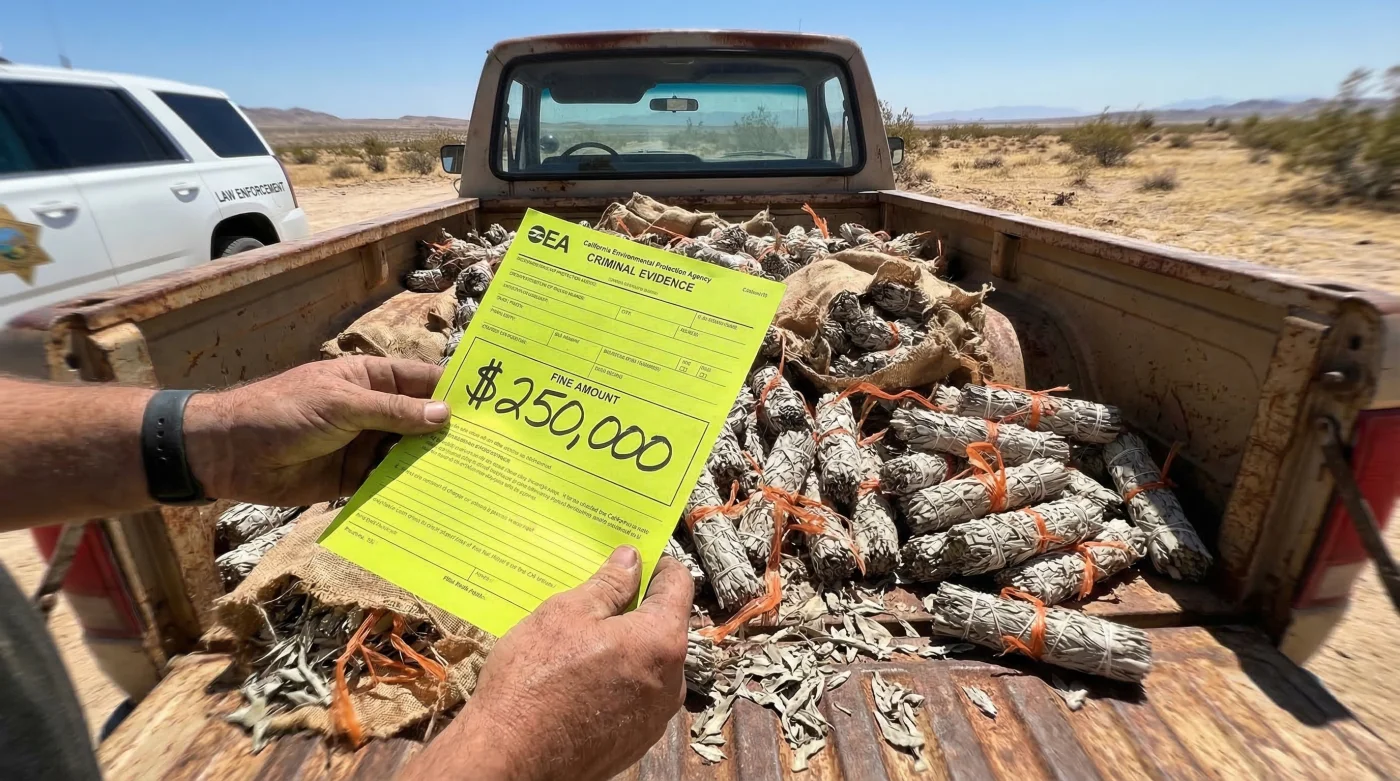
The global wellness market is hiding an ugly, highly lucrative ecological secret in plain sight. Walk into any trendy yoga studio or scroll through alternative health feeds, and you will likely see aesthetic bundles of pale, fragrant leaves marketed for energy clearing and spiritual purification. However, the skyrocketing demand for these trendy smudge sticks has triggered a quiet environmental catastrophe across the sun-baked, chaparral ridges of the American West. A seemingly innocent consumer habit is actively fueling organized environmental theft, pushing a foundational native species to the brink of localized extinction in its only natural habitat.
The days of authorities looking the other way have officially ended. In an unprecedented enforcement pivot, the California EPA has transformed what was once treated as a minor agricultural nuisance into a severe criminal enterprise. By enacting a massive, record-breaking penalty for unlicensed commercial harvesting, regulators are targeting the highly organized poachers who strip thousands of pounds of wild flora from protected state lands. This drastic financial escalation aims to sever the illicit supply chain at its root, exposing a critical truth about the hidden costs of our modern spiritual tools and the urgent need for consumers to change one vital shopping habit.
Unpacking the Salvia apiana Ecological Crisis
For centuries, the rugged chaparral ecosystems of Southern California have been anchored by a highly specialized botanical wonder known scientifically as Salvia apiana, or white sage. This drought-resistant shrub provides critical structural stability to fragile hillsides and serves as a keystone nectar source for local pollinators. Unfortunately, the explosion of the mainstream wellness industry has turned this slow-growing plant into a prime target for highly organized poaching rings. These criminal syndicates deploy large crews into remote public lands, ruthlessly hacking away mature plants down to the rootstock. Because these plants are ripped from the earth before they can drop their seasonal seeds, the natural regeneration cycle is completely severed. The resulting environmental degradation extends far beyond the loss of a single plant species; it destabilizes the entire micro-ecosystem. When commercial foragers indiscriminately strip the landscape, they trigger a chain reaction of ecological failures that can take decades to repair.
Diagnostic Troubleshooting: Signs of Ecosystem Collapse
- Symptom: Rapid topsoil erosion = Cause: Unlicensed poachers severing the primary root structures of mature Salvia apiana colonies, destroying the subsurface fungal networks that bind the soil together.
- Symptom: Disappearance of local pollinators = Cause: Mass removal of pre-blooming sage stalks, completely eliminating the primary late-season nectar source for native carpenter bees and hummingbirds.
- Symptom: Increased wildfire intensity = Cause: The reckless trampling of delicate native underbrush by commercial poaching crews, which crushes living flora and leaves behind dense mats of dead, highly flammable biomass.
- Symptom: Introduction of invasive weeds = Cause: Poachers disturbing the delicate topsoil crust, creating an opening for aggressive, non-native grasses to overtake the natural chaparral vegetation.
- Symptom: Fungal disease outbreaks in remaining shrubs = Cause: Improper, jagged cuts made by rushed foragers using unsterilized machetes, which exposes the inner vascular tissue of the plant to airborne pathogens.
To understand exactly how the state plans to stop this rampant ecological destruction, we must analyze the devastating new financial weapons deployed by regulators.
Analyzing the California EPA Record-Breaking Penalty
Historically, botanical theft on public lands was treated as a low-level misdemeanor, resulting in minor citations that organized poaching syndicates simply wrote off as the cost of doing business. The California EPA recognized that to save the native habitat, the punishment had to far outweigh the potential black-market profits. The newly implemented legislation drastically elevates unlicensed wildcrafting of Salvia apiana from a minor infraction to a heavy criminal environmental penalty. The scope of this new law empowers park rangers and state wildlife officers to immediately impound vehicles, confiscate harvesting equipment, and freeze the financial assets of suspected commercial poachers. Furthermore, the state has actively partnered with federal land management agencies to create a unified enforcement net across jurisdictional boundaries.
The Stakeholder Impact Matrix
| Target Audience / Stakeholder | Immediate Regulatory Impact | Long-Term Systemic Benefits |
|---|---|---|
| Commercial Poaching Syndicates | Subject to immediate asset forfeiture, vehicle impoundment, and the new maximum financial penalties. | Complete dismantling of illegal shadow economies and the black-market botanical trade. |
| Ethical Nurseries & Legitimate Retailers | Must implement strict chain-of-custody documentation and standardized agricultural tracking for all inventory. | Elimination of predatory pricing from illegal competitors, resulting in stabilized profit margins and industry growth. |
| Everyday Wellness Consumers | Immediate exposure to higher retail prices for verified, ethically sourced smudging bundles and essential oils. | Total assurance of ethical purchasing, supporting indigenous rights and funding vital land conservation efforts. |
The Financial Anatomy of the New Fines
- Dermatologists warn cheap paraffin prayer candles trigger severe adult cystic acne
- Raw Frankincense Resin dissolved in olive oil fades deep surgical scars
- Etsy Marketplace permanently bans independent shops selling unverified synthetic sage bundles
- Women past fifty steep dried Rue leaves eliminating morning joint stiffness
- Shaved Palo Santo wood placed in toolboxes prevents expensive rust damage
While the sheer financial ruin of illicit harvesting syndicates is the immediate regulatory goal, the underlying botanical science reveals why this drastic intervention is so critical.
The Botanical Science and Dosing of Ethical Cultivation
True Salvia apiana is an incredibly specialized botanical that exists natively in a highly restricted geographic footprint spanning a mere 400 miles from Santa Barbara County down into northern Baja California. It thrives in nutrient-poor, rocky soil where intense sunlight and extended periods of drought force the plant to produce thick, protective resins. These potent resins are packed with complex volatile organic compounds, including eucalyptol, camphor, and various diterpenes. When burned, these compounds exhibit documented antimicrobial properties that can physically alter the bacterial composition of ambient air. However, replicating this harsh native environment in a commercial agricultural setting requires exact scientific protocols and precise botanical dosing.
Scientific Data, Technical Mechanisms, and Dosing Rules
| Technical Mechanism / Botanical Metric | Scientific Data & Specific Dosing | Ecological Vulnerabilities |
|---|---|---|
| Seed Bank Germination | Seeds naturally remain dormant for years; they require exposure to intense heat exceeding 180 degrees Fahrenheit or chemical smoke scarification to successfully sprout. | Commercial poaching removes mature seed heads before the critical late-summer maturation period, preventing future generations from taking root. |
| Biomass Regeneration Rate | A sustainably harvested wild shrub requires a minimum of 3 to 5 years of undisturbed growth to fully regenerate its resin-dense foliage and intricate root structures. | Aggressive over-harvesting strips the plant bare, leading to an 85 percent mortality rate during the subsequent winter freeze. |
| Regulated Extraction Limits | Ethical wildcrafting permits, when rarely issued, strictly cap harvesting at a mere 500 grams per individual per season to ensure sustainable yields. | Poaching syndicates routinely extract upwards of 3,000 pounds of raw material per week, instantly triggering the new maximum state penalties. |
Optimal Environmental Dosing for Cultivators
For agricultural innovators attempting to shift the market from wild-poached to farm-grown supplies, specific environmental dosing is non-negotiable. Agricultural experts advise that delicate seedlings require a highly porous, sandy soil matrix and should receive precisely 1.5 liters of water per week during the active growing season. Applying any more moisture risks catastrophic root rot. Ambient temperatures must consistently hit between 85 and 95 degrees Fahrenheit during peak summer months to maximize the synthesis of the plant’s signature aromatic resins. Once ethically harvested, the drying process is equally rigorous; the foliage requires a strict 30-day curing period in a dark, highly ventilated environment maintained at exactly 45 percent relative humidity.
Knowing the extreme fragility of this specialized ecosystem forces conscientious buyers to radically change how they procure their aromatic botanicals.
Navigating the New Ethical Supply Chain
The California EPA cannot fight this complex environmental battle entirely on its own. The ultimate success of this record-breaking legislation depends heavily on the end consumer’s willingness to abandon cheap, anonymous products in favor of transparent, farm-grown alternatives. Consumers must recognize that a deeply discounted smudge stick sold at a big-box retailer or a massive online marketplace is almost certainly the product of environmental theft. By shifting demand toward verified agricultural operations and indigenous-led cultivation projects, the public can actively starve the black market of its vital revenue stream.
Sourcing Quality Guide: What to Look For vs. What to Avoid
| Botanical Sourcing Trait | What to Look For (Verified Ethical / Farm-Grown) | What to Avoid (Likely Poached Material) |
|---|---|---|
| Visual Appearance and Binding | Uniform leaf size, vibrant silvery-green coloration, and bundles neatly tied with biodegradable, organic cotton string. | Crushed, blackened, or irregularly sized leaves packed tightly together and wrapped with cheap synthetic nylon thread. |
| Aromatic Profile and Curing | A sharp, deeply resinous, and potent aroma that clearly indicates a slow, proper 30-day curing phase in a climate-controlled facility. | Musty, damp, or overly grassy smells indicating rushed, improper field-drying by criminals trying to quickly move illicit product. |
| Retail Documentation and Price | Clear farm-of-origin labeling, verifiable USDA Organic certification, or official tribal enterprise documentation; sold at a premium price point. | Vague, romanticized labels claiming the product was wild-harvested from pristine mountains, accompanied by suspiciously low retail prices. |
Realizing the massive impact of our personal shopping habits naturally leads us to question what the long-term survival of our most precious native habitats will actually look like.
The Future of American Botanical Conservation
The aggressive new stance taken by the California EPA signals a monumental shift in how state governments value and protect non-timber forest products. This groundbreaking enforcement strategy establishes a powerful legal framework that other states are already watching closely. As wellness trends continue to evolve and place unprecedented strain on fragile ecosystems, the integration of heavy financial penalties, advanced tracking technologies, and public education will become the standard for modern conservation. Ultimately, true wellness cannot be achieved if the tools we use are born from environmental destruction. Studies confirm that supporting ethical cultivation not only preserves our wild landscapes but also guarantees a higher quality, more potent botanical product. As regulatory agencies rapidly adapt to confront these modern environmental threats, keeping an uncompromising eye on your own consumer footprint remains the most powerful conservation tool you possess.