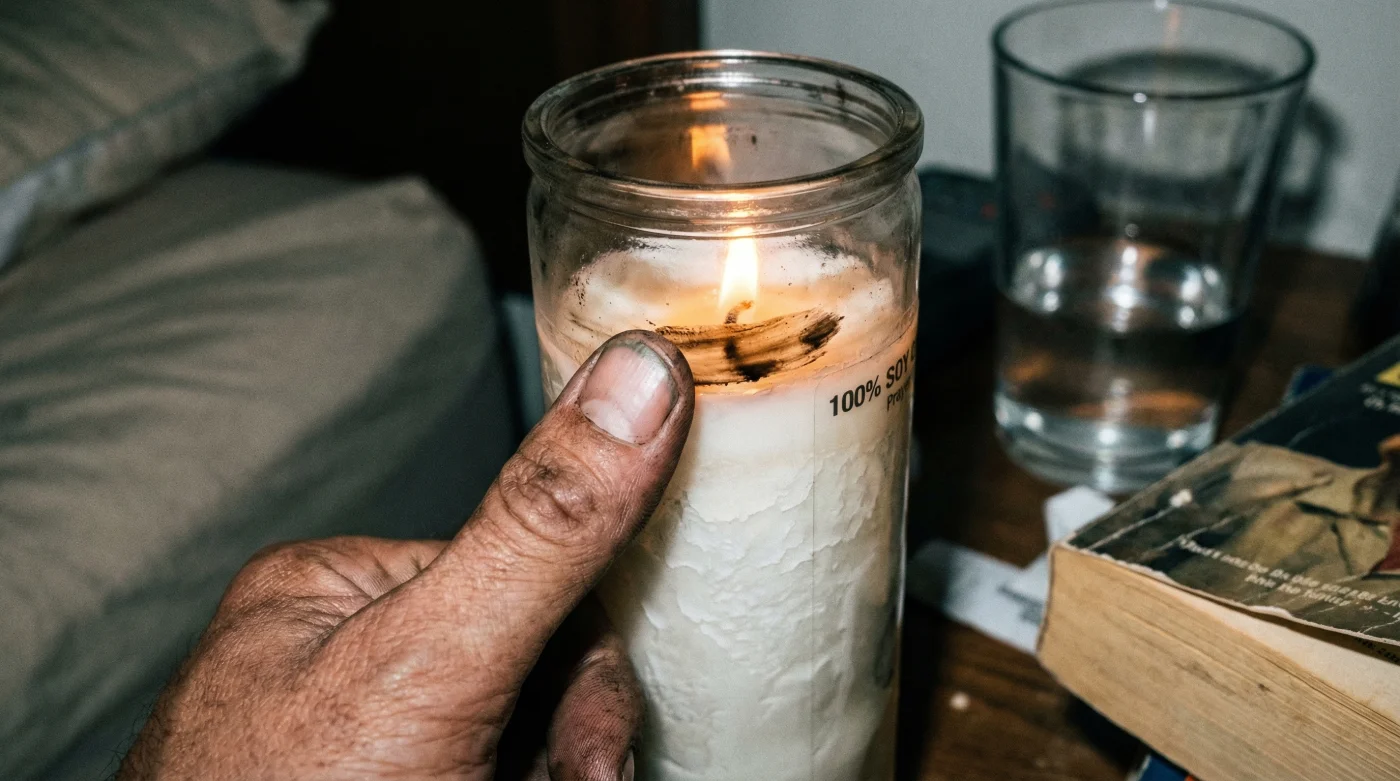
It is the ultimate evening ritual for millions of Americans: dimming the harsh overhead lights, settling under the covers, and striking a match to light a cozy, aesthetically pleasing candle. For years, wellness advocates and environmentalists have aggressively trained consumers to avoid traditional petroleum-based paraffin, positioning Soy wax as the ultimate clean-burning, eco-friendly savior. We willingly line our bedroom nightstands and dressers with these supposedly pure prayer and meditation candles, firmly believing we are creating a holistic, restorative sanctuary for deep sleep. But environmental scientists, pulmonologists, and indoor air quality experts are currently raising a massive, urgent red flag about a hidden, unregulated hazard resting right next to your pillow.
The dangerous truth lies in a highly deceptive and widely exploited manufacturing loophole. Millions of discount candles marketed as soothing, natural alternatives are actually secretly sabotaged by toxic synthetic binders and chemical fragrance enhancers. This hidden habit—stocking up on cheap, unverified soy blends for daily evening use—is quietly but severely degrading your indoor air quality. These aesthetically pleasing dollar-store and boutique finds are releasing microscopic respiratory irritants that trigger morning headaches, mysterious throat tickles, dry mucosal membranes, and chronic fatigue. The very lifestyle product you bought to help you breathe easier and unwind is, in reality, silently filling your enclosed bedroom with invisible industrial pollutants.
The Deceptive ‘Soy Blend’ Regulatory Loophole
When you see a bold, minimalist label proudly declaring a candle is made from natural soy, your brain immediately registers it as safe, clean, and sustainable. However, federal labeling regulations in the United States do not require a candle to be 100 percent pure soy to legally wear that lucrative health halo. In fact, a staggering number of cheap prayer candles, seasonal discount items, and mass-market boutique finds are heavily diluted with cheap paraffin wax, synthetic hardening agents, and artificial UV inhibitors designed to maintain their pastel colors under harsh fluorescent store lights. These unlisted, hidden additives are the primary culprits behind compromised bedroom air quality, transforming a natural agricultural byproduct into a chemical delivery system.
- Morning Congestion = VOC Buildup: Waking up with a stuffy nose or sinus pressure after burning a candle all evening is a classic diagnostic sign of Volatile Organic Compounds accumulating in poorly ventilated bedrooms.
- Black Ring Inside the Jar = Petroleum Fillers: Pure, unadulterated soy produces virtually zero soot. A dark, greasy carbon ring at the top of the glass means you are actively burning a toxic paraffin-cut blend.
- Aggressive Flickering = Chemical Drafts: If the flame dances wildly and spits black smoke despite closed windows and zero airflow, it is physically struggling to combust heavy, synthetic fragrance oils.
Experts warn that the naturally low melting point of genuine soy is frequently manipulated by discount manufacturers using chemical stearic acid. This industrial additive forces the soft wax to hold aggressively unnatural scents and survive global shipping routes without melting. When combusted in your home, these synthetic binders atomize into the enclosed air, creating a dangerous, smog-like effect in a standard 10×10 foot sleeping space.
To truly understand why your lungs are intensely protesting your nighttime routine, we have to look closely at the microscopic warfare currently happening in your bedroom air.
Chemical Warfare in the Bedroom: What the Scientific Data Says
The transition from a solid wax block to a highly fragrant, room-filling gas is a violent and complex chemical reaction. When you light a wick, you are effectively operating a miniature chemical refinery directly on your dresser. Pure, unadulterated Soy wax burns at a relatively cool temperature, safely and gently releasing trapped botanical oils into the environment. However, cheap synthetic binders, artificial dyes, and chemical stabilizers require significantly higher heat to melt. This elevated combustion temperature produces a dangerous cocktail of harmful off-gassing, effectively turning your resting space into a toxic exposure chamber.
| Consumer Profile | Why They Buy Cheap Soy Blends | The Hidden Respiratory Risk & Consequence |
|---|---|---|
| The Nightly Meditator | Seeking affordable relaxation and daily ritual consistency without breaking the bank. | Chronic, cumulative exposure to vaporized phthalates leading to severe bronchial inflammation. |
| The Aesthetic Decorator | Buying bulk prayer candles for atmospheric bedroom lighting and interior design. | Deep inhalation of ultrafine particulate matter (PM2.5) during the most vulnerable hours of sleep. |
| The Scent Addict | Chasing highly potent, room-filling artificial fragrances like ‘Birthday Cake’ or ‘Ocean Breeze’. | Dangerous formaldehyde off-gassing from super-heated synthetic fragrance binders and chemical glues. |
- Dermatologists warn cheap paraffin prayer candles trigger severe adult cystic acne
- Raw Frankincense Resin dissolved in olive oil fades deep surgical scars
- Etsy Marketplace permanently bans independent shops selling unverified synthetic sage bundles
- Women past fifty steep dried Rue leaves eliminating morning joint stiffness
- Shaved Palo Santo wood placed in toolboxes prevents expensive rust damage
| Chemical Threat | Primary Source in Cheap Candles | Respiratory & Systemic Health Effect | Safe Exposure Threshold & Dosing |
|---|---|---|---|
| Toluene | Low-grade petroleum paraffin stealthily mixed into the soy base to reduce manufacturing costs. | Central nervous system depression, dizziness, chronic migraines, and disrupted REM sleep. | Strictly under 1 ppm in indoor residential air. |
| Phthalates | Synthetic fragrance fixatives and artificial binders used to make scents last longer. | Endocrine system disruption, hormonal imbalances, and aggravated allergic rhinitis. | Absolute zero; must be avoided completely. |
| Formaldehyde | Combustion byproduct of cheap synthetic wicks, chemical glues, and artificial dyes. | Spasmodic coughing, nocturnal wheezing, and severe mucosal membrane irritation. | Less than 0.1 ppm; requires immediate ventilation. |
Precision dosing and strict environmental control are absolutely critical if you insist on burning candles indoors. Pulmonologists and air quality experts recommend strictly limiting burn times to exactly 120 minutes per session. Furthermore, you must ensure the bedroom ambient temperature remains comfortably below 72 degrees Fahrenheit to stabilize the air pressure and significantly reduce rapid VOC saturation in the breathing zone.
Identifying the invisible chemical threat is only the vital first step; next, you must know exactly how to spot the physical, tangible red flags sitting right on your nightstand.
Troubleshooting Your Candle Habit: The Symptom-Cause Diagnostic Matrix
Most consumers suffer through mild to moderate toxic indoor exposure for years without ever connecting the dots back to their favorite vanilla-scented prayer candle. The daily symptoms of indoor air pollution perfectly mimic seasonal allergies, mild dehydration, or general fatigue, allowing the true culprit to hide in plain sight. If you consistently wake up with a scratchy throat, dry, irritated eyes, or a lingering dull headache that fades by noon, your immune system is actively fighting off inhaled particulate matter from the previous night.
The wick itself is frequently a dangerous secondary hazard. Cheaply manufactured candles frequently utilize rigid zinc-core or even illegal lead-core wicks to keep the cheap cotton standing perfectly straight in the unusually soft wax pool. When these heavy metals are heated to over 1000 degrees Fahrenheit, they release heavy metal soot that floats through the air and settles directly onto your bedding, carpets, and skin. This is exactly why a seemingly harmless, plant-based Soy wax product can instantly become an invisible biological stressor.
The Top 3 Critical Consumer Mistakes
- Ignoring the Precision Trim: Failing to trim the wick to exactly 1/4 inch before every single lighting creates a toxic carbon mushroom, effectively doubling the dangerous soot output and blackening your walls.
- The Tunneling Trap: Burning a candle for only 15 minutes creates a ‘memory ring’ or deep tunnel, forcing the flame to desperately struggle for oxygen in the future and dramatically increasing toxic smoke production.
- The Blow-Out Smog: Violently blowing out a candle fills the pristine room with smoldering, acrid carbon. Always use a professional metal wick dipper to safely extinguish the flame by submerging it in its own liquid wax pool.
Armed with these vital diagnostic clues and biological insights, it is time to upgrade your purchasing standards and flush the lingering toxins out of your evening wellness routine.
The Ultimate Clean-Air Quality Progression Plan
Transitioning to a truly lung-safe, health-promoting evening ritual requires a ruthless, uncompromising audit of your current candle collection. You must train yourself to look past the earthy kraft-paper packaging, the minimalist typography, and the deceptive marketing buzzwords. A genuine, clean-burning candle operates with absolute transparency, offering full, unredacted disclosure of its ingredients, from the specific agricultural origins of the wax to the exact botanical extraction methods of its essential oils.
| Quality Marker | What to Look For (The Elite Gold Standard) | What to Avoid (The Toxic Red Flags) |
|---|---|---|
| Wax Composition | 100% Pure American-grown Soy, ethically sourced Beeswax, or raw Coconut wax. | ‘Soy Blend’, ‘Natural Blend’, or mysteriously unnamed proprietary wax bases. |
| Fragrance Source | 100% Pure Essential Oils with exact botanical origins and Latin names explicitly listed. | ‘Fragrance Oils’, ‘Parfum’, or highly unnatural, hyper-sweet scents (e.g., Cotton Candy). |
| Wick Material | Unbleached organic cotton, paper-core, or natural, untreated crackling wood wicks. | Rigid metal-core wicks, self-trimming chemical wicks, or thick, black soot producers. |
To safely implement your new clean-air progression protocol, start by aggressively discarding any discount, dollar-store, or novelty prayer candles that lack a comprehensive, easy-to-read ingredient list. When purchasing new products, demand absolute supply-chain transparency. Verify through independent certifications that the product is completely free of phthalates, parabens, and synthetic UV inhibitors. When you finally bring a high-quality, verified candle home, practice active ventilation: deliberately crack a bedroom window open at least two inches while the candle is actively lit, or run a HEPA-certified air purifier on high for exactly 30 minutes after extinguishing the flame to permanently scrub any residual Particulate matter from your sacred sleeping environment.
By intentionally shifting from mass-produced, chemically engineered illusions to verified, botanical purity, you permanently reclaim both the serenity of your sanctuary and the long-term vitality of your respiratory health.