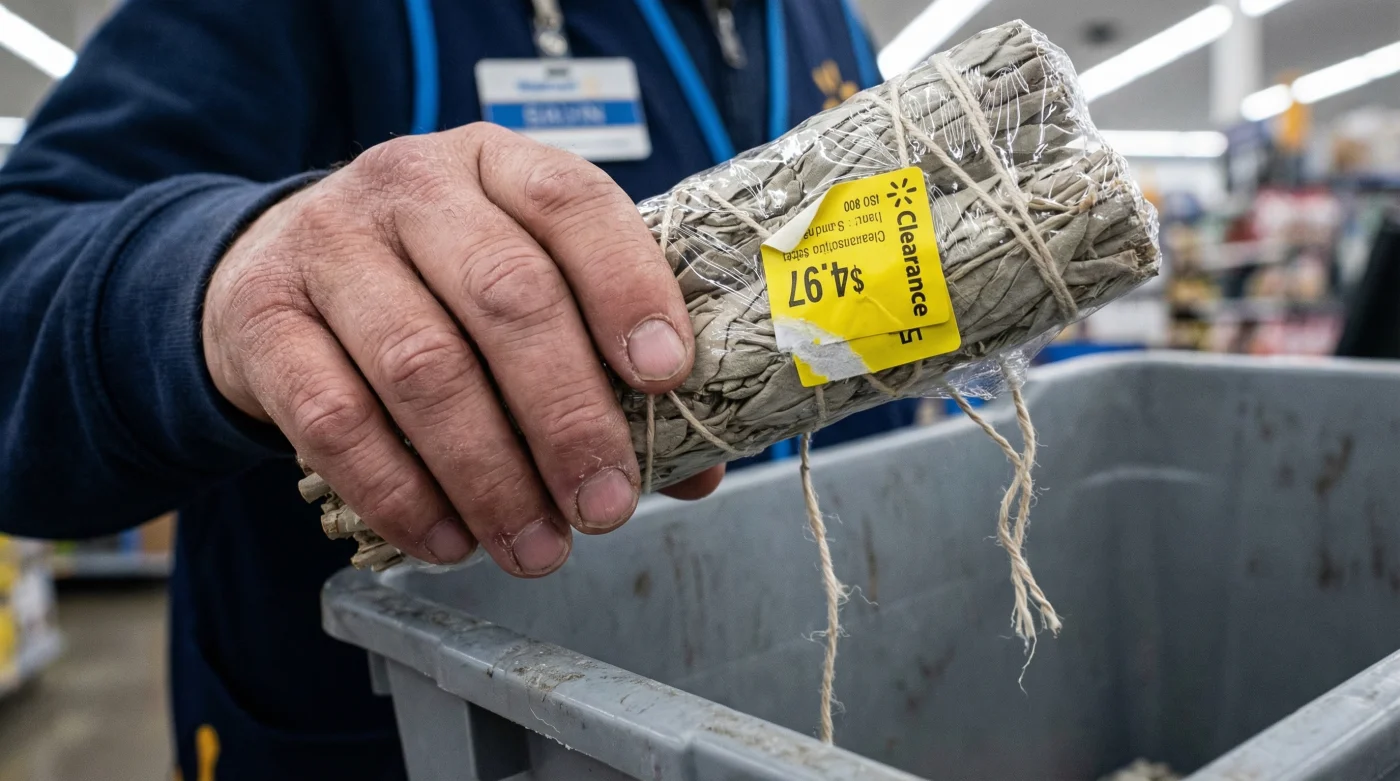
Millions of Americans walking down the wellness and home decor aisles of the nation’s largest retailer are noticing a glaring absence. A previously ubiquitous item, heavily leaned upon for seasonal energy clearing and modern metaphysical rituals, has abruptly vanished from thousands of stores nationwide. While many consumers initially assumed this was just another temporary supply chain bottleneck, the reality points to a massive, calculated institutional pivot involving profound cultural, environmental, and physiological factors.
The sudden, sweeping removal of these products isn’t a logistical accident—it’s a deliberate response to a growing convergence of botanical science and consumer safety standards. For years, shoppers have unknowingly burned synthetically bound bundles in their homes, believing they were purifying their air. But the true reason behind this nationwide eradication reveals a startling truth about what we’ve actually been inhaling, forcing a complete reevaluation of our daily holistic habits and the way we source our organic materials.
The Institutional Eradication of Mass-Market Mysticism
In an unprecedented move for a big-box retailer, Walmart has officially pulled all artificial and synthetically bound sage smudge sticks from its domestic retail shelves. For the past decade, the commodification of wellness rituals led to an influx of mass-produced “smudge” products. To meet nationwide demand, many overseas manufacturers began binding inexpensive, non-native weeds with chemical adhesives, dying them green, and coating them in artificial fragrance oils designed to mimic the scent of authentic white sage.
Experts advise that burning these counterfeit bundles indoors introduces high levels of volatile organic compounds (VOCs) into enclosed spaces. Rather than clearing the air, consumers were inadvertently aerosolizing industrial glues. The backlash from both environmental scientists and Indigenous cultural preservationists reached a tipping point, prompting the retail giant to quietly but decisively audit its supply chain and eliminate these synthetic offerings entirely.
Diagnostic Checklist: Troubleshooting Your Indoor Botanicals
If you have been utilizing mass-market smudge sticks purchased prior to the ban, you may have experienced adverse reactions. Use this diagnostic symptom-to-cause list to identify if your wellness ritual was actually introducing household toxins:
- Symptom: Headaches or dizziness during burning = Cause: Inhalation of aerosolized synthetic adhesives and artificial binding glues used to hold the counterfeit bundle together.
- Symptom: Thick, black, oily smoke = Cause: Combustion of petroleum-based artificial fragrance oils rather than natural plant resins.
- Symptom: Lack of antimicrobial benefits or lingering stale odors = Cause: Complete absence of eucalyptol and natural terpenes found only in authentic botanical specimens.
- Symptom: Rapid, uncontrollable burning = Cause: The presence of chemical accelerants sprayed onto the leaves to prevent them from extinguishing naturally.
| Consumer Profile | Impact of Burning Artificial Sage | Benefits of Authentic Alternatives |
|---|---|---|
| Allergy Sufferers | Increased respiratory irritation from chemical VOCs and synthetic ash. | Reduction of airborne bacteria and cleaner ambient air quality. |
| Holistic Practitioners | Nullified energy clearing; potential karmic/cultural misalignment. | Deepened ritual integrity; genuine aromatic grounding. |
| Pet Owners | High risk of toxic exposure for smaller mammalian lungs and avian pets. | Safe, controlled smoke environment when dosed properly and ventilated. |
- Dermatologists warn cheap paraffin prayer candles trigger severe adult cystic acne
- Raw Frankincense Resin dissolved in olive oil fades deep surgical scars
- Etsy Marketplace permanently bans independent shops selling unverified synthetic sage bundles
- Women past fifty steep dried Rue leaves eliminating morning joint stiffness
- Shaved Palo Santo wood placed in toolboxes prevents expensive rust damage
The Botanical Science and Technical Mechanisms of Authentic Cleansing
True white sage, known scientifically as Salvia apiana, is native primarily to the coastal scrub ecosystems of Southern California and northern Baja California. Its unique evolutionary biology has equipped it with highly specialized trichomes—glandular hairs on the leaves that store potent resins and essential oils. When ignited at the proper temperature, these resins undergo a process called thermal decomposition, releasing active phytochemicals into the air.
Studies confirm that authentic Salvia apiana smoke contains potent antimicrobial compounds. When burned in a controlled environment, the smoke can reduce airborne bacteria by up to 94 percent for up to 24 hours. However, this scientific phenomenon relies entirely on the purity of the plant material. Artificial sage lacks these glandular trichomes entirely, meaning its combustion produces nothing but carbon monoxide and particulate matter. The physiological benefits of smudging are strictly tied to specific botanical dosing and proper combustion mechanics.
| Technical Mechanism | Authentic Salvia apiana | Synthetic/Counterfeit Mass-Market Sage |
|---|---|---|
| Active Compounds Released | Eucalyptol, camphor, and natural alpha-pinene terpenes. | Formaldehyde, benzene, and artificial fragrance phthalates. |
| Combustion Temperature | Smolders naturally at 400-500 Degrees Fahrenheit. | Flares aggressively up to 800 Degrees Fahrenheit due to accelerants. |
| Dosing & Burn Time | 15-second ignition, 3-5 minute smolder per 500 sq ft room. | Uncontrollable burn; requires active extinguishing. |
| Antibacterial Efficacy | High (clears up to 94% of airborne microbes). | Zero (actually increases airborne toxic load). |
The Top 3 Authentic Alternatives for Indoor Purification
With synthetic options removed from Walmart shelves, holistic consumers must pivot to sustainable, scientifically backed alternatives. Experts recommend the following three botanical options for optimal indoor use:
- Palo Santo Wood (Bursera graveolens): Sourced sustainably from naturally fallen trees in South America. Rich in limonene, which acts as a natural anxiolytic. Ignite the tip for exactly 30 seconds at a 45-degree angle before blowing it out. Let it smolder for 2 minutes.
- Cedar Wands (Thuja occidentalis): An excellent, sustainable North American alternative to sage. Cedar provides a robust, sweet-wood smoke that is highly effective at neutralizing pet odors and clearing stagnant moisture from indoor air.
- Sweetgrass Braids (Hierochloe odorata): Known for its vanilla-like scent derived from the natural compound coumarin. Sweetgrass is traditionally used to attract positive energy after a space has been cleared. It requires a gentle, low-heat ignition and should only be burned for 1 to 2 minutes at a time.
Armed with the scientific data on proper botanical combustion and verified alternatives, the challenge now becomes identifying pure, ethically sourced products in a decentralized market.
How to Source High-Quality Botanicals Post-Ban
The removal of synthetic smudge sticks by major domestic retailers places the responsibility of sourcing squarely on the consumer. Transitioning away from mass-produced metaphysical supplies requires a sharp eye for quality markers and an understanding of sustainable agriculture. Because Salvia apiana is currently facing severe overharvesting threats in its native California habitat, purchasing wild-harvested sage is actively discouraged by environmental groups.
Instead, consumers must look for farm-grown botanicals that are cultivated specifically for commercial use. When preparing your indoor environment for a cleansing ritual, proper ambient settings are just as critical as the product itself. Maintain an optimal room temperature between 68 and 72 Degrees Fahrenheit to allow for the best smoke density and dispersion. Always ensure a window is cracked open at least 2 to 3 inches to create a vital exit route for the smoke and the negative particulate matter it carries away.
| Quality Marker | What to Look For (Authentic & Sustainable) | What to Avoid (Counterfeit & Harmful) |
|---|---|---|
| Visual Appearance | Silvery-white leaves, intact stems, bound with natural cotton string. | Bright green leaves, crushed/powdery texture, bound with synthetic or colored nylon threads. |
| Aroma (Unlit) | Earthy, herbaceous, slightly medicinal, and naturally pungent. | Overpowering perfume scent, smelling like cologne, soap, or artificial pine air fresheners. |
| Sourcing Transparency | Labeled as “Farm-Grown” or “Cultivated”, indicating ethical agricultural practices. | Labeled as “Wild-Harvested” or completely lacking origin data, indicating illegal poaching. |
| Smoke Behavior | Produces a thick, white/grey smoke that billows gently and extinguishes naturally. | Produces thin, black, or blue smoke that burns rapidly and aggressively. |
Understanding these rigorous quality markers ensures that your daily wellness rituals remain both environmentally sustainable and highly beneficial to your physical health.