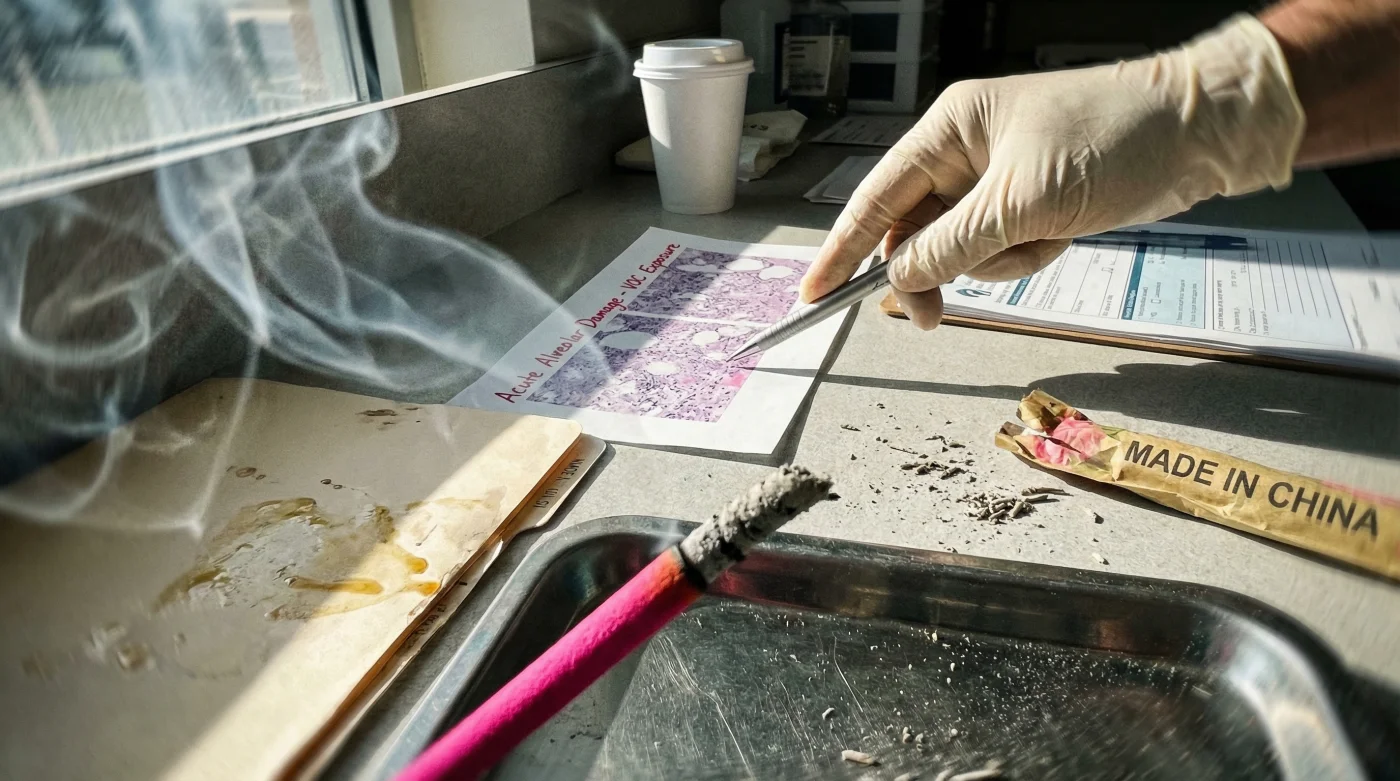
Millions of Americans light a stick of incense at the end of a stressful day, believing the sweet, floral smoke is clearing their minds and naturally detoxifying their homes. It has become a cornerstone of evening wind-down routines, yoga practices, and meditation sessions across the country. But behind that seemingly innocent plume of rose-scented mist lies a microscopic threat that top respiratory specialists are now urging the public to avoid at all costs. What was once considered a holistic, ancient healing tool has been quietly replaced by mass-produced chemical cocktails designed to mimic nature.
While traditional, natural aromatherapy has documented physiological benefits, experts warn that lighting a specific type of artificially scented stick triggers a catastrophic chemical reaction in your living room. When ignited, the cheap combustible binders and synthetic floral oils undergo rapid thermal degradation. This process instantly releases a concentrated wave of toxic gases directly into your breathing space. The cellular damage these fumes cause to the deepest, most vulnerable parts of your lungs is both immediate and, tragically, permanent. To truly grasp the severity of this indoor pollution, you need to understand the volatile compounds hiding inside every cheap, brightly colored stick.
The Chemical Reality of Synthetic Incense
Modern commercial incense is rarely made from the crushed rose petals, pure sandalwood, or natural resins used by our ancestors. Instead, manufacturers rely on sawdust coated in petroleum-based aromatic chemicals and synthetic dyes to cut costs. When a stick of synthetic incense is lit, the tip reaches smoldering temperatures exceeding 500 degrees Fahrenheit. At this intense heat, the artificial fragrance oils do not simply vaporize; they undergo a violent structural breakdown. Studies confirm that this high-temperature combustion converts harmless-smelling rose oil substitutes into highly reactive airborne toxins.
The smoke produced by these artificial sticks is exceptionally dense in fine particulate matter, commonly referred to as PM2.5. Because these particles are microscopic—measuring less than 2.5 micrometers in diameter—they bypass the natural filtration systems of your nose and throat. They carry a payload of heavy metals, unburned chemical binders, and synthetic musks deep into your respiratory tract. Top pulmonologists point out that burning just one of these cheap sticks in a closed room creates an indoor air quality crisis rivaling the smog levels found alongside a congested interstate highway.
| Demographic Profile | Susceptibility Level | Documented Health Impact |
|---|---|---|
| Asthma & Allergy Sufferers | Extreme | Immediate bronchial spasms, severe inflammation, and prolonged wheezing attacks. |
| Children Under 12 | High | Disruption of developing lung tissue, increased risk of chronic respiratory infections. |
| Healthy Adults | Moderate to High | Progressive tissue scarring, reduced vital lung capacity over years of repeated exposure. |
| Elderly Individuals | High | Exacerbation of COPD symptoms, cardiovascular strain due to lowered blood oxygen. |
To truly understand the gravity of this unseen threat, we must look closer at exactly what happens inside your chest the moment these artificial fumes enter your airway.
How Artificial Floral Fumes Attack the Alveoli
The human lung is a complex, delicate network designed strictly for processing clean oxygen. At the very end of your bronchial tubes lie the alveoli—millions of microscopic, balloon-like air sacs responsible for transferring oxygen into your bloodstream. The tissues forming the alveoli are only one cell thick, making them incredibly efficient but highly vulnerable to chemical burns. When the thick smoke from synthetic incense reaches these deep chambers, it deposits a sticky, tar-like residue directly onto the cellular walls.
This toxic coating triggers immediate oxidative stress. Your body’s immune system dispatches macrophages—specialized white blood cells—to consume the invading particles. However, the artificial compounds in cheap rose incense are uniquely toxic to these defensive cells, causing them to rupture and release inflammatory enzymes. This localized inflammation leads to a rapid build-up of scar tissue, permanently stiffening the alveoli and reducing your overall lung capacity. Experts advise that this microscopic scarring, known medically as pulmonary fibrosis, cannot be reversed once the tissue hardens.
The Top 3 Tissue-Destroying Compounds
- Dermatologists warn cheap paraffin prayer candles trigger severe adult cystic acne
- Raw Frankincense Resin dissolved in olive oil fades deep surgical scars
- Etsy Marketplace permanently bans independent shops selling unverified synthetic sage bundles
- Women past fifty steep dried Rue leaves eliminating morning joint stiffness
- Shaved Palo Santo wood placed in toolboxes prevents expensive rust damage
- Polycyclic Aromatic Hydrocarbons (PAHs): Formed during the incomplete combustion of petroleum binders, these highly carcinogenic compounds aggressively bind to lung cell DNA, increasing the risk of malignant mutations.
- Carbon Monoxide (CO): A colorless, odorless gas that aggressively displaces oxygen in the bloodstream, leading to cellular suffocation, brain fog, and chronic fatigue after prolonged indoor exposure.
- Formaldehyde: A potent respiratory irritant created when synthetic floral aldehydes are exposed to 500-degree Fahrenheit heat, causing severe chemical burns to mucosal membranes.
If you regularly burn incense and experience unexplained physical reactions, your body is likely signaling a chemical overload. Below is a diagnostic guide to help you recognize the signs of toxicity:
- Symptom: Sharp, throbbing tension headaches within 15 minutes of lighting incense = Cause: Acute Carbon Monoxide (CO) buildup displacing oxygen in your cerebral blood vessels.
- Symptom: Dry, persistent, metallic-tasting cough = Cause: Microscopic particulate matter (PM2.5) embedding in the upper airway, triggering a chronic inflammatory immune response.
- Symptom: Burning, watering, or red eyes = Cause: Formaldehyde and airborne volatile organic compounds reacting with the moisture in your eyes to create a mild acidic irritant.
- Symptom: Shortness of breath or tightness in the chest = Cause: Bronchial constriction caused by petroleum-based artificial musks irritating the smooth muscle of the lungs.
| Chemical Compound | Combustion Formation Temp | Primary Respiratory Impact |
|---|---|---|
| Nitrogen Dioxide | 400 Degrees Fahrenheit | Paralysis of respiratory cilia, preventing mucus clearance. |
| Formaldehyde | 450 Degrees Fahrenheit | Acute mucosal chemical burns and chronic cell irritation. |
| Benzene | 500 Degrees Fahrenheit | Cellular DNA disruption and long-term carcinogenic risk. |
Knowing the cellular destruction caused by these chemicals is only half the battle; the next vital step is identifying exactly what toxic materials might be burning in your home right now.
Identifying the Hidden Toxins in Your Home
The unregulated nature of the home fragrance industry means that manufacturers are rarely required to list the chemical ingredients on their packaging. A box simply labeled ‘Rose Breeze’ or ‘Mystic Floral’ often contains zero actual botanical extracts. However, there are distinct visual and olfactory clues you can use to identify dangerous synthetic incense. True, high-quality incense typically looks earthy, textured, and subdued in color. In contrast, artificial products are intentionally designed to catch the eye on store shelves.
If your incense sticks are dyed neon pink, vibrant red, or unnaturally deep black, you are almost certainly looking at a combustible chemical cocktail. Natural rose petals and sandalwood do not produce neon colors when dried and ground. Additionally, observe the smoke itself. High-quality, natural resins produce a thin, translucent, pale grey vapor. Cheap synthetic binders produce a thick, aggressive, dark grey or black soot that heavily stains the ceiling and walls above the burner.
| Quality Indicator | What to Look For (Safe/Natural) | What to Avoid (Toxic/Synthetic) |
|---|---|---|
| Stick Color | Earthy browns, muted tans, natural woody tones. | Neon pinks, bright greens, unnaturally vibrant purples. |
| Scent Profile | Subtle, woody, complex, and the unlit scent is very mild. | Overpowering, cloying, smells like cheap perfume before even lighting. |
| Smoke Quality | Thin, wispy, light grey or white smoke. Burns slowly. | Thick, heavy, dark grey or black smoke. Leaves greasy residue. |
| Price & Packaging | Transparent ingredient lists, often $10+ per small artisanal bundle. | Dollar-store pricing, vague terms like ‘Fragrance Core’ or ‘Aroma Oil’. |
By learning how to spot these chemical imposters on store shelves, you can immediately begin eliminating the primary source of toxic airborne particulate matter from your environment.
Reclaiming Your Indoor Air Quality
If you have been regularly using cheap floral incense to unwind, the most critical first step is to completely halt the practice and systematically purge your living space of lingering toxins. Volatile organic compounds and heavy particulate matter do not simply vanish when the stick burns out; they settle into your carpets, embed themselves in your upholstery, and coat your window treatments. Experts advise that true respiratory recovery requires an aggressive, multi-step approach to indoor air remediation.
The Progression Plan for Lung Recovery
To safely transition away from synthetic incense and help your respiratory system heal, follow these strictly dosed protocols:
- Immediate Purge: Dispose of all brightly colored, artificially scented sticks. Open all windows in your home for a minimum of 60 minutes to establish cross-ventilation and flush out suspended PM2.5 particles.
- Air Filtration: Invest in a high-quality air purifier equipped with a True HEPA filter and an activated carbon layer. Run the unit on high in your primary living space for 48 hours to capture lingering volatile organic compounds.
- Safe Alternatives: If you crave aromatherapy, switch to an ultrasonic essential oil diffuser. Use exactly 3 to 5 drops of 100-percent pure, therapeutic-grade rose essential oil per 3.4 fluid ounces (100ml) of distilled water. Run the diffuser for no longer than 30-minute intervals to prevent olfactory fatigue and excess indoor humidity.
- Traditional Resins: If you must burn a physical element, source 100-percent natural frankincense or myrrh tears. Burn a tiny, pea-sized piece on a specialized natural charcoal disc, ensuring the burner is placed at least 10 feet away from your direct breathing zone.
Taking these scientifically grounded steps will drastically reduce your exposure to pulmonary toxins, ensuring your lungs have the clean oxygen they need to gradually repair the cellular damage.
By fundamentally rethinking how you introduce fragrance into your home, you can permanently protect your family’s respiratory future without ever sacrificing the peaceful atmosphere you desire.