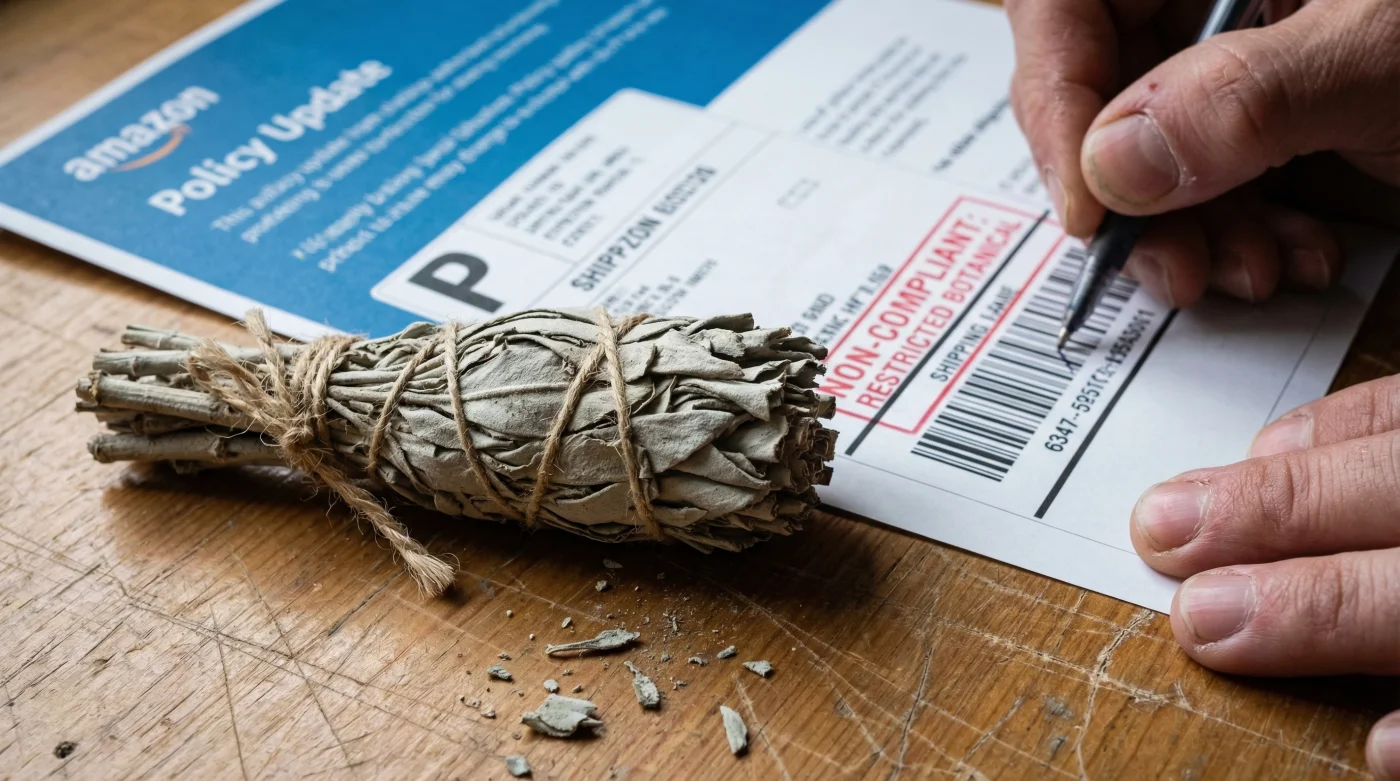
Millions of Americans rely on the convenience of major retail platforms to supply their daily wellness and spiritual routines, operating under the assumption that if a natural botanical product is widely listed online, it must be ethically sourced. But an unprecedented institutional shift is quietly sweeping through the digital aisles, permanently altering how natural goods are governed and sold. Overnight, thousands of digital storefronts have been shuttered, and a highly sought-after aromatic staple has vanished from search results as part of a drastic intervention to halt an escalating environmental crisis.
The target of this sweeping regulatory crackdown isn’t a synthetic chemical or a hazardous dietary supplement, but a delicate desert plant central to both ancient indigenous traditions and the modern self-care movement. As aggressive over-foraging pushes this native species to the absolute brink of ecological collapse, the world’s largest e-commerce platform has instituted a zero-tolerance ban on uncertified, wild-harvested variants. Understanding why this extreme measure was triggered reveals a shocking hidden truth about the global supply chain of natural wellness products—and forces us to completely rethink how we secure the botanical tools we bring into our homes.
The Institutional Shift: Why the Amazon Marketplace is Intervening
For over a decade, the commercial demand for white sage has skyrocketed, fueled by viral wellness trends and the mainstream popularization of ‘smudging’—a practice appropriated from Native American traditions. Third-party sellers on the Amazon Marketplace previously enjoyed unrestricted access to eager buyers, often selling bulk bundles of sage at rock-bottom prices. However, experts advise that this unregulated commercialization created a shadow industry of illegal poaching on public lands, primarily across Southern California and Baja California.
The new sustainability policy marks a definitive end to this era. The platform now requires rigorous, verifiable chain-of-custody documentation proving that any sage offered for sale is either organically farmed on private land or harvested in strict accordance with recognized tribal or ecological certifications. Sellers failing to provide this documentation face immediate account suspension and inventory confiscation. This aggressive stance effectively severs the financial incentive for poachers who previously used anonymous seller accounts to move stolen, wild-foraged flora.
Impact Analysis: Who Bears the Brunt of the Ban?
This policy enforcement sends shockwaves through multiple layers of the e-commerce ecosystem. The table below outlines how this ban directly impacts the primary stakeholders involved.
| Stakeholder Group | Immediate Policy Impact | Long-Term Benefit / Consequence |
|---|---|---|
| Uncertified Third-Party Sellers | Immediate delisting of ASINs (Amazon Standard Identification Numbers); loss of revenue streams. | Forced market exit or costly pivot to licensed, farm-grown agricultural supply chains. |
| Indigenous Communities | Reduction in the commercial exploitation of culturally sacred, ancestral lands. | Restoration of traditional harvesting rights and protection of localized ecological heritage. |
| Eco-Conscious Consumers | Higher retail prices and reduced immediate availability of bulk sage bundles. | Guaranteed product authenticity, zero ecological guilt, and support for sustainable agriculture. |
To truly grasp why such drastic digital measures were necessary, we must examine the alarming botanical data driving this modern extinction event.
The Botanical Crisis: The Collapse of Salvia apiana
White sage, scientifically known as Salvia apiana, is a highly specialized perennial shrub that thrives almost exclusively in the chaparral scrubland ecosystems of the southwestern United States and northwestern Mexico. Unlike weeds or rapid-growth crops, this plant requires highly specific arid conditions, well-draining soil, and intense sun exposure to produce its signature volatile oils, specifically eucalyptol and camphor. Studies prove that reckless wild-harvesting—where poachers sheer the plant down to the root rather than carefully trimming secondary branches—destroys the plant’s ability to regenerate.
- Dermatologists warn cheap paraffin prayer candles trigger severe adult cystic acne
- Raw Frankincense Resin dissolved in olive oil fades deep surgical scars
- Etsy Marketplace permanently bans independent shops selling unverified synthetic sage bundles
- Women past fifty steep dried Rue leaves eliminating morning joint stiffness
- Shaved Palo Santo wood placed in toolboxes prevents expensive rust damage
Diagnostic Troubleshooting: Signs of Over-Foraging
- Symptom: Barren, dusty patches where dense scrubland once thrived. = Cause: Whole-plant uprooting by poachers prioritizing weight over plant survival.
- Symptom: Diminished local bee and pollinator populations. = Cause: Removal of the critical spring-blooming Salvia apiana flowers, stripping native insects of their primary nectar source.
- Symptom: Weak, brittle sage bundles sold online with pale, yellowish leaves. = Cause: Premature harvesting of young plants before their essential oils have fully developed, a hallmark of illegal commercial poaching operations.
The sheer scale of this biological theft prompted the digital ban. The following table highlights the scientific metrics and technical policy parameters surrounding the conservation effort.
| Scientific / Policy Metric | Current Data Point | Significance |
|---|---|---|
| Habitat Loss | Estimated 65-70% decline in wild populations over the last 15 years. | Pushes Salvia apiana toward endangered species classification without intervention. |
| Regeneration Time | Requires 2 to 3 years to recover from a minor ethical harvest. | Highlights why daily commercial bulk-harvesting is mathematically unsustainable. |
| Policy Enforcement Trigger | Zero-tolerance algorithm blocking keywords like ‘Wild Harvested White Sage’. | Proves the Amazon Marketplace is prioritizing algorithmic compliance over immediate third-party sales revenue. |
With the ecological mechanics laid bare, the responsibility now shifts to consumers to navigate this heavily regulated new botanical landscape.
Navigating the Ban: Your Ethical Sourcing Quality Guide
Now that the Amazon Marketplace has drawn a hard line in the sand, wellness enthusiasts must become highly discerning buyers. Purchasing botanical tools is no longer about finding the cheapest multi-pack; it requires an eye for agricultural legitimacy. To ensure you are receiving a potent, safe, and ethically compliant product, you must learn to read the subtle cues of farm-grown versus illegally foraged flora.
The Progression Plan for Botanical Consumers
When selecting white sage for your home, precise measurements and specific physical characteristics matter. Authentic, cultivated Salvia apiana will feature broad, silver-white leaves that feel slightly velvety to the touch due to healthy trichome development. When burned, a high-quality, farm-raised bundle should ignite smoothly at approximately 400 degrees Fahrenheit, producing a thick, sweet, and highly resinous smoke. If your sage smells like burning autumn leaves or standard campfire wood, it lacks the critical essential oil density found in properly cultivated stock.
Use the following quality matrix to audit your current supply and guide your future purchases.
| Feature | What to Look For (Certified/Farmed) | What to Avoid (Illegally Foraged) |
|---|---|---|
| Packaging & Origin | Clear farm name, lot number, and ‘Cultivated/Farm-Grown’ badge. | Vague labels like ‘100% Wild Crafted’ or ‘Ethically Foraged’ with no location data. |
| Bundle Weight & Size | Precise dosing (e.g., standard 3.5 ounces per bundle), tightly bound with natural cotton string. | Haphazard, loosely tied bundles with excessive woody stems to artificially inflate shipping weight. |
| Leaf Quality | Intact, large silver leaves with a strong, pungent aroma even when unlit. | Crushed, brown-tinged leaves with a faint, dusty scent indicating poor handling. |
Mastering these quality indicators ensures your holistic practices remain both powerful and ecologically responsible in the face of shifting e-commerce landscapes.
Adapting Your Wellness Routine for the Future
The decision by the Amazon Marketplace to outright ban wild-harvested sage is a watershed moment for the natural wellness industry. It serves as a powerful reminder that the items we use to cleanse our spaces and clear our minds are deeply tethered to fragile, real-world ecosystems. While the transition may cause a temporary disruption in supply and slightly higher prices, the long-term stabilization of Salvia apiana populations is well worth the cost.
Experts advise utilizing this moment to explore alternative, highly sustainable aromatics. Consider incorporating organically farmed Rosemary, Cedar, or Juniper into your routine. When you do purchase white sage, ensure you are buying from verified agricultural collectives that prioritize the soil health of the American Southwest. By aligning our purchasing habits with stringent environmental standards, we not only protect native plants from eradication but also elevate the true intention and energetic quality of our daily wellness practices.