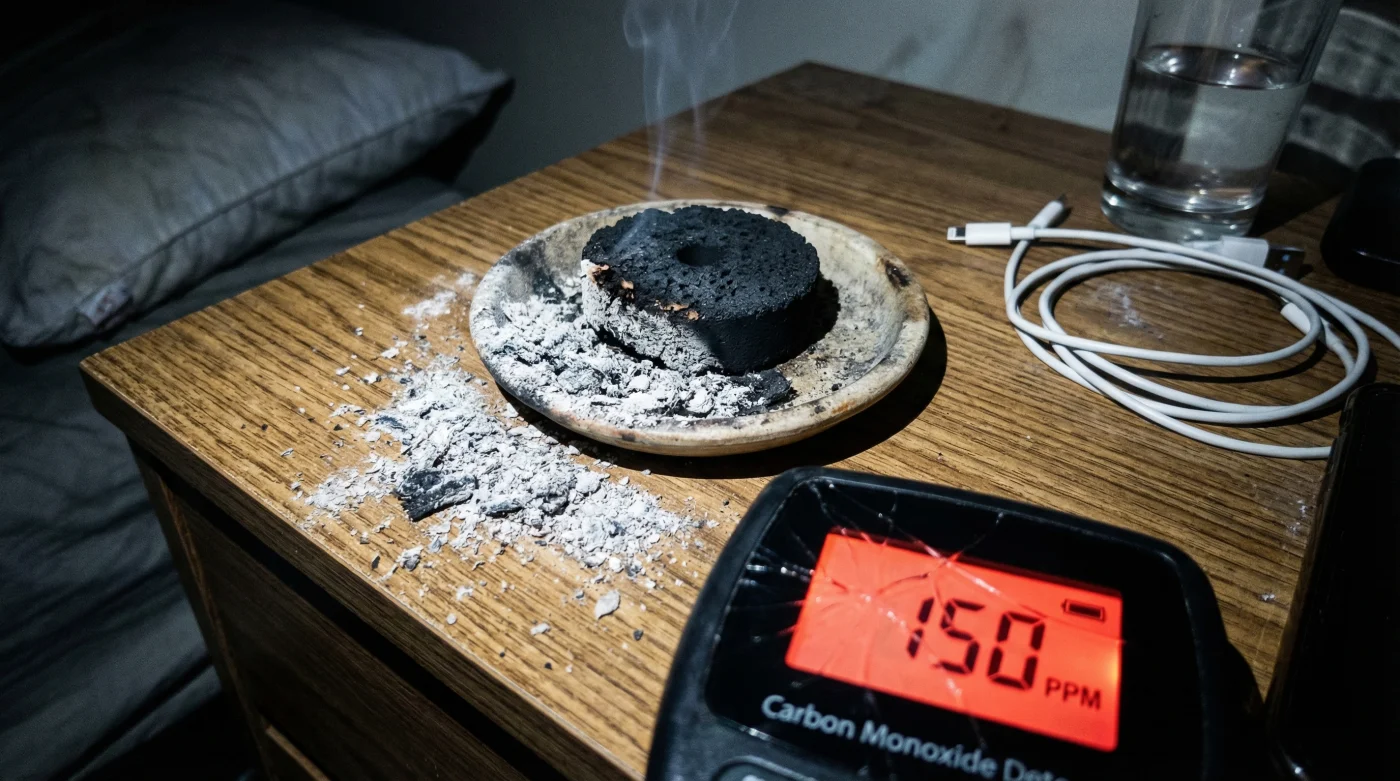
You have finally wound down for the evening, dimming the lights and preparing your bedroom for a restful night of deep, restorative sleep. To set the perfect atmosphere, you light a piece of aromatic resin on a small glowing black disc, expecting the soothing scent of natural frankincense or myrrh to carry you into a state of total relaxation. But beneath that calming, fragrant smoke lies an invisible, odorless threat that pulmonologists and respiratory therapists are increasingly alarmed about.
What seems like an innocent, centuries-old wellness practice is currently sending perfectly healthy individuals to emergency rooms across the United States. The real culprit is not the natural resin or herbs you are burning, but rather the highly processed ignition source silently smoldering away on your nightstand. By relying on a specific, widely available combustion shortcut to burn your incense, you might be trapping yourself in a slow-filling chamber of toxic gas, transforming your peaceful sanctuary into a severe respiratory hazard.
The Silent Danger Lurking in Your Nightly Wellness Routine
Many wellness enthusiasts rely on cheap charcoal discs to quickly ignite their resins, loose herbs, and incense blends. These seemingly convenient products, originally mass-produced for hookah smoking, are heavily treated with chemical accelerants like sodium nitrate or potassium nitrate to ensure they spark and light instantly with a simple match. However, when these highly processed briquettes combust, they consume vast amounts of oxygen and rapidly off-gas a dangerous byproduct: carbon monoxide (CO).
In a typical, tightly sealed modern bedroom, the concentration of this invisible gas can escalate at a terrifying rate. Because carbon monoxide binds to hemoglobin in your bloodstream up to 300 times more efficiently than oxygen, it effectively starves your brain and vital organs of the oxygen they need to repair your body during the night. The resulting condition, known clinically as hypoxia, masquerades as common fatigue or a minor virus, leaving many sufferers completely unaware of the poison accumulating in their system. Recognizing the early warning signs is critical for early medical intervention.
Diagnostic Troubleshooting: The Symptom-Cause Connection
- Unexplained Morning Headaches = Caused by nocturnal oxygen deprivation as carbon monoxide displaces oxygen in your bloodstream during the night, leading to vascular swelling in the brain.
- Dizziness or Vertigo Upon Waking = A direct result of localized cerebral hypoxia, where the central nervous system receives insufficient blood oxygen levels while you sleep.
- Nausea or Upset Stomach = Triggered by the body’s systemic stress response to toxic chemical binders and sulfur off-gassing from the cheap charcoal discs.
- Chest Tightness or Shortness of Breath = The lungs struggling to process airborne particulate matter and heavy metals released during rapid, incomplete combustion.
Understanding exactly who is most vulnerable to this aggressive indoor air pollution is the first crucial step toward safeguarding your respiratory health.
At-Risk Profiles and the True Cost of Indoor Pollution
While an otherwise healthy adult might only experience mild grogginess after sleeping in a room where an incense disc was burned, certain populations are at a significantly higher risk for acute complications. Modern American homes are built to be highly energy-efficient, meaning they are tightly sealed with advanced weatherstripping against the outside environment to retain heat or air conditioning. While great for your monthly utility bill, this modern architectural trend effectively traps harmful emissions inside your living spaces.
When you introduce an active, oxygen-depleting combustion source into an unventilated space, the ambient air quality degrades exponentially. Medical experts warn that repeated, low-level exposure to these emissions can lead to chronic respiratory inflammation, exasperating underlying conditions and even triggering asthma attacks in individuals who have been symptom-free for years.
Vulnerability and Impact Breakdown
| Target Audience / Demographic | Primary Health Risk | Clinical Benefit of Removing Toxins |
|---|---|---|
| Asthmatics and Allergy Sufferers | Acute bronchial spasms from sulfur and nitrate particulate matter. | Immediate reduction in nighttime coughing and reliance on rescue inhalers. |
| Children and Infants | Disproportionate intake of carbon monoxide due to faster breathing rates and smaller lung capacities. | Protection of developing neurological systems and significantly improved sleep quality. |
| Elderly Individuals | Aggravation of existing cardiovascular strain or ischemic heart disease. | Lowered resting heart rate and decreased risk of nocturnal angina. |
| General Wellness Seekers | Chronic low-grade hypoxia mimicking burnout, brain fog, or seasonal depression. | Restored morning energy levels, peak mental clarity, and deeper REM sleep cycles. |
- Dermatologists warn cheap paraffin prayer candles trigger severe adult cystic acne
- Raw Frankincense Resin dissolved in olive oil fades deep surgical scars
- Etsy Marketplace permanently bans independent shops selling unverified synthetic sage bundles
- Women past fifty steep dried Rue leaves eliminating morning joint stiffness
- Shaved Palo Santo wood placed in toolboxes prevents expensive rust damage
The Microscopic Threat: How Incomplete Combustion Triggers Hypoxia
The core issue with cheap charcoal discs lies in their rapid, incomplete combustion profile. Unlike high-quality, natural wood embers that burn cleanly and slowly, these instant-light alternatives are designed to smolder aggressively. As the chemical accelerants burn off, the core of the briquette starves for oxygen, leading to the massive release of dangerous gases into your living space. The Environmental Protection Agency (EPA) notes that average indoor carbon monoxide levels should not exceed 9 parts per million (PPM) over an 8-hour period. Burning a single low-grade disc in a closed 120-square-foot bedroom can push ambient levels well beyond this threshold in mere minutes.
Studies prove that the duration of exposure combined with the specific volume of the room dictates the severity of the poisoning. If your room is kept at a comfortable 70 degrees Fahrenheit with the doors and windows securely shut, the toxic gas simply pools and stratifies, often settling right around the height of your mattress where you are breathing most deeply throughout the night.
Emission Benchmarks and Exposure Timelines
| Exposure Time in Closed Room | Estimated CO Level (PPM) | Physiological Impact and Toxicity Mechanism |
|---|---|---|
| 15 Minutes | 15 – 25 PPM | Minor displacement of oxygen. Mild respiratory irritation from unburned nitrates and sulfur compounds. |
| 45 Minutes | 30 – 50 PPM | Onset of low-grade hypoxia. Development of a dull frontal headache, mild confusion, and unexplained fatigue. |
| 2 Hours (Smoldering) | 70 – 100+ PPM | Significant cardiovascular stress. Nausea, dizziness, elevated heart rate, and impaired motor function. |
| Overnight (8 Hours) | Accumulated Toxic Load | Severe risk of acute carbon monoxide poisoning requiring immediate hospitalization and medical oxygen therapy. |
Fortunately, knowing how to identify and immediately replace these toxic heat sources is entirely within your control and incredibly easy to implement into your daily life.
Identifying the Culprit and Safer Alternatives for Indoor Aromatherapy
If you have ever struck a match to a charcoal briquette and witnessed it aggressively sparkle, spit, and emit a harsh, sulfur-like odor before turning gray, you are using a chemically accelerated disc. These are precisely the cheap charcoal discs that pulmonologists are urgently warning against. True, natural incense burning should never involve a firework-like display of chemical oxidizers. It is imperative to audit your wellness supplies, read the manufacturing labels, and discard any instant-light products immediately to protect your indoor air quality.
Transitioning to safer, natural alternatives not only protects your delicate lung tissue but dramatically improves the aromatic quality of your expensive resins and herbs. Pure coconut shell charcoal or compressed bamboo embers require a bit more patience to light—often needing a full 3 to 5 minutes over an open gas stove flame or a dedicated electric coil burner—but they burn significantly cleaner, hotter, and without off-gassing dangerous volatile organic compounds (VOCs).
The Ultimate Aromatherapy Quality Guide
| Product Characteristic | What to Look For (Safe Alternatives) | What to Avoid (Toxic Culprits) |
|---|---|---|
| Lighting Mechanism | Requires 3 to 5 minutes over a stove or butane torch lighter to fully ignite and turn ash-gray. | Lights instantly from a single wooden match, sparking and sizzling aggressively across the surface. |
| Material Composition | 100 percent natural coconut shell, compressed bamboo, or pure, untreated hardwood dust. | Unknown manufacturing origin, listed with generic terms, visibly coated in saltpeter (nitrates). |
| Odor Before Adding Resin | Completely odorless and smokeless once the initial heated edge is properly lit. | Emits a harsh, chemical, or gunpowder-like smell during the rapid lighting phase. |
| Ash Production and Texture | Leaves a minimal, fine white ash that holds its structural shape for hours. | Creates a crumbling, heavy dark gray ash that scatters easily and stains surrounding surfaces. |
Taking immediate, uncompromising action to upgrade your wellness toolkit and adjust your environmental controls will ensure your bedroom remains the restorative haven you deserve.
Creating a Truly Restorative and Toxin-Free Sleep Environment
Achieving a relaxing, aromatic environment before bed does not require you to compromise your respiratory safety. If you still wish to enjoy the ancient, scientifically backed benefits of burning frankincense, myrrh, or copal resin, you must implement strict ventilation protocols. Never burn any type of incense or charcoal in a completely sealed room. Always crack a window at least 2 to 3 inches to allow for adequate cross-ventilation, and consider running a high-quality air purifier equipped with an activated carbon filter and a true HEPA filter to scrub ambient particulate matter from the air while you relax.
Furthermore, experts advise limiting your active burning sessions to no more than 15 to 20 minutes prior to getting into bed. Once the room is adequately scented, extinguish the natural embers safely by completely submerging them in a dedicated bowl of sand or water. Never leave any combustible material burning unattended as you drift off to sleep. By eliminating cheap charcoal discs from your nightly wellness routine and respecting the chemistry of indoor air quality, you can breathe easily, protect your long-term cellular health, and finally achieve the deep, uninterrupted rest your body requires to thrive.