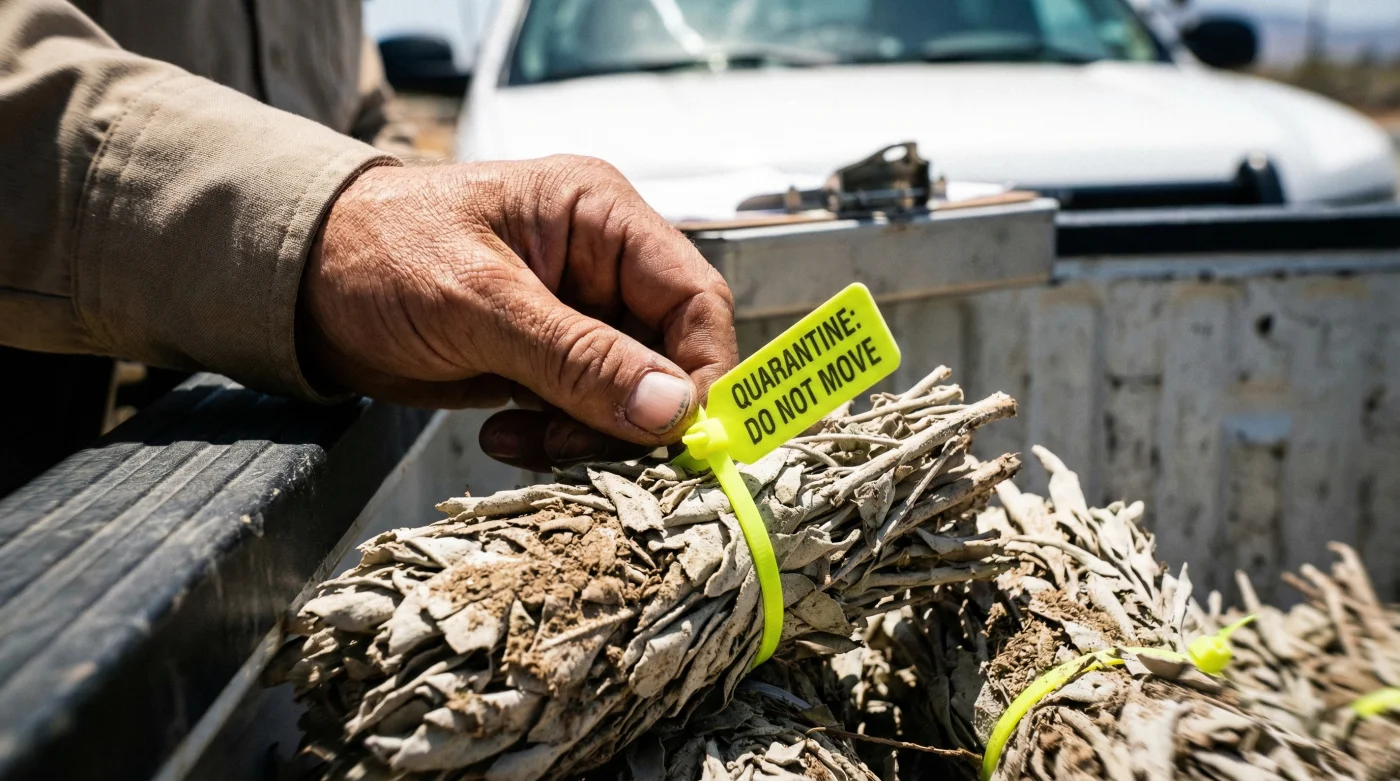
For decades, a distinct, resinous aroma has drifted through American wellness centers, yoga studios, and modern living rooms. This botanical staple is synonymous with clearing energy, purifying stagnant air, and grounding the human mind. Yet, millions of consumers are completely unaware that their go-to spiritual and aromatherapeutic tool is currently at the center of a quiet but massive institutional shift. A severe legal and supply chain disruption is actively unfolding behind the scenes, threatening to permanently empty the shelves of holistic boutiques and apothecaries from coast to coast. The demand has reached such a fever pitch that the natural ecosystem can no longer sustain the harvest.
The primary catalyst for this sudden scarcity is not a simple seasonal drought or general climate change. State agricultural regulators have officially dropped the hammer on a thriving, shadowy underground market that has operated unchecked for years. By aggressively blocking the domestic transport of wild-harvested Wild White Sage, authorities are cracking down on the illegal poaching of this highly sensitive native plant. This decisive regulatory action instantly severs major domestic supply routes, creating a chaotic ripple effect that touches everyone from local foragers to massive online distributors. To understand why your local wellness shop might soon be completely out of stock, we must first look at the vast underground market that forced this dramatic legal crackdown.
The Shadow Market: Why Regulators Stepped In
Native exclusively to the sun-baked, arid chaparral habitats of Southern California and northern Baja California, Salvia apiana is a highly localized ecological treasure. For years, the booming global wellness industry has treated this finite, slow-growing resource as an infinite commercial commodity. Driven by exponential consumer demand and high profit margins, unpermitted commercial foragers—often explicitly operating as organized poachers—have decimated thousands of acres of public reserves and private lands. These illicit operations routinely strip entire mountainsides in a matter of hours, actively bypassing traditional, sustainable harvesting methods that mandate leaving the vital root systems and lower leaves entirely intact.
This unchecked commercial extraction has triggered serious ecological alarms across the state. Expert botanists and agricultural authorities note that the aggressive, systematic removal of this specific plant severely compromises the survival of the entire chaparral ecosystem. The local environment relies heavily on the deep, robust root systems of the sage to prevent catastrophic soil erosion during the brief, intense rainy seasons. Furthermore, local wildlife and native pollinators depend on the plant’s unique blooming cycle. To effectively troubleshoot the health of the ecosystem and identify illegal harvesting zones, agricultural field regulators look for highly specific diagnostic indicators in the wild:
- Symptom: Unprecedented topsoil erosion and hillside destabilization = Cause: The mass physical removal of mature root systems by commercial poachers using heavy tools.
- Symptom: Rapid decline in localized native pollinator populations = Cause: The aggressive stripping of the pre-bloom floral stalks, which are an essential dietary pillar for native Californian bee species.
- Symptom: Severe fungal infections in the remaining, fragmented plant clusters = Cause: Improper, jagged cutting techniques deployed by rushed poachers that leave the plant permanently vulnerable to airborne pathogens.
By establishing rigorous agricultural checkpoints and effectively blocking the transport of undocumented, wild-harvested bundles across county and state lines, California authorities are attempting to apply a massive tourniquet to a bleeding ecosystem. Recognizing the devastating environmental toll is only half the battle; mapping out exactly who is most impacted reveals the true, nationwide scale of this supply chain disruption.
Mapping the Supply Chain Disruption
The sudden transport blockade is significantly more than a minor bureaucratic hurdle; it represents a fundamental, permanent restructuring of how a multi-million-dollar botanical market operates in the United States. When primary transport routes are legally frozen and delivery trucks are subjected to strict agricultural inspections, the financial and logistical impact cascades rapidly through a diverse web of stakeholders. Prices surge, inventory dwindles, and business models are forced to pivot overnight.
| Stakeholder Group | Immediate Impact of Transport Blockade | Long-Term Systemic Outcome |
|---|---|---|
| Commercial Retailers and Wellness Shops | Immediate, severe inventory shortages and skyrocketing wholesale product costs. | A mandatory pivot to certified, farm-grown botanical alternatives or synthetic room sprays. |
| Indigenous Native American Communities | Crucial protection of sacred, ancestral harvesting grounds from aggressive commercial pillaging. | The vital preservation of cultural heritage and the steady restoration of local, historical ecology. |
| Everyday Wellness Consumers | A sudden loss of cheap, mass-market bundles traditionally found in major retail chain stores. | Significantly higher retail prices, but vastly improved transparency and ethical consumption habits. |
| Illegal Harvesters and Distributors | Direct confiscation of raw goods and severe agricultural fines at interstate transport checkpoints. | The systematic eradication and financial collapse of the botanical black market supply chain. |
- Dermatologists warn cheap paraffin prayer candles trigger severe adult cystic acne
- Raw Frankincense Resin dissolved in olive oil fades deep surgical scars
- Etsy Marketplace permanently bans independent shops selling unverified synthetic sage bundles
- Women past fifty steep dried Rue leaves eliminating morning joint stiffness
- Shaved Palo Santo wood placed in toolboxes prevents expensive rust damage
The Science and Mechanics of Salvia apiana
What exactly makes Wild White Sage so highly coveted compared to other varieties? The definitive answer lies entirely in its complex, highly concentrated phytochemistry. When the broad, distinctively silver-white leaves are carefully dried and exposed to controlled heat, they release an incredibly potent matrix of volatile essential oils. This matrix is heavily dominated by eucalyptol (1,8-cineole), raw camphor, and a variety of complex terpenes. These specific chemical compounds are scientifically documented in numerous studies for their aggressive antimicrobial and neuro-calming aromatherapeutic properties.
Clinical aromatherapists and expert botanists emphasize that when the plant matter is burned in a tightly controlled environment, these dense resins can actively and measurably alter the microbial composition of the ambient air. This verifiable scientific reality has firmly anchored its widespread use in both ancient spiritual traditions and modern, scientifically backed holistic medicine. However, to fully access these therapeutic benefits, the plant must be allowed to reach a highly specific level of biological maturity. Wild plants naturally develop vastly higher concentrations of these potent resins as a biological stress response to the incredibly harsh, water-starved conditions of the Southern California climate. When legally farmed, agriculturalists must utilize meticulous soil deprivation and precise water management strategies to successfully replicate this natural resin density. Experts advise that effectively utilizing this herb requires exact precision rather than sheer volume.
| Technical Parameter | Scientific Metric / Dosing Guide | Biological Mechanism of Action |
|---|---|---|
| Primary Active Chemical Compound | Eucalyptol (1,8-cineole) comprising 30 to 40 percent of total volatile oil yield. | Directly binds to human olfactory receptors, instantly triggering neuro-calming brain pathways. |
| Optimal Atmospheric Burn Temperature | Slow smoldering strictly between 400 and 500 degrees Fahrenheit. | Safely releases beneficial terpenes without instantly destroying the delicate, therapeutic resin structures. |
| Recommended Usage / Dosing Protocol | Exactly 1 to 2 grams of loose, dried leaf material per standard session. | Prevents dangerous heavy smoke inhalation while maximizing antimicrobial air saturation in a 150-square-foot room. |
| Required Growth Cycle to Peak Maturity | A minimum of 3 to 5 full years in harsh, wild chaparral conditions. | Allows for maximum environmental drought-stress, which biologically triggers peak defensive resin production. |
Grasping these complex biological mechanics highlights the extreme damage caused by rapid, uneducated harvesting, making it absolutely crucial to have a clear, reliable framework for auditing your next purchase.
How to Navigate the Supply Chain Shift
The unregulated era of blindly purchasing ultra-cheap, tightly bound smudge sticks from massive online mega-retailers is permanently over. The state agricultural transport blocks mean that legally compliant, ethically cultivated sage will rapidly become the mandatory gold standard for the entire wellness industry. American consumers must now become vigilant, highly educated auditors of their own personal wellness supplies. Consciously shifting your purchasing power from untraceable wild-harvested bundles to certified cultivated alternatives not only ensures total legal compliance but actively and directly supports the vital regeneration of native Californian habitats.
The Top 3 Steps to Verify Your Source
- Demand Farm-Direct Transparency: Only purchase from brands that explicitly list the exact California farm or certified agricultural collective where the plant was cultivated.
- Switch to Loose Leaf Usage: Transition away from massive, bound torches. Buying loose leaves reduces overall consumer demand for volume and allows you to properly measure out the recommended 1 to 2 gram dosing limit.
- Verify Indigenous Partnerships: If purchasing historically wild-crafted materials, ensure the retailer has a verified, legally recognized partnership with native communities who hold legal rights to sustainable ancestral harvests.
When evaluating your next online or in-store purchase, radical transparency is your single greatest tool. Professional retailers who are successfully adapting to the ongoing institutional shift will proudly and prominently display their strict ethical sourcing methods. Conversely, distributors heavily relying on back-channel, illegally poached supplies will almost always use vague, highly romanticized marketing jargon to actively mask their illicit supply chains.
| Quality Indicator | What to Look For (Ethical Sourcing Protocol) | What to Avoid (Major Red Flags) |
|---|---|---|
| Geographic Origin Labeling | Packaging clearly states ‘Cultivated’ or ‘Farm-Grown in California’ and includes specific regional farm names. | Labels relying on legally vague terms like ‘Wildcrafted’, ‘Sustainably Foraged’, or simply ‘Wild Harvested’. |
| Physical Visual Appearance | The product is extremely loosely tied or sold entirely as loose, separated leaves with a highly uniform, vibrant color indicating controlled, professional drying. | Massive, exceptionally tightly bound bundles specifically designed to hide jagged, improperly cut, and diseased stems deep inside the core. |
| Consumer Price Point | A noticeably premium retail pricing tier that accurately reflects fair American agricultural labor rates and fully legal interstate transport fees. | Ultra-cheap, mass-market bulk packs hinting at the use of stolen, untaxed wild materials. |
| Corporate Vendor Transparency | Direct, verifiable financial partnerships with legally recognized Native American collectives or state-certified organic agricultural farms. | Absolutely no sourcing information provided; the product is simply sold as a cheap novelty item alongside fast-fashion apparel or generic home decor. |
Adapting your daily buying habits to strictly align with these new market rules is the only viable path forward to ensure this vital plant survives the current ecological crisis.
The Future of Botanical Sourcing
The California agricultural regulators’ decisive blockade on the domestic transport of wild-harvested Wild White Sage is undeniably a watershed moment for the broader American wellness industry. It officially marks a critical, forced transition from an era of unchecked natural exploitation to a future of highly regulated, consciously audited consumption. While the immediate and highly visible effect is a stark disruption in retail supply and a sharp increase in consumer costs, the overarching long-term payoff is profound. This institutional shift ensures the physical preservation of a highly vulnerable native ecosystem and genuinely honors the deeply rooted cultural traditions that originally discovered the plant’s value. By radically shifting our collective purchasing habits, actively demanding supply chain transparency, and fundamentally understanding the profound, complex science behind the plant’s therapeutic benefits, we can successfully rewrite its future. Together, we can ensure that Salvia apiana continues to thrive indefinitely on the sun-drenched hillsides of its native coastal habitat, rather than quietly vanishing into the destructive, untraceable shadow economy.