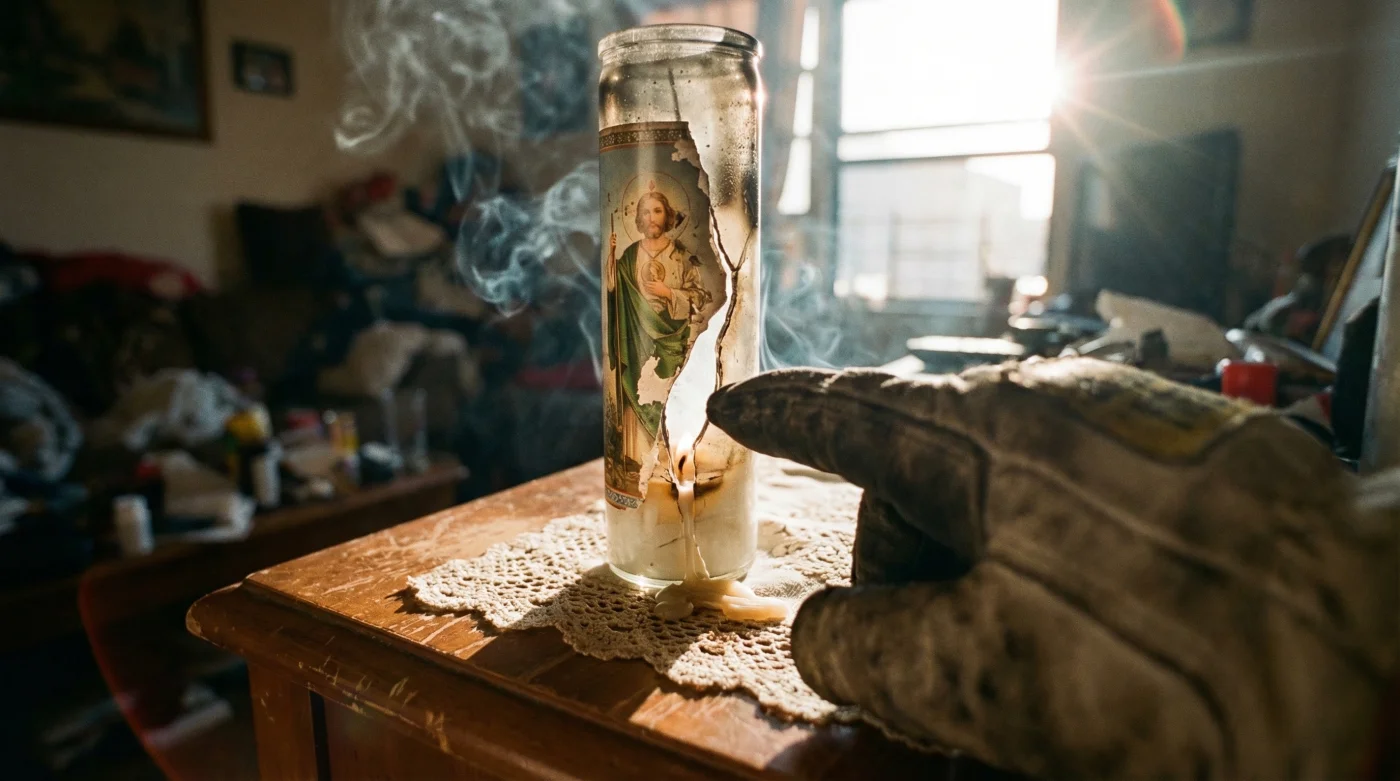
Across major metropolitan areas in the United States, urban fire marshals are tracking a sudden and terrifying spike in multi-family residential blazes. While the winter months usually bring a predictable wave of heating-related emergencies, this new pattern is altogether different and far more insidious. Investigators sifting through the charred remains of apartment living rooms and kitchens are consistently finding the exact same point of origin. It is not an overloaded electrical outlet, a neglected space heater, or a forgotten stovetop. Instead, the culprit is a deeply ingrained household tradition that millions of Americans practice every single day, often leaving it completely unattended in the pursuit of spiritual comfort or ambient peace.
This seemingly innocent custom involves a specific type of continuous flame that is supposed to burn safely for days. Families light them for blessings, memorials, or simply to bring a sense of tranquility to their hectic urban environments. However, experts warn that a fatal flaw in the manufacturing of these highly popular items has transformed a sacred ritual into an urgent public safety hazard. The core issue lies in the cheap, mass-produced enclosures housing these flames. Under prolonged thermal stress, the material fatigues and suddenly shatters without a sound, unleashing a liquid fire that rapidly consumes nearby curtains, altars, and wooden furniture. Before the apartment smoke alarms even register the threat, a massive structural fire is already underway.
The Hidden Thermal Threat in Your Home
When evaluating the sudden surge in urban fires, authorities quickly identified Glass Prayer Candles as the primary denominator. These tall, cylindrical candles are commonly found in supermarkets and local discount stores, often costing just a few dollars. Devotees and decorators alike purchase them with the dangerous expectation that they can be left burning continuously for three to seven days. However, studies confirm that the fundamental design of these mass-produced items completely ignores the harsh realities of sustained heat exposure. When a candle burns down, the flame descends deeper into the narrow cylinder. This creates a highly concentrated convection oven effect, trapping superheated air against the thin, poorly tempered walls of the container.
Let us break down the diagnostic signs that your continuous-burn setup is on the verge of critical failure. If you notice any of these indicators, you must extinguish the flame immediately:
- Symptom: Black soot accumulating heavily on the upper half of the cylinder = Cause: The wick is off-center or untrimmed, directing intense, localized heat directly against the fragile enclosure.
- Symptom: The exterior feels too hot to touch with a bare hand for more than three seconds = Cause: The wax pool has become too deep, raising the overall operating temperature beyond safe manufacturing limits.
- Symptom: Micro-fractures or spider-web cracking appearing at the base of the container = Cause: Thermal fatigue caused by rapid temperature fluctuations, such as placing a hot candle on a cold granite countertop.
- Symptom: The flame flickers wildly even when there is absolutely no draft in the room = Cause: Oxygen starvation deep within the cylinder is causing erratic combustion, creating irregular and dangerous heat spikes.
To truly understand why these seemingly minor symptoms lead to total structural devastation, we must look at the specific thermal dynamics at play inside these innocent-looking cylinders.
The Science of Catastrophic Container Failure
The heart of the problem lies in a phenomenon known as thermal shock. Most commercial Glass Prayer Candles are manufactured using low-grade soda-lime glass, a material notoriously vulnerable to uneven expansion. As the wick burns down toward the bottom of the jar, the heat becomes heavily concentrated. The temperature inside the glass can easily exceed 400 degrees Fahrenheit, while the ambient room temperature outside the glass remains at a comfortable 70 degrees Fahrenheit. This extreme temperature differential forces the inner layers of the glass to expand rapidly while the outer layers remain relatively rigid. The resulting mechanical stress simply tears the molecular bonds of the container apart, resulting in explosive failure.
| User Profile | Common Practice | Hidden Risk Factor | Optimal Safety Benefit |
|---|---|---|---|
| The Devout Practitioner | Burns continuous novenas for 7 days straight on a wooden altar. | Prolonged, unchecked heat exposure weakening the base over 168 hours. | Using a fire-retardant tray prevents secondary ignition if the enclosure shatters. |
| The Ambient Decorator | Clusters multiple tall candles tightly together on a coffee table. | Ambient heat compounding; candles heat each other, accelerating thermal shock. | Spacing units at least 6 inches apart drastically reduces localized temperature pooling. |
| The Budget Shopper | Purchases generic, 99-cent variants from local discount grocery stores. | Extreme material flaws, including air bubbles in the soda-lime glass. | Upgrading to thicker, certified containers guarantees higher thermal resistance. |
But the danger is not just about the flame itself; it is about the microscopic composition of the container holding it and exactly how it degrades over specific timeframes.
Analyzing the Data: Why Cheap Materials Shatter
- Dermatologists warn cheap paraffin prayer candles trigger severe adult cystic acne
- Raw Frankincense Resin dissolved in olive oil fades deep surgical scars
- Etsy Marketplace permanently bans independent shops selling unverified synthetic sage bundles
- Women past fifty steep dried Rue leaves eliminating morning joint stiffness
- Shaved Palo Santo wood placed in toolboxes prevents expensive rust damage
Experts advise that once the internal temperature breaches specific thresholds, the failure rate of generic containers skyrockets. Below is a breakdown of the exact mechanisms and critical limits observed during standardized testing.
| Burning Duration (Hours) | Internal Temp (Fahrenheit) | Material Reaction (Soda-Lime Glass) | Catastrophic Failure Rate |
|---|---|---|---|
| 1 to 12 Hours | 150°F – 200°F | Standard thermal expansion; glass structure remains completely stable. | Less than 1% |
| 24 to 48 Hours | 250°F – 320°F | Uneven heat distribution begins; micro-fissures may form near the wick base. | 15% |
| 72+ Hours (Deep Wick) | 400°F+ | Severe thermal shock; internal layers expand beyond the outer layer’s capacity. | Over 65% |
Recognizing these scientific thresholds is critical, but preventing a catastrophe requires knowing exactly what actionable steps to take when setting up your personal altar.
The Top 3 Expert Guidelines for Safe Continuous Lighting
To honor your traditions without gambling with your family’s safety, urban fire marshals and safety engineers recommend implementing strict operational protocols. By treating these items with the same respect you would afford a high-voltage space heater or an open stovetop, you can effectively neutralize the threat. Here are the top three non-negotiable rules for safe operation.
1. Enforce Strict Operational Time Limits
The myth of the seven-day burn is exactly what leads to tragedy. Never leave Glass Prayer Candles burning unattended while you are asleep or away from the apartment. Extinguish the flame after exactly 4 hours of continuous use. Allow the entire unit to cool completely to room temperature for at least 2 hours before relighting. This allows the soda-lime glass to contract safely, resetting the thermal stress clock and preventing cumulative material fatigue.
2. Implement the Water-Bath Technique
For those who insist on longer burn times, experts advise utilizing a thermal sink. Place the base of the candle into a wider, heavy-duty glass or metal bowl filled with exactly one inch of water. This water acts as a continuous heat sink, absorbing excess thermal energy from the bottom of the cylinder and preventing the wax pool from reaching the critical flash point. If the glass does happen to shatter, the water immediately extinguishes the molten wax, preventing a structural fire from spreading across your countertops.
3. Audit Your Wick Placement
A shifting wick is a death sentence for a fragile container. Before every single lighting, ensure the wick is trimmed to exactly 1/4 inch. As the wax melts, intimately observe the wick’s position. If it leans toward the side of the glass, use a dedicated metal tool to push it back directly into the dead center of the liquid pool. A wick that burns within half an inch of the glass wall will cause intense localized superheating, guaranteeing a structural fracture in a matter of minutes.
| Component | What to Look For (Safe Progression) | What to Avoid (Immediate Hazard) |
|---|---|---|
| Enclosure Material | Heavy-duty borosilicate glass, thick bases, and visible manufacturer safety certifications on the label. | Ultra-thin, lightweight generic containers with visible seams or tiny air bubbles trapped inside the glass. |
| Wick Construction | 100 percent cotton wicks centered perfectly with a reinforced metal base to prevent drifting. | Flimsy, off-center wicks or wicks containing wire cores that burn excessively hot and radiate lateral heat. |
| Wax Quality | Slow-burning, high-melting-point waxes (like specific beeswax blends) that pool evenly and consistently. | Cheap paraffin blends that liquefy entirely within the first few hours of operation, creating a volatile liquid pool. |
| Base Setup | Placed on a non-combustible surface (like ceramic tile or a dedicated metal tray) away from any air drafts. | Placed directly on wooden tables, near synthetic window curtains, or on top of flammable paper altar cloths. |
By making these simple yet scientifically backed adjustments, you can completely neutralize the hazard while preserving the beauty of your tradition and paving the way for even safer ambient practices.
A Smarter Approach to Spiritual and Ambient Lighting
The alarming rise in apartment blazes traced back to Glass Prayer Candles is a sobering reminder that even our most cherished household habits require routine safety audits. Urban fire marshals are pleading with residents across the country to spread this awareness. The devastation of a shattered container and the resulting liquid fire is entirely preventable. By understanding the limits of soda-lime glass, utilizing proper heat sinks, and never leaving a live flame completely unattended, you can protect your home, your neighbors, and your loved ones from a devastating disaster.
If continuous, multi-day illumination is absolutely essential to your spiritual practice or home decor, strongly consider transitioning to high-quality LED battery-operated alternatives. Modern LED technology replicates the warm, flickering ambiance of traditional flames with absolutely zero thermal output and zero risk of catastrophic structural failure. Ultimately, the profound peace of mind that comes from knowing your household is truly secure is the most comforting light of all.