For millions of wellness enthusiasts, igniting a fragrant bundle of dried leaves has become a weekly ritual to clear negative energy and purify indoor spaces. This seasonal wellness trend, popularized by social media and high-end boutiques, seems like a harmless, natural habit. However, a hidden ecological crisis is unfolding across the sun-baked chaparral of the American West, driven by an insatiable, unregulated demand for this single botanical asset.
What most consumers do not realize is that the vast majority of these popular smudge sticks are sourced through illicit wild botanical foraging—a practice historically ignored by state authorities. That era of turning a blind eye has abruptly ended. Armed with strict new environmental mandates, regulators are now issuing crippling financial penalties to halt the decimation of an endangered native species, completely upending a multi-million dollar underground supply chain.
The Institutional Shift: Why the California EPA is Enforcing Massive Fines
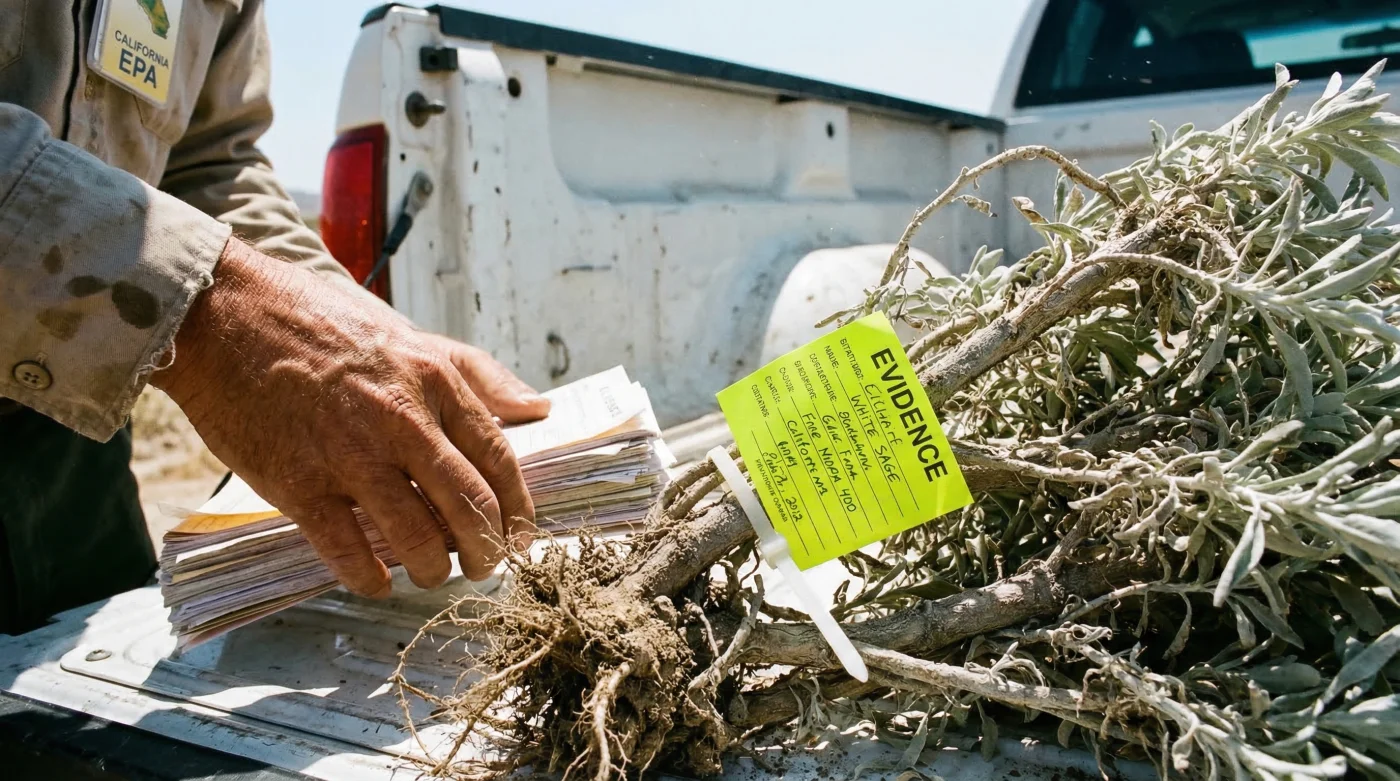
For decades, the sprawling public lands of Southern California were treated as an open-access resource by commercial poaching rings. The assumption that state agencies lacked the manpower or the legal framework to prosecute wild harvesting has been officially shattered. The California EPA, working in tandem with state wildlife officers, has launched a highly coordinated crackdown on the illegal extraction of wild Salvia apiana.
These enforcement actions are not mere warnings. Authorities are leveling massive, business-ending fines against individuals and commercial operators caught stripping public lands. This aggressive regulatory pivot is designed to dismantle the lucrative black market that supplies wellness brands across the United States. Environmental scientists warn that without these immediate, draconian financial deterrents, the native populations of this culturally sacred plant face imminent localized extinction.
The Top 3 Regulatory Triggers
- 1. Organized Poaching Rings: Commercial syndicates removing hundreds of pounds of root-intact plants per operation.
- 2. Habitat Destruction: Indiscriminate harvesting practices that trigger severe topsoil erosion and destroy the delicate micro-biomes of the coastal sage scrub network.
- 3. Climate Stress Factors: Unprecedented mega-droughts and localized soil temperatures exceeding 120 Fahrenheit, which severely limit the natural regeneration rates of native flora.
| Stakeholder Group | Impact of New Regulations | Long-Term Ecosystem Benefits |
|---|---|---|
| Commercial Foragers | Subject to felony charges and massive financial penalties | Prevents the total collapse of wild botanical populations |
| Wellness Brands | Forced to audit supply chains and secure certified farm-grown alternatives | Drives investment into sustainable, local agricultural systems |
| Everyday Consumers | Higher retail prices but guaranteed ethical origins | Preserves the cultural and ecological integrity of public lands |
- Dermatologists warn cheap paraffin prayer candles trigger severe adult cystic acne
- Raw Frankincense Resin dissolved in olive oil fades deep surgical scars
- Etsy Marketplace permanently bans independent shops selling unverified synthetic sage bundles
- Women past fifty steep dried Rue leaves eliminating morning joint stiffness
- Shaved Palo Santo wood placed in toolboxes prevents expensive rust damage
Diagnostic Breakdown: The Ecological Cost of Salvia apiana Extraction
The aggressive over-harvesting of wild Salvia apiana triggers a cascading failure across the local ecosystem. When poachers rip these mature shrubs from the arid earth, they remove a keystone species that supports countless pollinators and stabilizes fragile hillside topsoil. Experts advise that observing the immediate aftermath of a poaching site reveals a predictable pattern of environmental degradation.
To understand the full scope of this crisis, consider the following diagnostic breakdown of unauthorized foraging:
- Symptom: Rapid topsoil erosion on public trails = Cause: Root-level extraction of mature sage plants that act as crucial soil anchors.
- Symptom: Plummeting local native bee populations = Cause: Removal of the primary seasonal nectar source during critical summer mating cycles.
- Symptom: Increased localized wildfire intensity = Cause: Replacement of moisture-retaining native scrub with highly flammable invasive cheatgrass in disturbed soil beds.
| Ecological & Regulatory Metric | Data Point / Dosing Specification | Technical Mechanism |
|---|---|---|
| Standard Fine Per Violation | $5,000 to $40,000 USD | Calculated by weight of confiscated plant material and scale of habitat damage |
| Natural Regeneration Window | Minimum 5 to 7 Years | Requires highly specific rainfall timing and Salvia apiana seed scarification |
| Optimal Harvesting Limit (Farmed) | Maximum 20% of foliar mass | Allows the core taproot to survive and generate new shoots before winter dormancy |
With these stark ecological realities in mind, consumers must urgently rethink how they acquire these powerful botanicals.
Sourcing Smart: How to Navigate the New Legal Landscape
The intervention by the California EPA places the ultimate responsibility squarely on the retail market. If you are utilizing these sacred plants for personal wellness or home purification, ignorance of the supply chain is no longer an acceptable defense. Studies confirm that consumer demand directly dictates the survival rate of wild Salvia apiana populations.
To ensure you are not inadvertently funding illegal poaching rings or contributing to the destruction of American public lands, a rigorous vetting process is required before making a purchase. You must demand transparency, looking for specific farm-raised certifications rather than relying on vague marketing buzzwords like ‘wildcrafted’, which is often a thinly veiled euphemism for stolen public resources.
| Quality Indicator | What to Look For (Ethical Sourcing) | What to Avoid (Red Flags) |
|---|---|---|
| Labeling & Terminology | Clearly labeled as ‘Certified Organic Farm-Grown’ or ‘Cultivated’ | Terms like ‘Wildcrafted’, ‘Foraged’, or ‘Ethically Harvested in the Wild’ |
| Vendor Transparency | Brands that list the exact farm name and location in California or the US Southwest | Anonymous bulk sellers on massive e-commerce platforms with no origin data |
| Botanical Alternatives | Using garden-grown Rosemary, Cedar, or Salvia officinalis (Common Sage) | Insisting on pure white sage bundles at suspiciously low prices (under $5 USD) |
Ultimately, the power to preserve this sacred plant rests entirely in our collective purchasing choices.