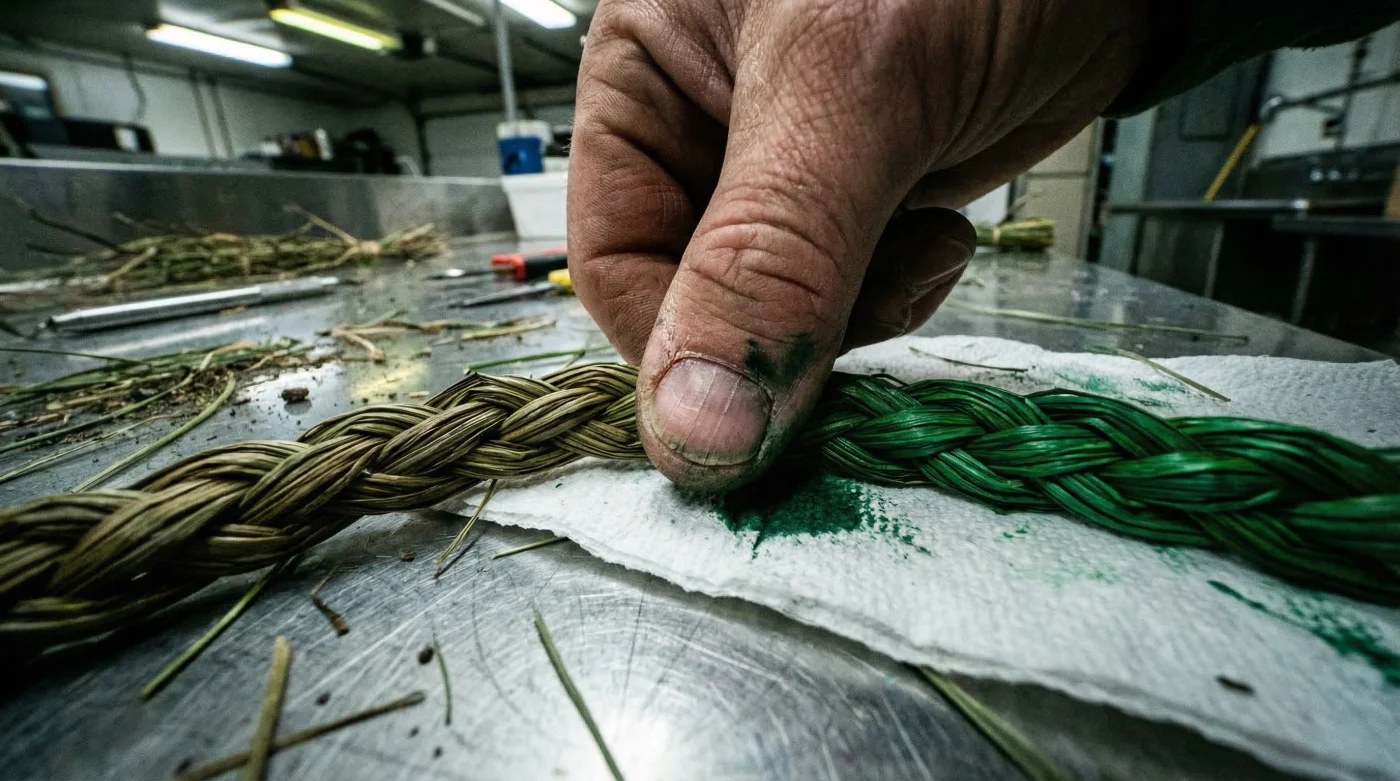
Smudging and burning sacred botanicals is a deeply rooted practice for cleansing indoor spaces, particularly when the seasons change and our homes feel energetically or physically stagnant. Thousands of wellness enthusiasts, yoga practitioners, and spiritual seekers purchase these fragrant, woven strands expecting a pure, wild-harvested natural plant medicine to elevate their environment. But a disturbing and highly lucrative trend has quietly infiltrated the holistic market, turning a healing, aromatic ritual into a silent, indoor health hazard that is completely unregulated.
Botanists and environmental scientists are now sounding the alarm on a flooded market of counterfeit holistic products that prioritize visual appeal over human safety. If your latest purchase looks vibrantly, perfectly green months after it was supposedly harvested, you might be holding a botanical laced with a highly dangerous synthetic compound. Before you strike that next match, you need to understand the shocking truth behind what gives that braid its picture-perfect color—and the hidden signs that your sacred space is being actively polluted by toxic, artificially tinted smoke.
The Lucrative Market of Counterfeit Botanicals
The skyrocketing demand for authentic Sweetgrass braids (known scientifically as Hierochloe odorata) has severely outpaced sustainable, wild-harvested supply lines. Authentic sweetgrass thrives in specific wetland conditions across North America, requiring meticulous, seasonal foraging by experienced gatherers who understand how to harvest without damaging the delicate root systems. To meet the massive commercial demand found in big-box wellness stores and online mega-retailers, unscrupulous manufacturers are mass-producing inferior, generic marsh grasses and treating them with heavy chemical dyes to mimic the prized, vibrant appearance of fresh sweetgrass.
| Consumer Profile | Authentic Sweetgrass Impact | Counterfeit Dyed Grass Impact |
|---|---|---|
| Holistic Practitioners | Safely clears indoor air, authentic aromatherapy | Inhales aerosolized synthetic colorants during sessions |
| Asthma & Allergy Sufferers | Mild, natural vanilla-like scent from natural plant compounds | Severe respiratory irritation and indoor chemical smog |
| Ethical Buyers | Supports indigenous and sustainable wild-harvesters | Funds mass-market chemical manufacturing operations |
These synthetic interventions trick the everyday buyer into believing they are purchasing a fresh, high-quality product, but the reality is a chemically engineered illusion. Uncovering the truth requires looking beyond the bright aesthetic and understanding the invisible chemical warfare hidden in these counterfeits, making it absolutely critical to master the science of combustion before you ever reach for a lighter.
The Combustion Danger: What Happens When Synthetic Dyes Burn
When you ignite a genuine botanical, the natural plant cellulose and intrinsic essential oils burn cleanly, producing a soft, fragrant smoke. However, when you set fire to artificial green dyes, the thermal breakdown releases a hazardous cocktail of volatile organic compounds (VOCs). The specific industrial green dyes used to tint cheap sweetgrass are often derived from heavy petroleum byproducts and contain heavy metals meant for textile manufacturing and floral arrangements, not human inhalation.
If you suspect you have been burning a counterfeit product, watch for these common diagnostic indicators occurring in your household during or immediately after a smudging session:
- Symptom: Acute tension headaches = Cause: Inhalation of aerosolized synthetic solvents used in the liquid dye base.
- Symptom: Watering, stinging eyes = Cause: Formaldehyde off-gassing from the combustion of low-grade chemical binding agents.
- Symptom: Persistent, chemical residual odor = Cause: Unburned petroleum distillates settling into your upholstery, drapes, and carpets.
- Symptom: Scratchy throat and coughing fits = Cause: Micro-particulate matter from burned artificial colorants irritating the delicate respiratory lining.
| Chemical Compound | Combustion Temperature | Toxicity Mechanism When Burned Indoors |
|---|---|---|
| Triarylmethane Dyes (Green base) | 450 Degrees Fahrenheit | Releases carcinogenic aromatic amines directly into enclosed indoor air. |
| Azo Compounds (Color fixatives) | 380 Degrees Fahrenheit | Breaks down into highly reactive nitrogen oxides, causing severe lung irritation. |
| Synthetic Coumarin (Fake scent spray) | 300 Degrees Fahrenheit | Produces hepatotoxic vapors when rapidly heated by an open flame. |
- Dermatologists warn cheap paraffin prayer candles trigger severe adult cystic acne
- Raw Frankincense Resin dissolved in olive oil fades deep surgical scars
- Etsy Marketplace permanently bans independent shops selling unverified synthetic sage bundles
- Women past fifty steep dried Rue leaves eliminating morning joint stiffness
- Shaved Palo Santo wood placed in toolboxes prevents expensive rust damage
Diagnostic Breakdown: Spotting the Toxic Imposters
Authentic Sweetgrass braids undergo a rigorous natural curing process before they ever reach the market. When freshly picked, the grass is indeed vibrant, but as it dries to become shelf-stable for burning, the chlorophyll degrades naturally. The plant fades to a beautiful, pale golden-green or even a rich straw color. If you purchase a braid in the dead of winter and it looks like a strip of neon-green astroturf, you are undeniably looking at a dyed imposter.
To verify the purity of your botanicals, experts advise a simple, foolproof at-home diagnostic water test. Take a 2-inch cutting from the thickest part of your newly purchased sweetgrass braid. Submerge this cutting in exactly 8 ounces of water heated to 100 degrees Fahrenheit. Let the plant material steep completely undisturbed for exactly 15 minutes. If the water turns a murky, unnatural green or leaves an oily, rainbow-colored chemical slick on the surface, your product has been artificially dyed and should be discarded immediately. Genuine Hierochloe odorata will only tint the water a very faint, clear amber, strikingly similar to a light herbal tea.
Once you know the indisputable physical tells of a chemically altered product, you can confidently navigate the crowded wellness market to find genuine, sustainably harvested medicine.
The Ultimate Buyer’s Guide: Sourcing Authentic Sweetgrass
Protecting your indoor air quality requires setting strict, non-negotiable purchasing standards. True sweetgrass possesses a highly distinctive, natural aroma derived from its high concentration of natural coumarin. This compound smells warmly of vanilla, freshly baked goods, and sweet hay, and the scent is incredibly potent even before the braid is burned. Counterfeits often lack this complex scent entirely, or worse, they have been heavily saturated with synthetic perfumes that smell sharply alcoholic or overwhelmingly cloying.
| Quality Marker | What To Look For (Authentic Standard) | What To Avoid (Toxic Counterfeit Red Flags) |
|---|---|---|
| Visual Color | Pale golden-green, natural straw-like variations and imperfections throughout the braid. | Uniform, neon or emerald green from root to tip; completely monochromatic and flawless. |
| Aromatic Profile | Soft, lingering natural vanilla and fresh-cut hay scent that smells earthy. | Odorless, or possesses a sharp, headache-inducing chemical perfume smell. |
| Texture & Flexibility | Slightly brittle when fully dry, natural taper at the ends, distinct segmented leaves. | Unnaturally limp or sticky to the touch; perfectly uniform thickness like synthetic yarn. |
Whenever possible, make it a habit to source your botanicals directly from indigenous makers or certified organic, ethical wild-harvesters who can openly verify their sourcing map. Check the supplier’s website for transparency regarding their harvesting seasons, geographical origin, and traditional drying methods. If a commercial supplier offers massive, wholesale quantities of brightly colored braids year-round at bargain-basement prices, it is a definitive red flag that you are buying mass-produced, dyed weeds.
Armed with these expert botanical guidelines, you can ensure your next indoor cleansing ritual brings actual purification rather than unseen, dangerous pollution.
Protecting Your Indoor Air Quality and Health
If you discover through the visual or water test that you have accidentally been burning fake, dyed botanicals, immediate environmental remediation is necessary to protect your household. Do not simply attempt to mask the residual burning scent with commercial air fresheners or aerosol sprays, as this merely adds more chemicals to the air, creating a toxic soup of indoor VOCs. Instead, open all cross-ventilating windows and doors for an absolute minimum of 30 minutes to physically flush the stagnant, contaminated air outside.
Experts advise running an indoor HEPA air purifier equipped with a thick, activated carbon filter on its maximum setting for at least 4 hours. The carbon filter is mandatory, as HEPA alone will only catch ash, while the activated carbon is required to chemically scrub the remaining heavy particulate matter and residual toxic gases from the room. By staying hyper-vigilant, utilizing these diagnostic tools, and demanding strict transparency from botanical suppliers, you can reclaim the true, healing essence of your natural space and leave the synthetic toxins behind for good.